

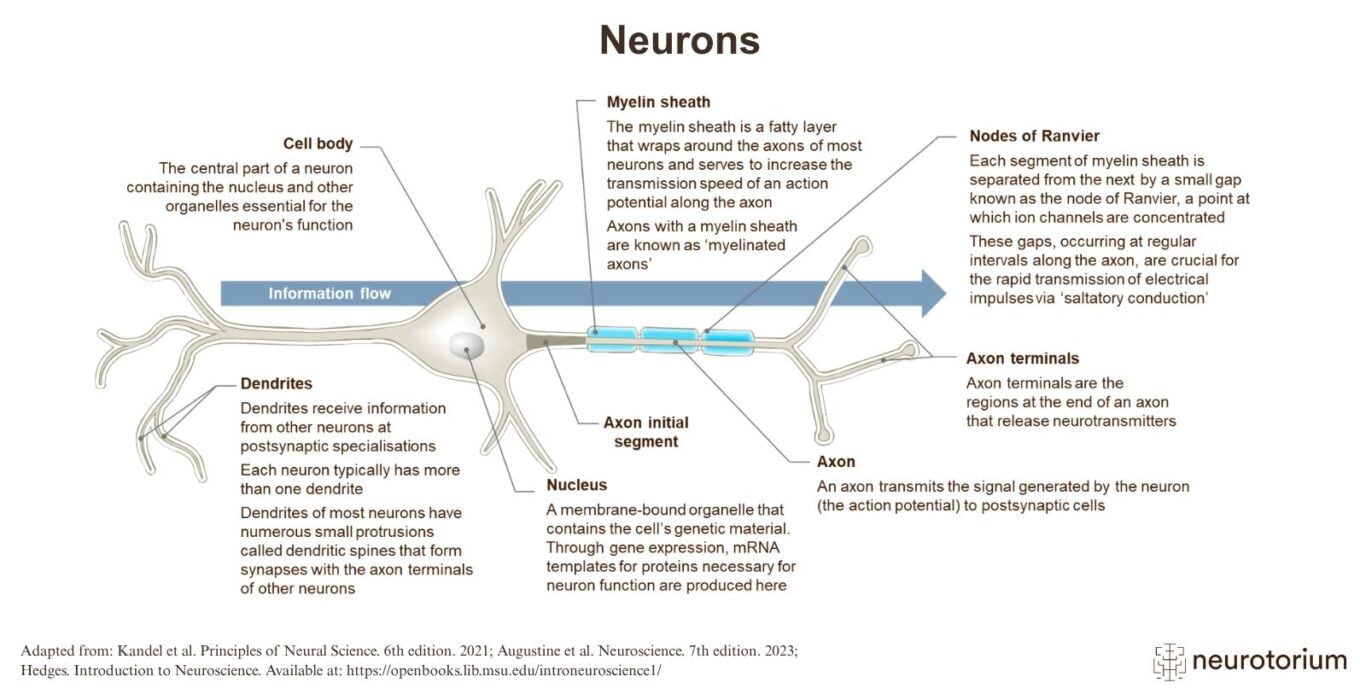
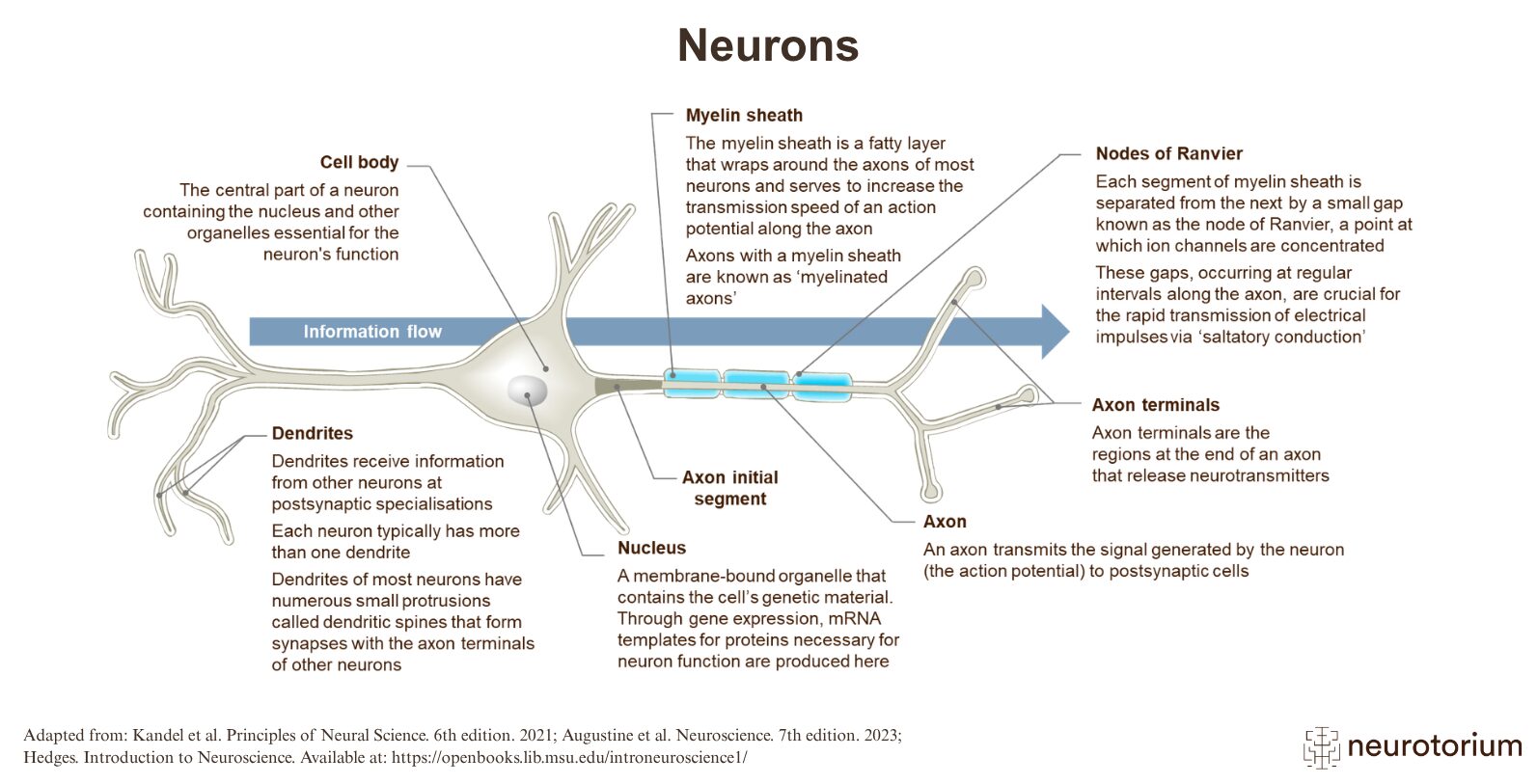
The neuron constitutes the functional unit of the nervous system, and there are many billions of neurons in the brain.1,4,5 Each neuron has the ability to connect with up to a thousand other neurons via specialized sites of communication called synapses, creating complex neural circuits.1,2 A simplified neuron is shown on the slide, along with explanations of its various component parts.1
Related content
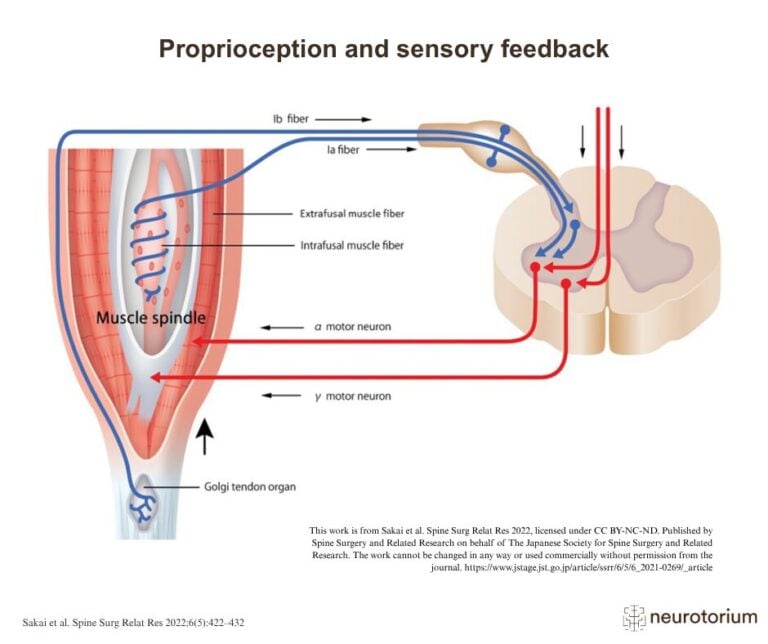
Controlled movement relies on sensory feedback, particularly proprioception (the sense of body position in space and movement).
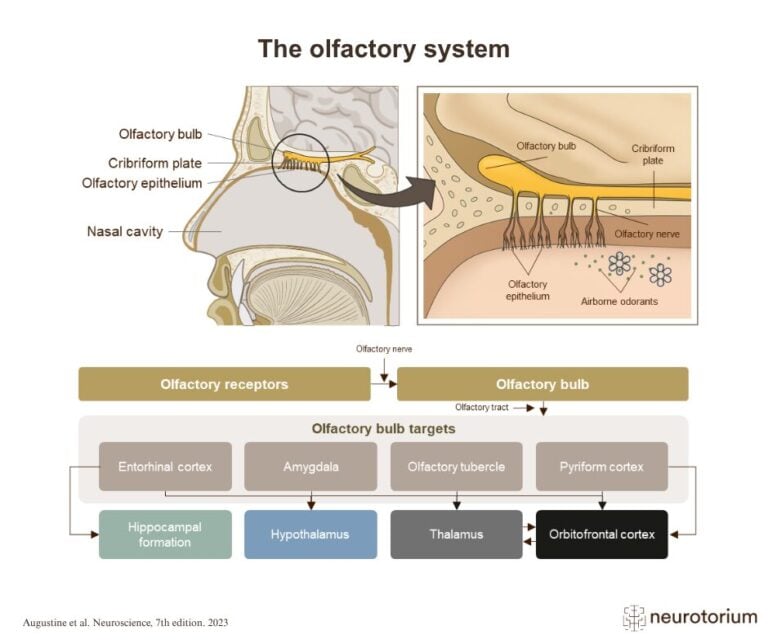
The olfactory system detects airborne odor molecules in the nasal cavity and transmits this information to the olfactory bulb. From there, signals are relayed to several brain regions involved in smell perception, memory, emotion, and behaviour.
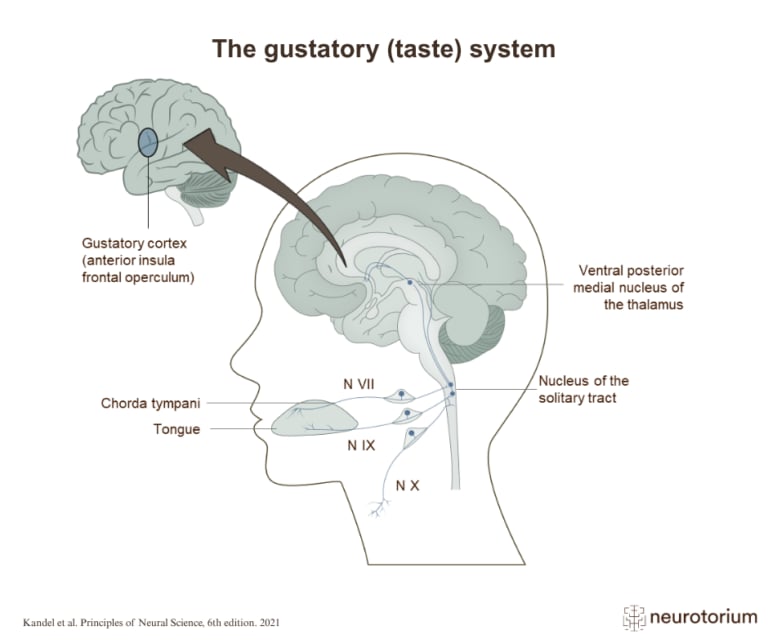
The gustatory system detects taste stimuli on the tongue and relays this information through brainstem and thalamic pathways to the gustatory cortex.