

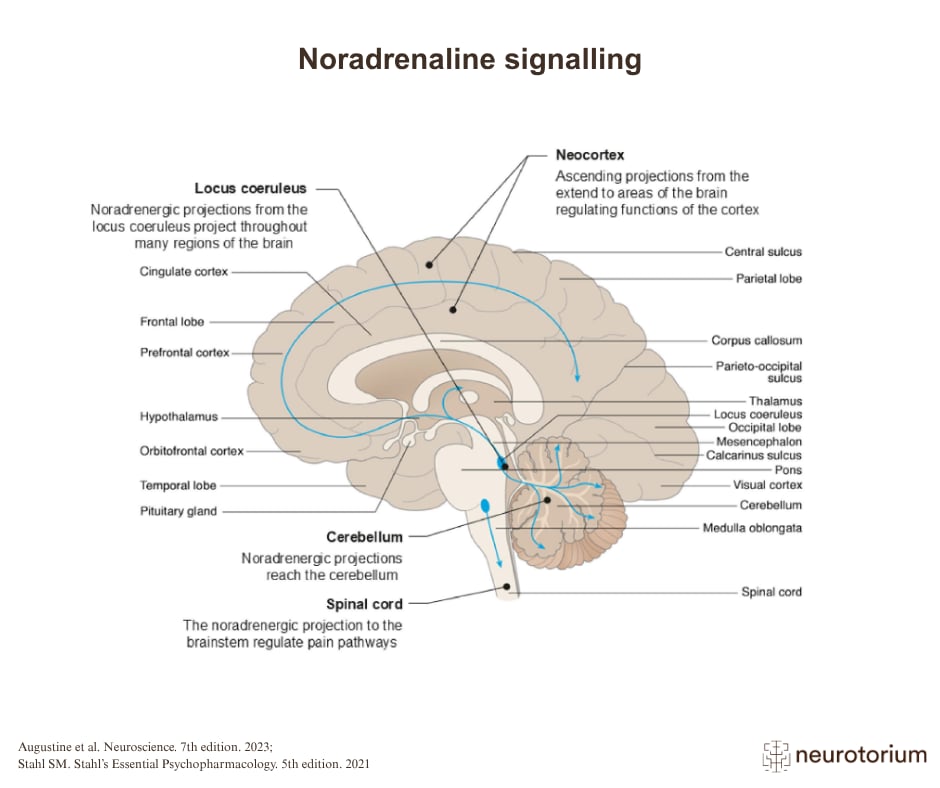
Noradrenaline (also called norepinephrine) is a neurotransmitter primarily found within neurons in the locus coeruleus1,2
Noradrenaline and the locus coeruleus are thought to have important input into the control the CNS exerts over cognition, memory, stress response, arousal, pain, and other functions.5-7 Malfunction of the locus coeruleus is thought to underlie disorders such as depression, anxiety, and Alzheimer’s disease, and Parkinson’s disease.5 In addition, abnormalities in the noradrenergic projection to the hypothalamus – which mediates stress response – are thought to be involved in the pathology of depressive and anxiety disorders.8
Related content
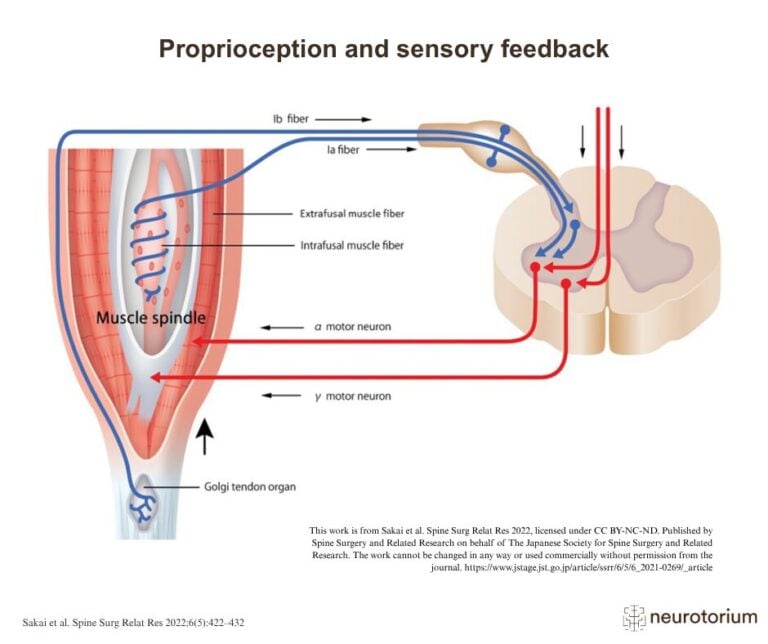
Controlled movement relies on sensory feedback, particularly proprioception (the sense of body position in space and movement).
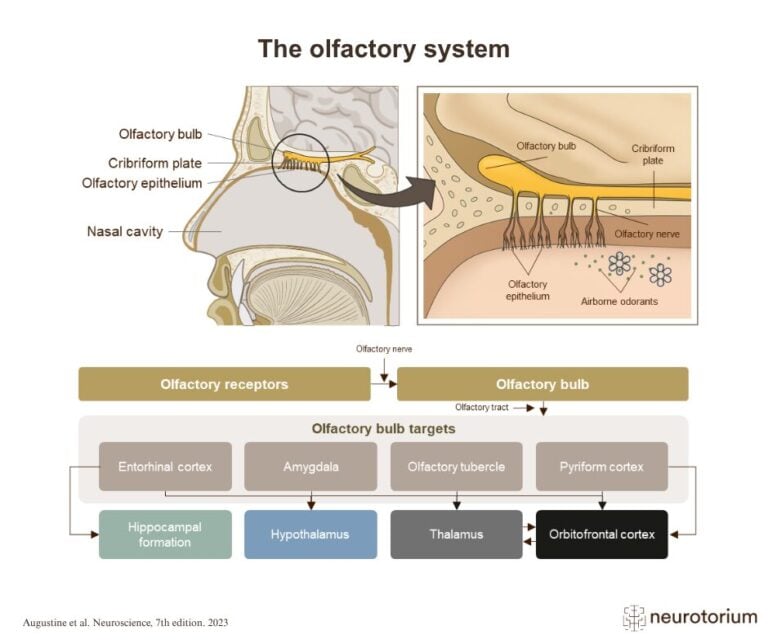
The olfactory system detects airborne odor molecules in the nasal cavity and transmits this information to the olfactory bulb. From there, signals are relayed to several brain regions involved in smell perception, memory, emotion, and behaviour.
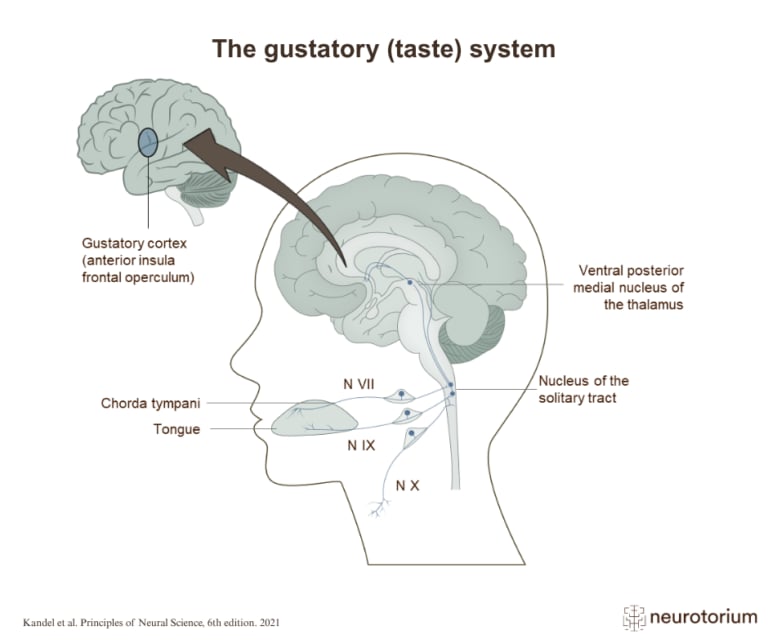
The gustatory system detects taste stimuli on the tongue and relays this information through brainstem and thalamic pathways to the gustatory cortex.