


Several different, socio–cultural, psychological, demographic, behavioral, and health factors have been identified that increase or decrease a person’s risk of depression, the effects of which appear to be quite context- and time-specific.
While some risk and protective factors directly affect the pathophysiological processes of major depressive disorder (MDD), their interpretation is not straightforward.1 Moreover, the relationship of many of them with MDD is bidirectional: for example, low socioeconomic status or lack of support increase the risk of MDD, but people with MDD also often experience functional impairment and deterioration that may result in smaller social network, unemployment and lower income.1
Related content

Major Depressive Disorder (MDD) is a highly prevalent psychiatric condition with significant individual and socio-economic burden. Despite the broad availability of numerous effective therapeutic interventions, up to 30% of patients fail to achieve adequate symptom relief and are classified as having treatment-resistant depression (TRD). TRD represents a significant clinical challenge, affecting approximately 30% of individuals with MDD who fail to respond to at least two adequate antidepressant trials.
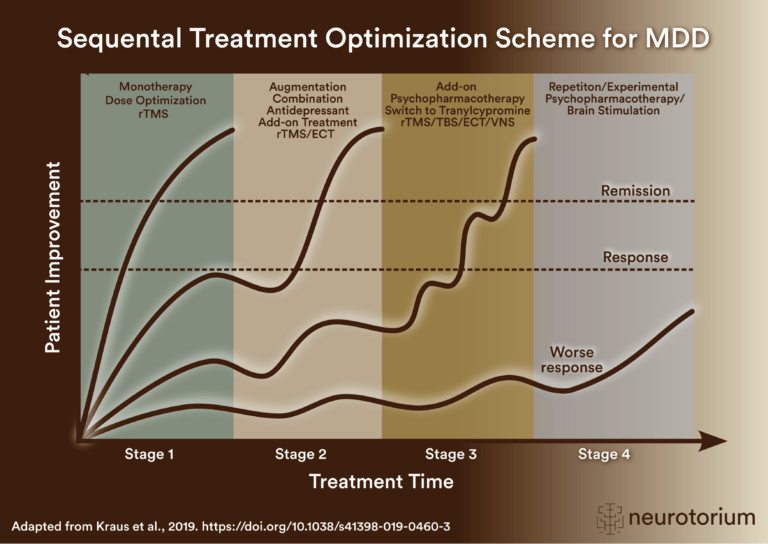
Sequential treatment optimization scheme for major depressive disorder generated according to international evidence.
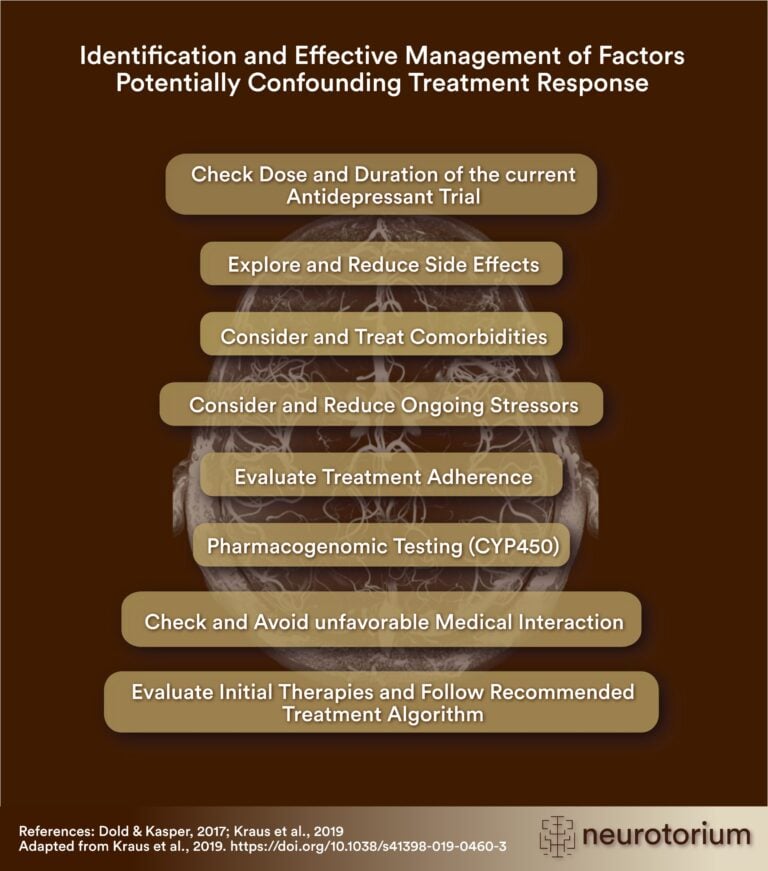

Key steps for managing factors that may confound antidepressant treatment response, including dose, side effects, comorbidities, stressors, adherence, pharmacogenomics, interactions, and treatment algorithms.