


Images
Filter
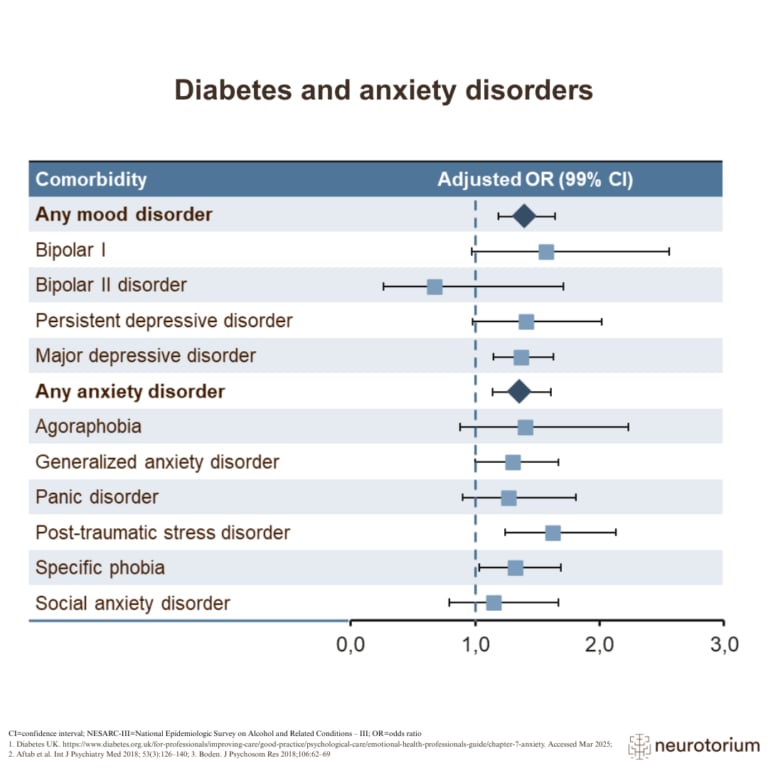
Diabetes is associated with an increased prevalence of both mood and anxiety disorders. This figure illustrates the relationship between diabetes and a range of psychiatric conditions, highlighting the importance of recognising and addressing mental health symptoms as part of comprehensive diabetes care.
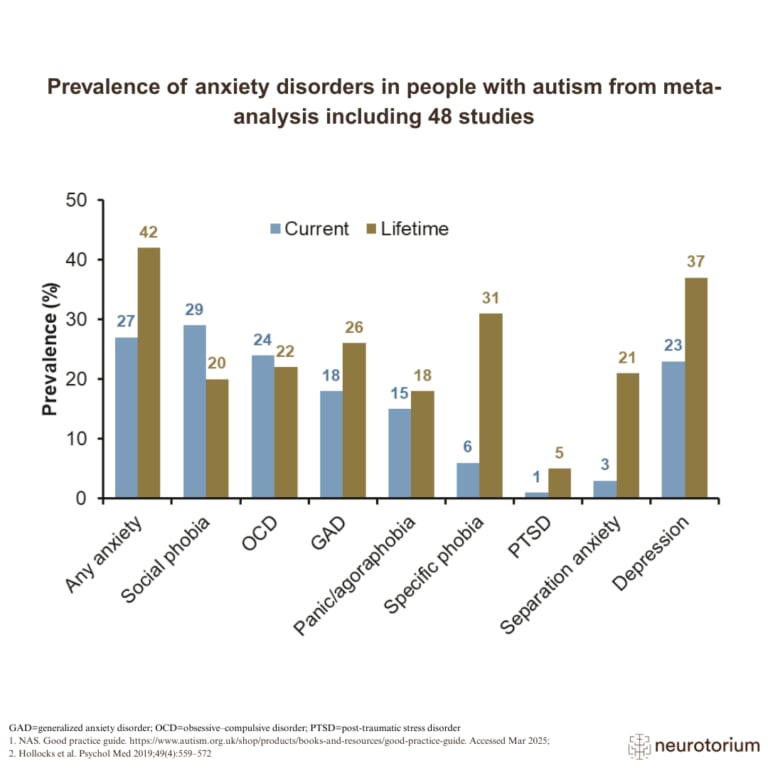
A meta-analysis of 48 studies reveals striking rates of co-occurring anxiety in autism, with lifetime prevalence reaching 42% for any anxiety disorder and 37% for depression
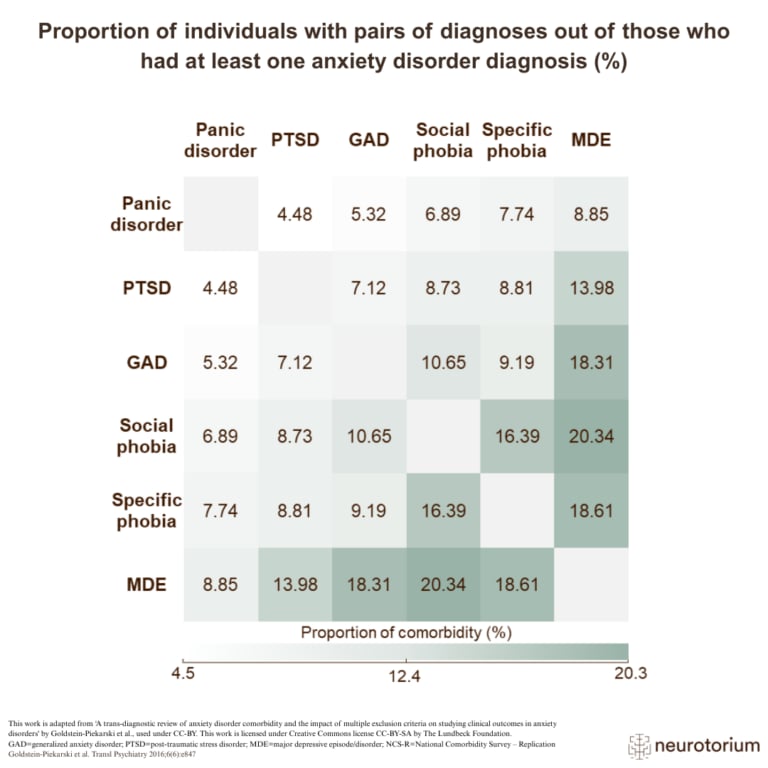
Anxiety disorders rarely occur alone. This heat map maps out comorbidity pairs; from panic disorder to PTSD, GAD, phobias, and depression, showing which combinations overlap most often.
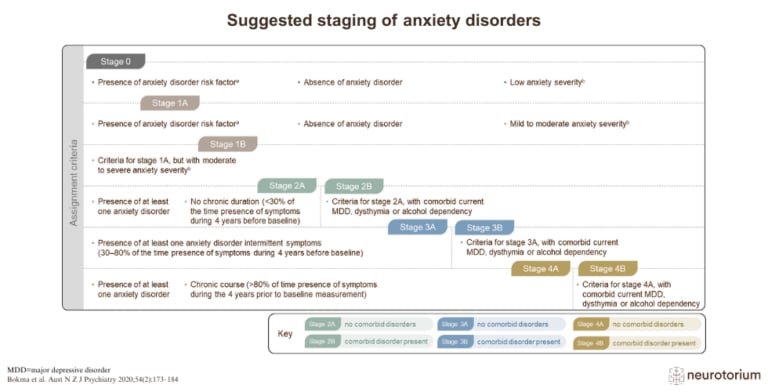
Not all anxiety looks the same over time. This staging model tracks progression from early risk factors through chronic illness, distinguishing cases with and without comorbid depression or alcohol dependency.
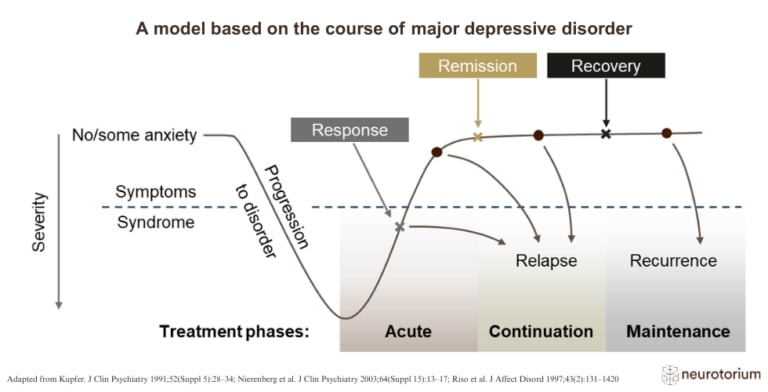
Treatment doesn’t end when symptoms lift. This model tracks the course of major depressive disorder through acute, continuation, and maintenance phases – mapping the path from response to remission, recovery, and the risk points for relapse or recurrence along the way.

With regard to possible exposure scenarios, innovative software enables the generation of almost any environment.
No results matched your search.
Please try again.