

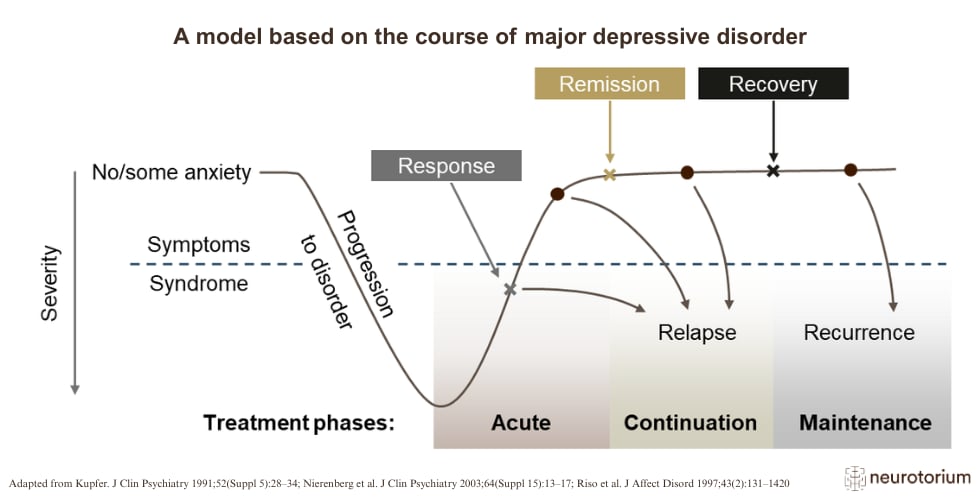
The course of anxiety disorders can be described using a model based on the course of major depressive disorder. Treatment is divided into three phases: acute, continuation, and maintenance.
During treatment, patients may show a response, followed by remission, and eventually recovery. However, episodes can reappear. A relapse is defined as an episode of an anxiety disorder that occurs within six months after either response or remission. A recurrence is an episode that occurs after six months following response or remission.
Related content
Decades of twin and family research have established that anxiety disorders run in families and are meaningfully influenced by genetic factors. Family and twin studies suggest an increased recurrence risk for first degree relatives of patients with anxiety to develop any anxiety disorders.
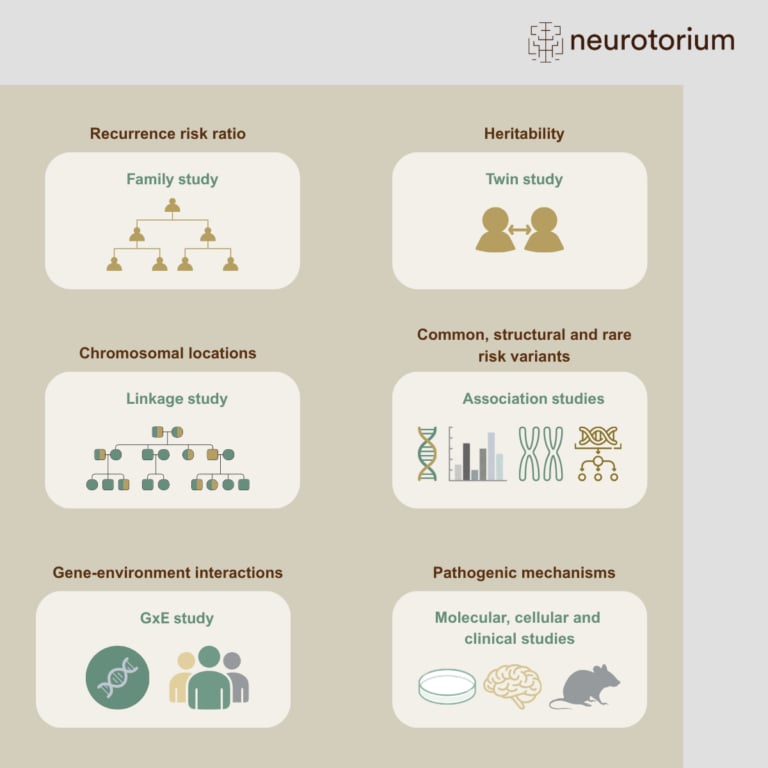
Family and twin studies estimate recurrence risk and heritability, showing that anxiety disorders aggregate in families and have a moderate genetic component.
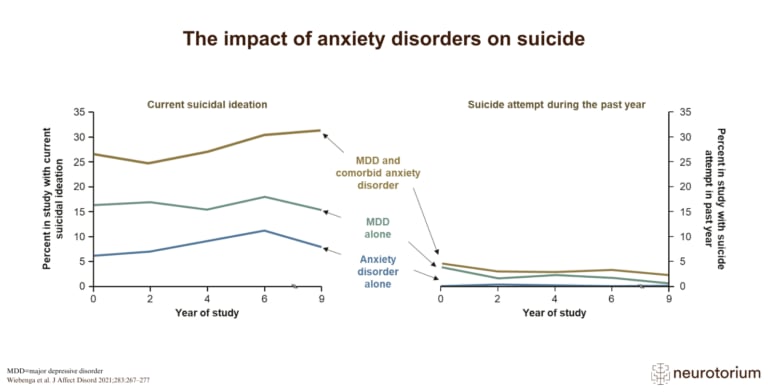
Suicidal ideation is far more common than attempts in people with anxiety or depression, especially with comorbid disorders and severe depression.