

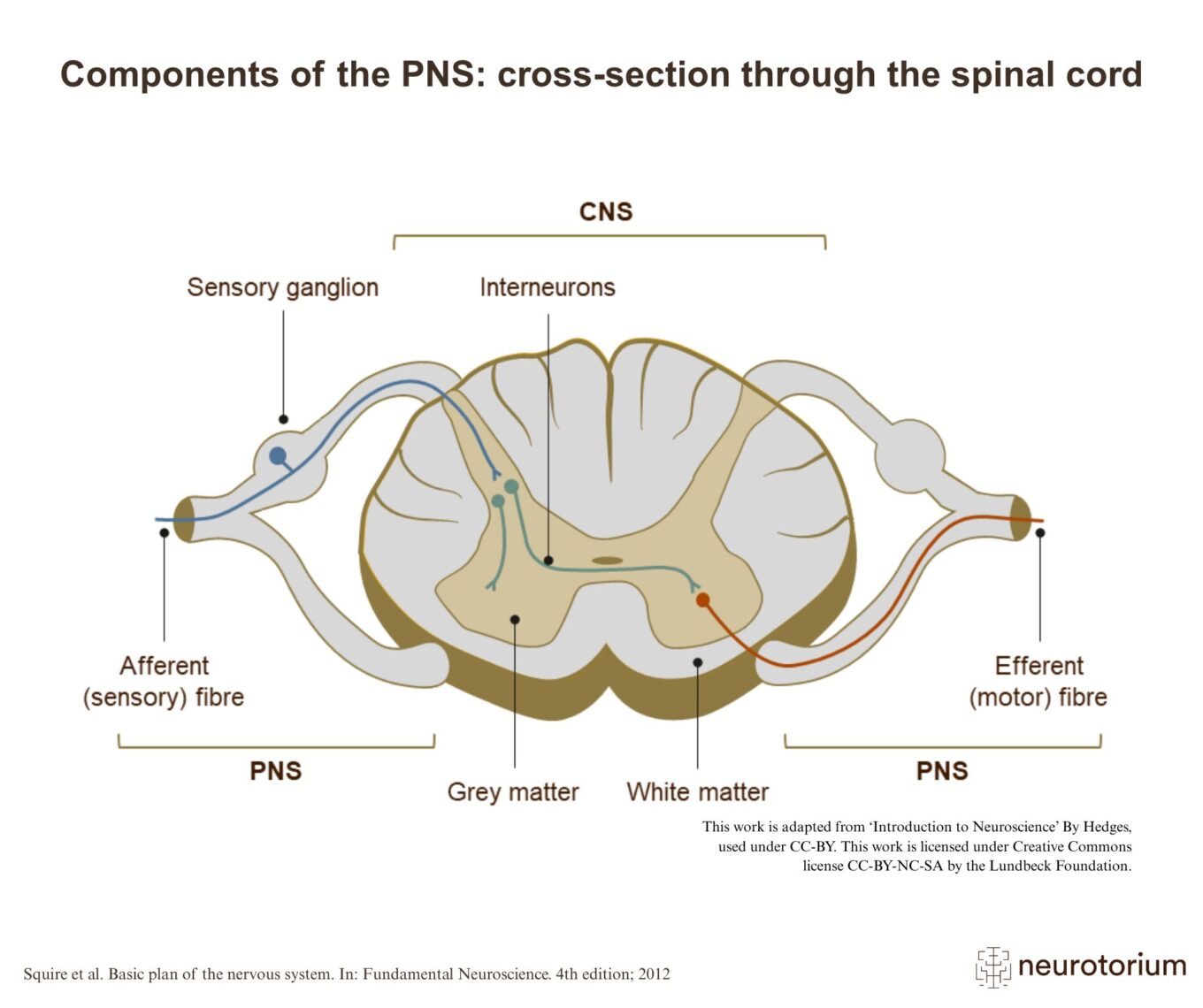
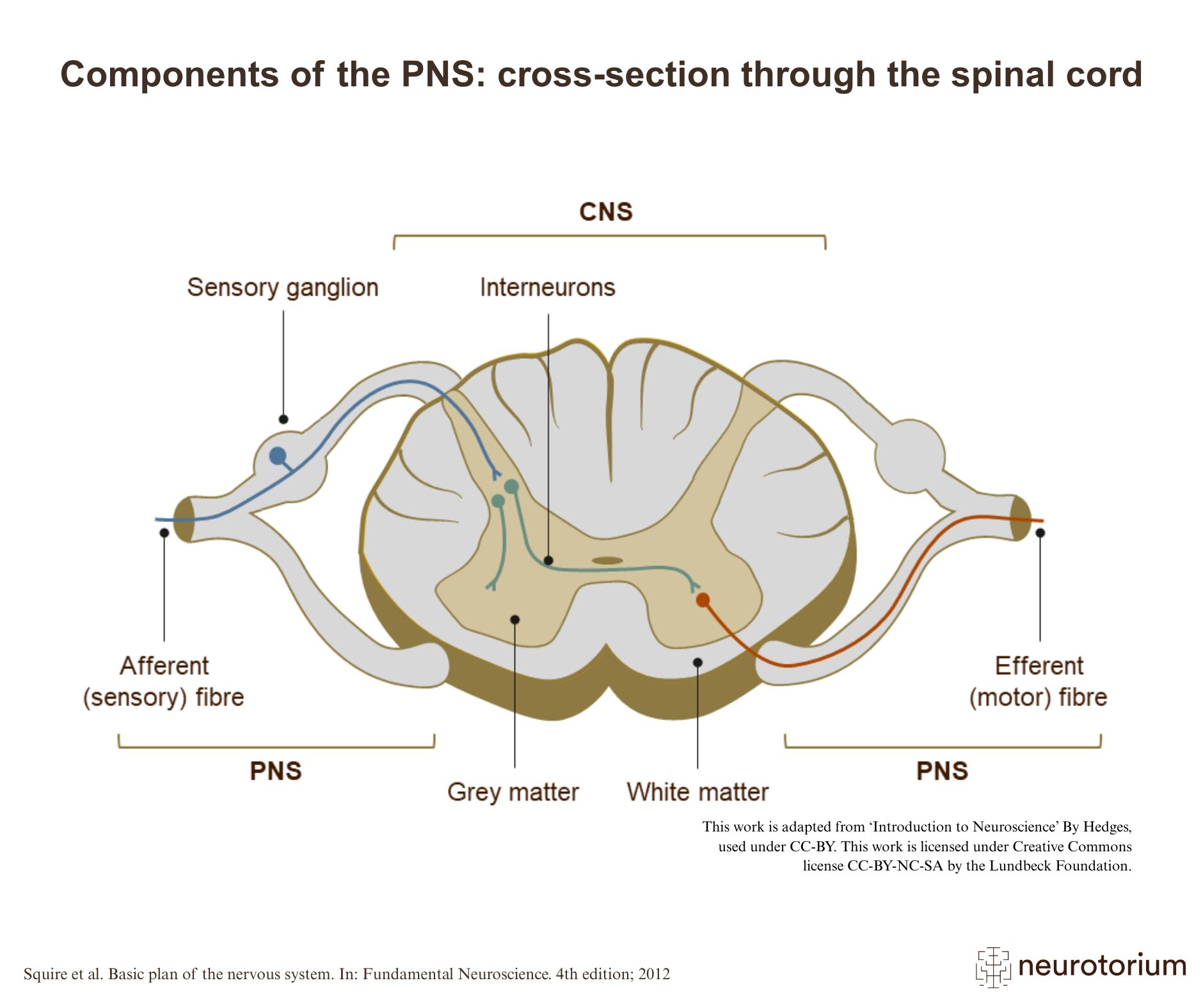
The cell bodies of efferent pathways (motor and autonomic) lie in the spinal cord of the central nervous system (CNS) and peripheral nerves contain axons from these neuronal cell bodies as well as those situated in peripheral ganglia.1,2 The central/peripheral distinction is therefore to some extent an anatomical convenience that ignores this aspect of circuit organisation.1
Related content
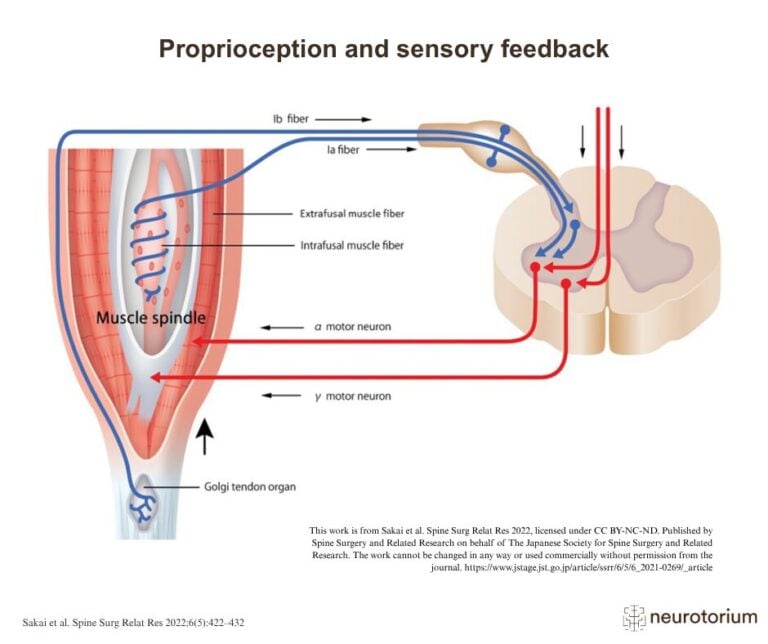
Controlled movement relies on sensory feedback, particularly proprioception (the sense of body position in space and movement).
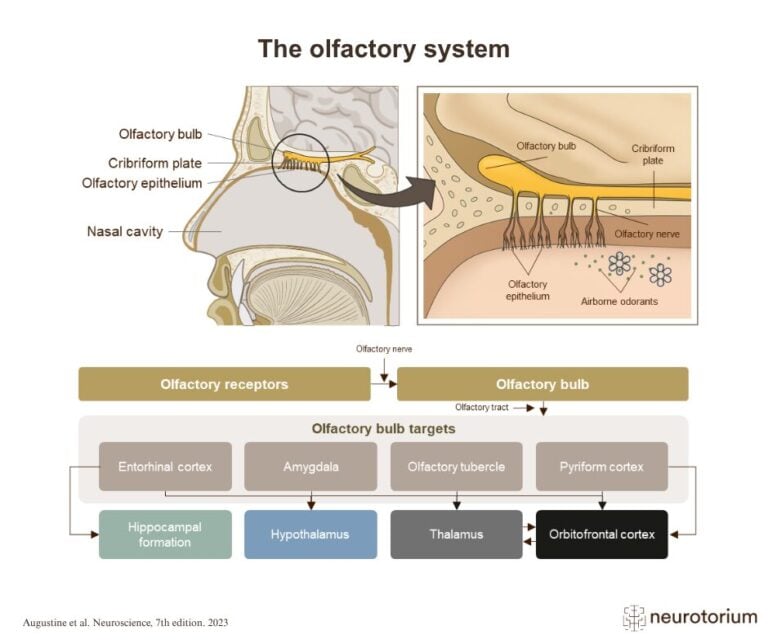
The olfactory system detects airborne odor molecules in the nasal cavity and transmits this information to the olfactory bulb. From there, signals are relayed to several brain regions involved in smell perception, memory, emotion, and behaviour.
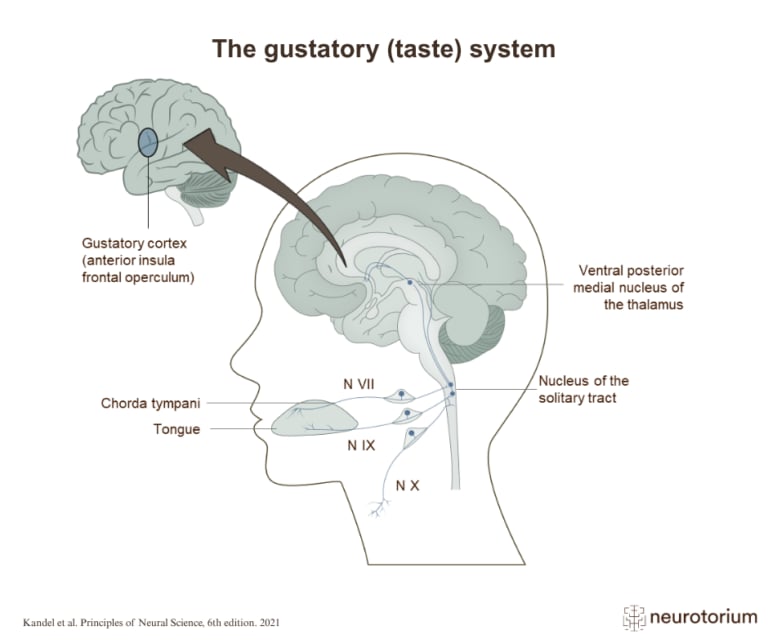
The gustatory system detects taste stimuli on the tongue and relays this information through brainstem and thalamic pathways to the gustatory cortex.