

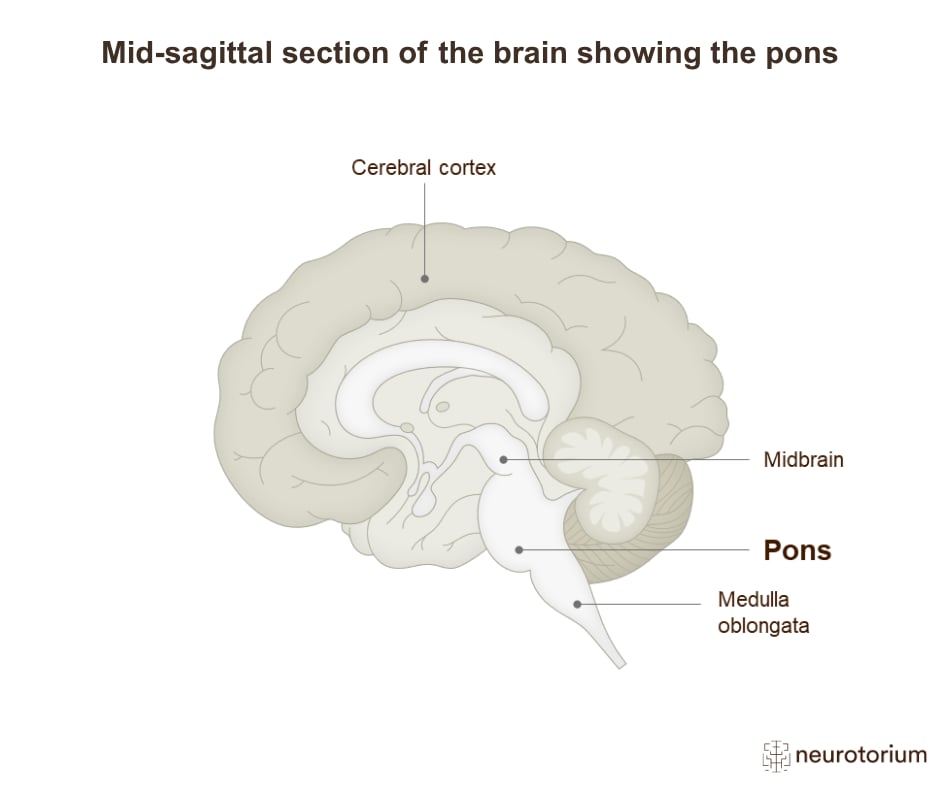
The pons is situated in the brainstem, directly above the medulla oblongata and below the midbrain1,2. The pons contains both grey and white matter, the latter of which includes ascending and descending nerve tracts1. One of the primary functions of the pons is to serve as a relay station for messages between various parts of the brain, particularly between the cerebrum and cerebellum1.
Damage to the pons can result in significant motor and sensory deficits, including locked-in syndrome.3 Because the pons regulates vital functions such as breathing and sleep, damage can lead to respiratory problems, loss of consciousness, coordination issues, or death3-5
Related content
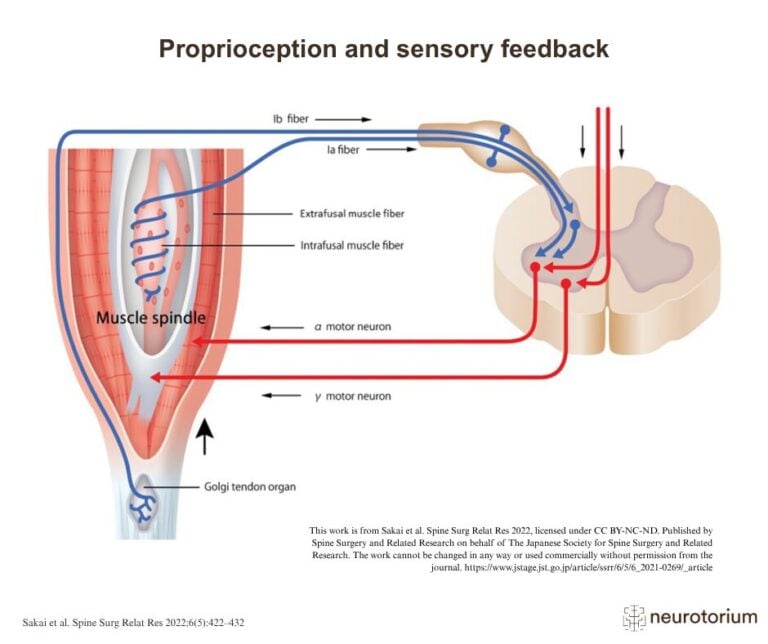
Controlled movement relies on sensory feedback, particularly proprioception (the sense of body position in space and movement).
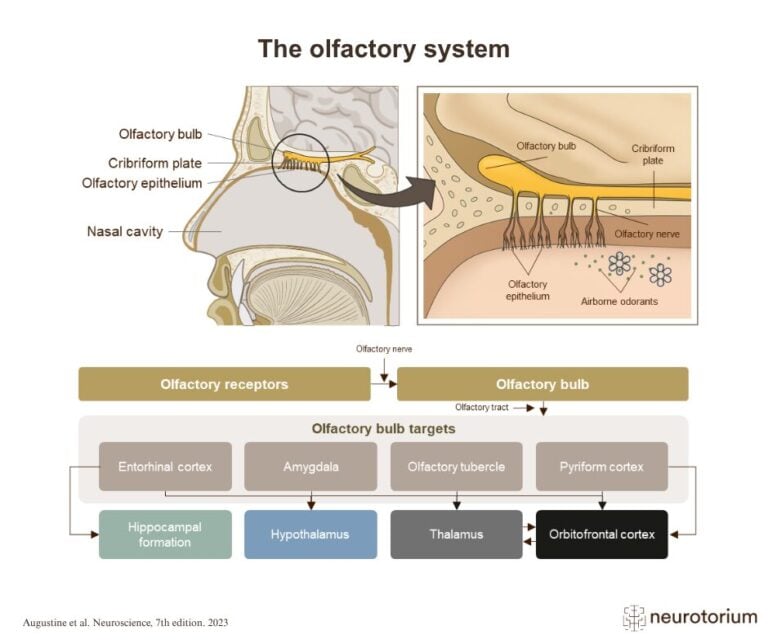
The olfactory system detects airborne odor molecules in the nasal cavity and transmits this information to the olfactory bulb. From there, signals are relayed to several brain regions involved in smell perception, memory, emotion, and behaviour.
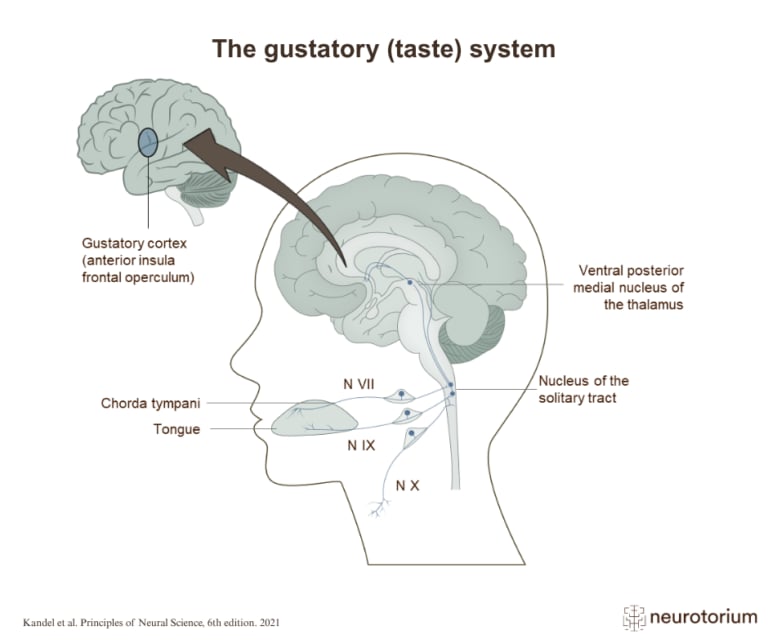
The gustatory system detects taste stimuli on the tongue and relays this information through brainstem and thalamic pathways to the gustatory cortex.