

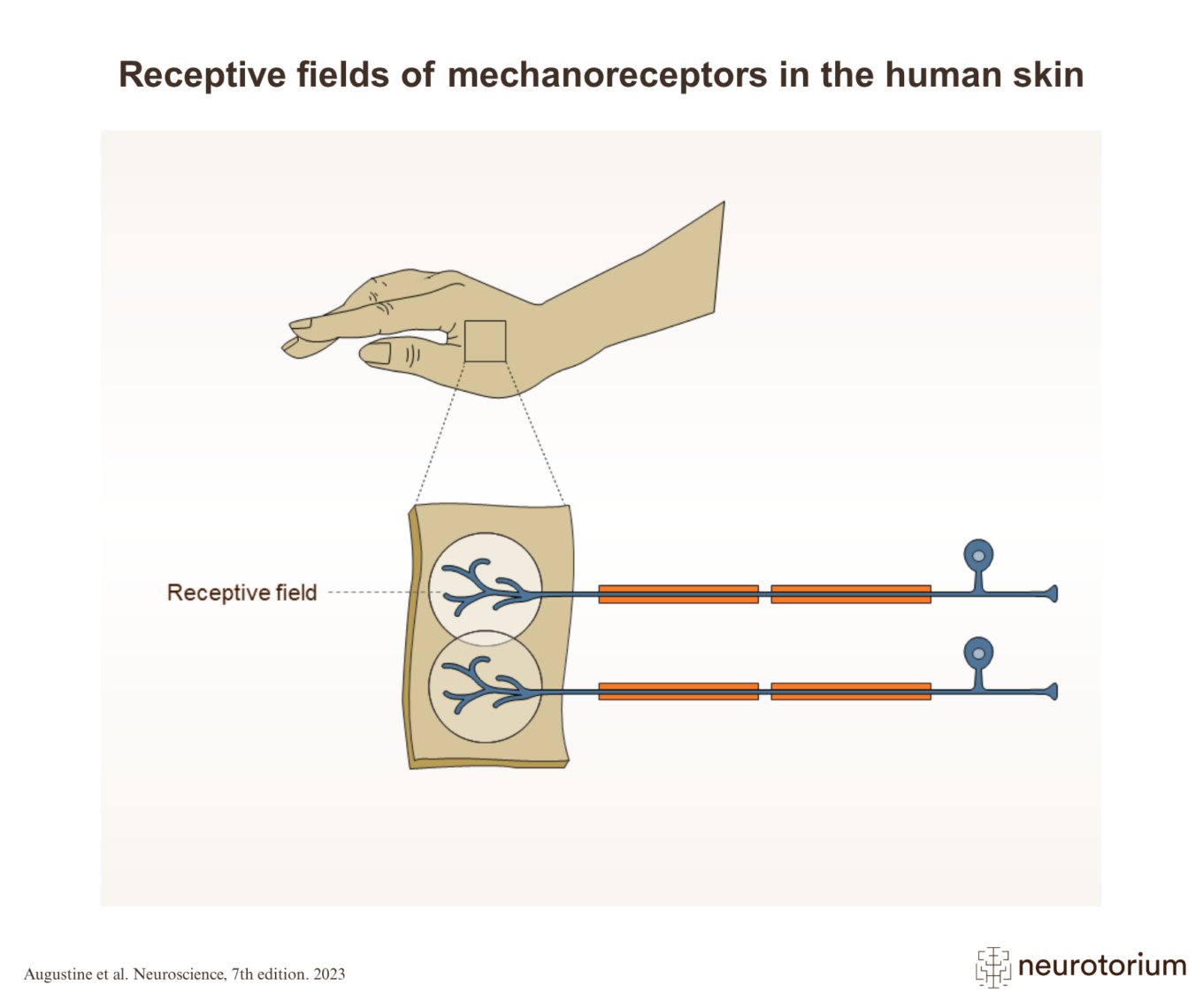
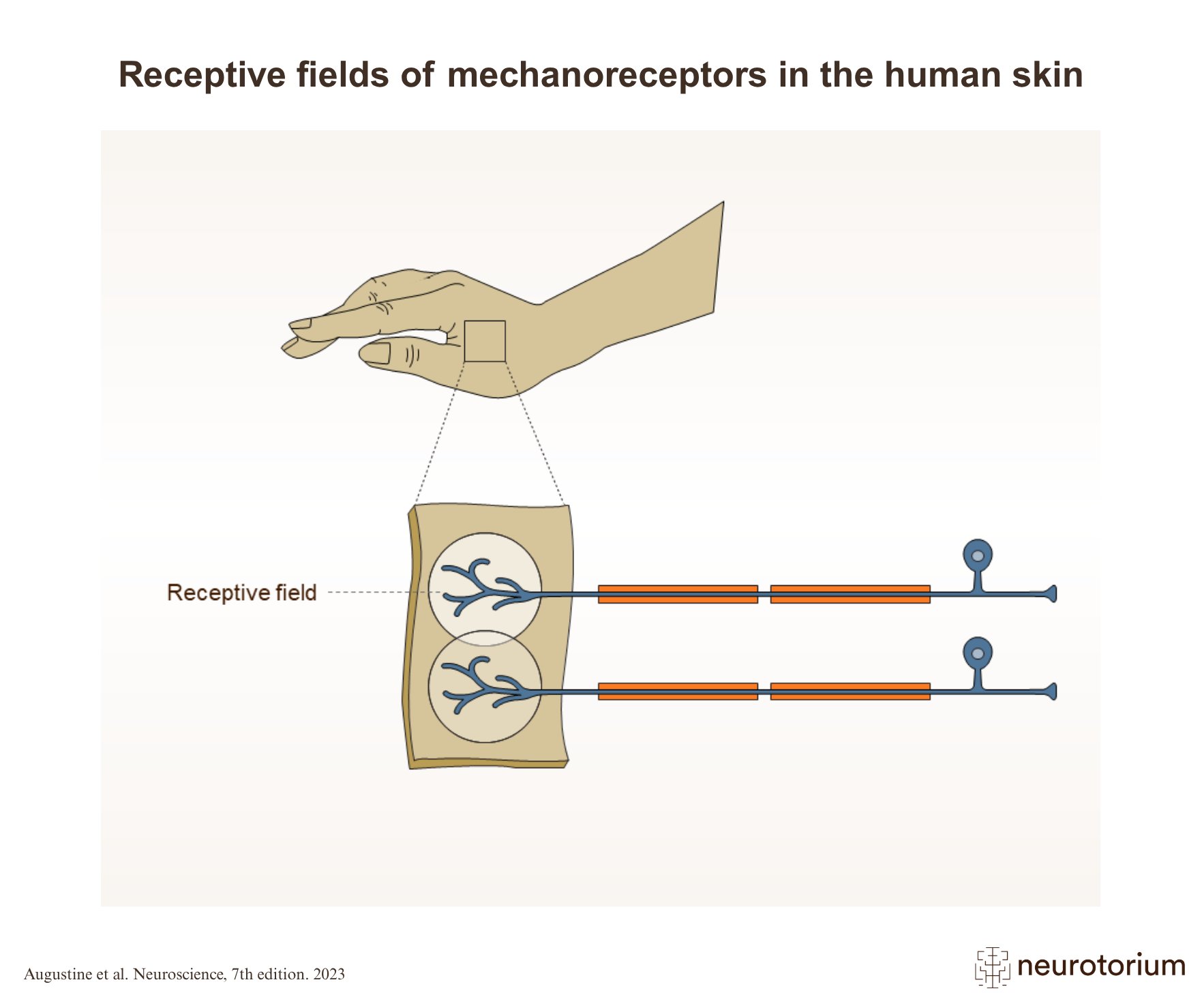
The receptive field of a neuron usually coincides with its perceptive field – the area from which a sensation is perceived to arise.2 The overlapping of receptive fields of individual neurons allows for perception to smoothly move from one sensory neuron to the next.2
The spatial resolution of a sensory system depends on the total number of receptors, and the distribution of their receptive fields over the area covered.2 In body regions where the receptor density is high, neurons receive input from only a few receptors with small receptive fields close together, providing a very detailed sensory perception (e.g., the fovea in the eye for visual perception, or fingertips for tactile perception); conversely, lower receptor density at the edge of the retina or in the skin of the arm provide less detailed sensory perception.2
Related content
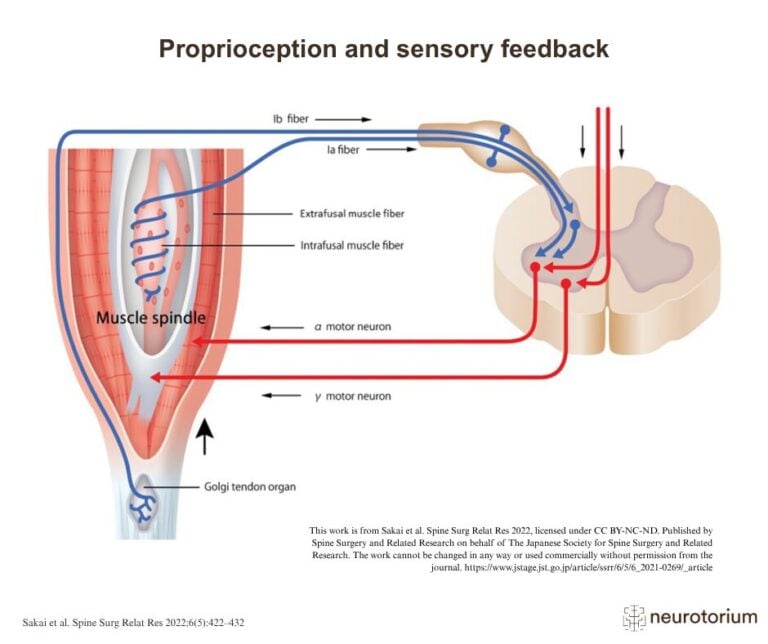
Controlled movement relies on sensory feedback, particularly proprioception (the sense of body position in space and movement).
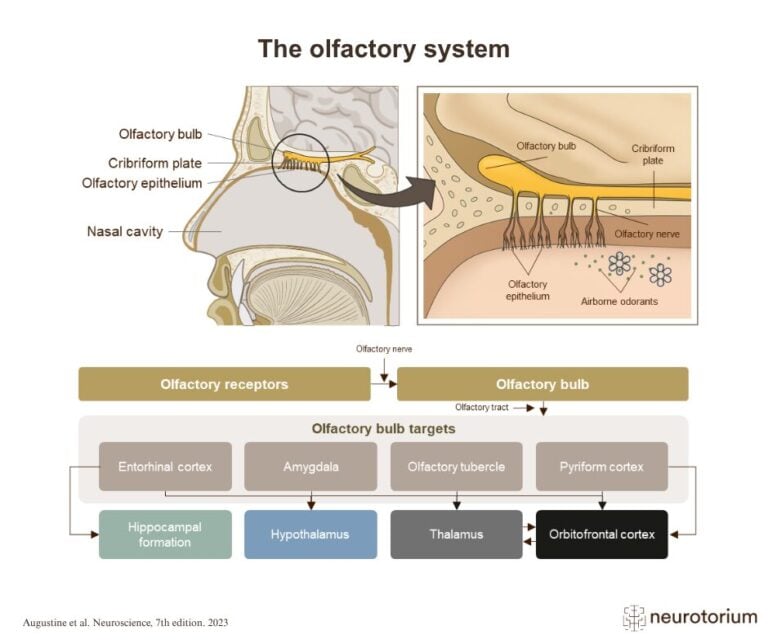
The olfactory system detects airborne odor molecules in the nasal cavity and transmits this information to the olfactory bulb. From there, signals are relayed to several brain regions involved in smell perception, memory, emotion, and behaviour.
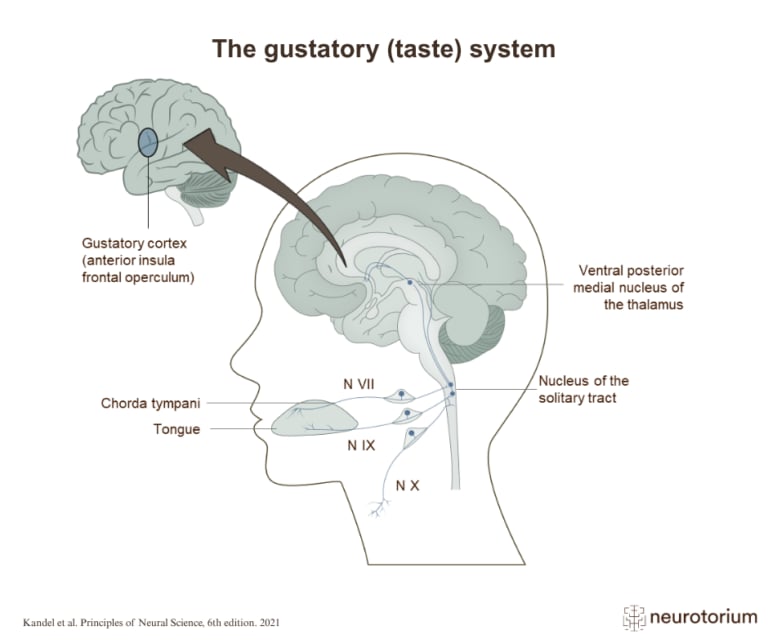
The gustatory system detects taste stimuli on the tongue and relays this information through brainstem and thalamic pathways to the gustatory cortex.