

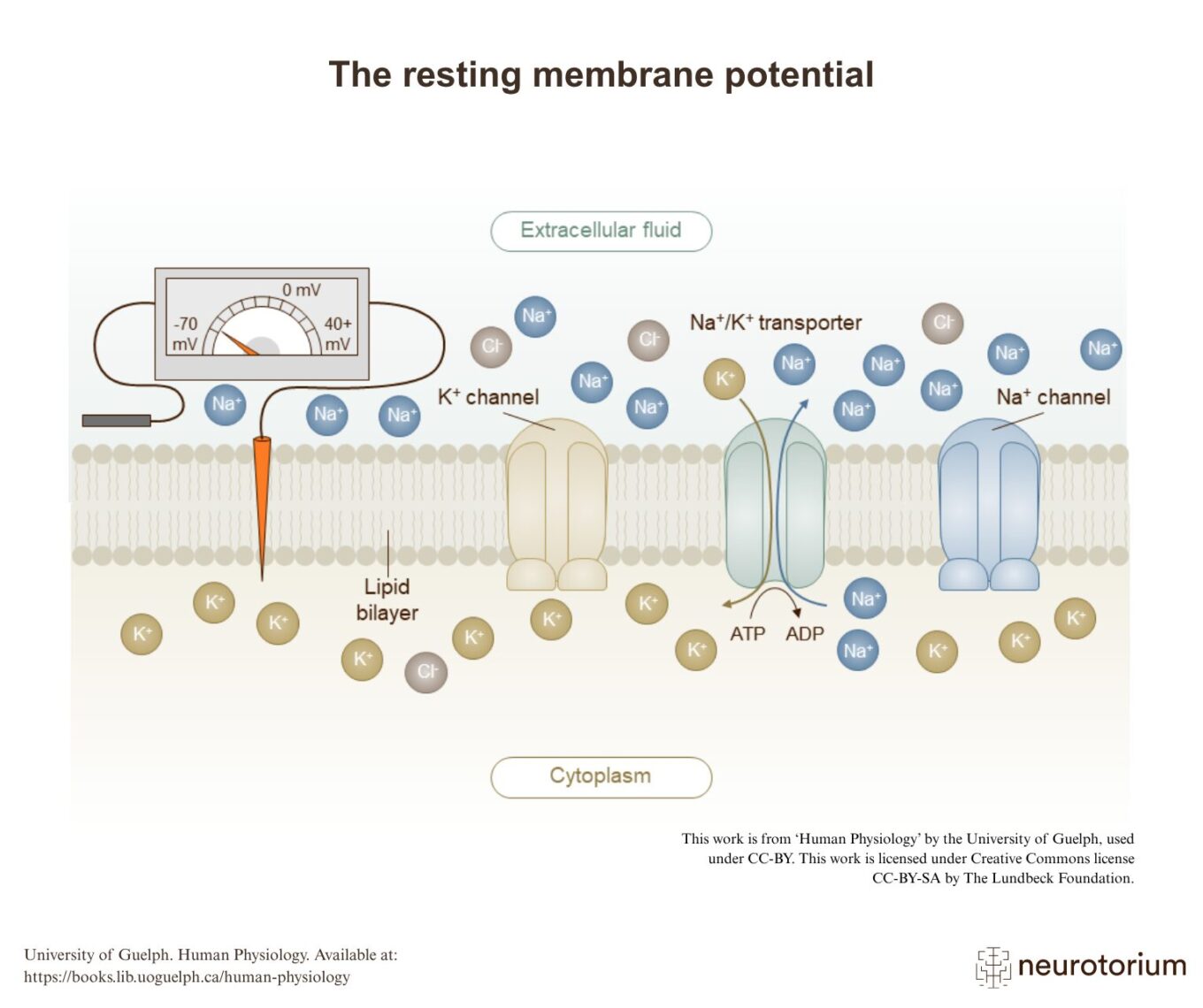
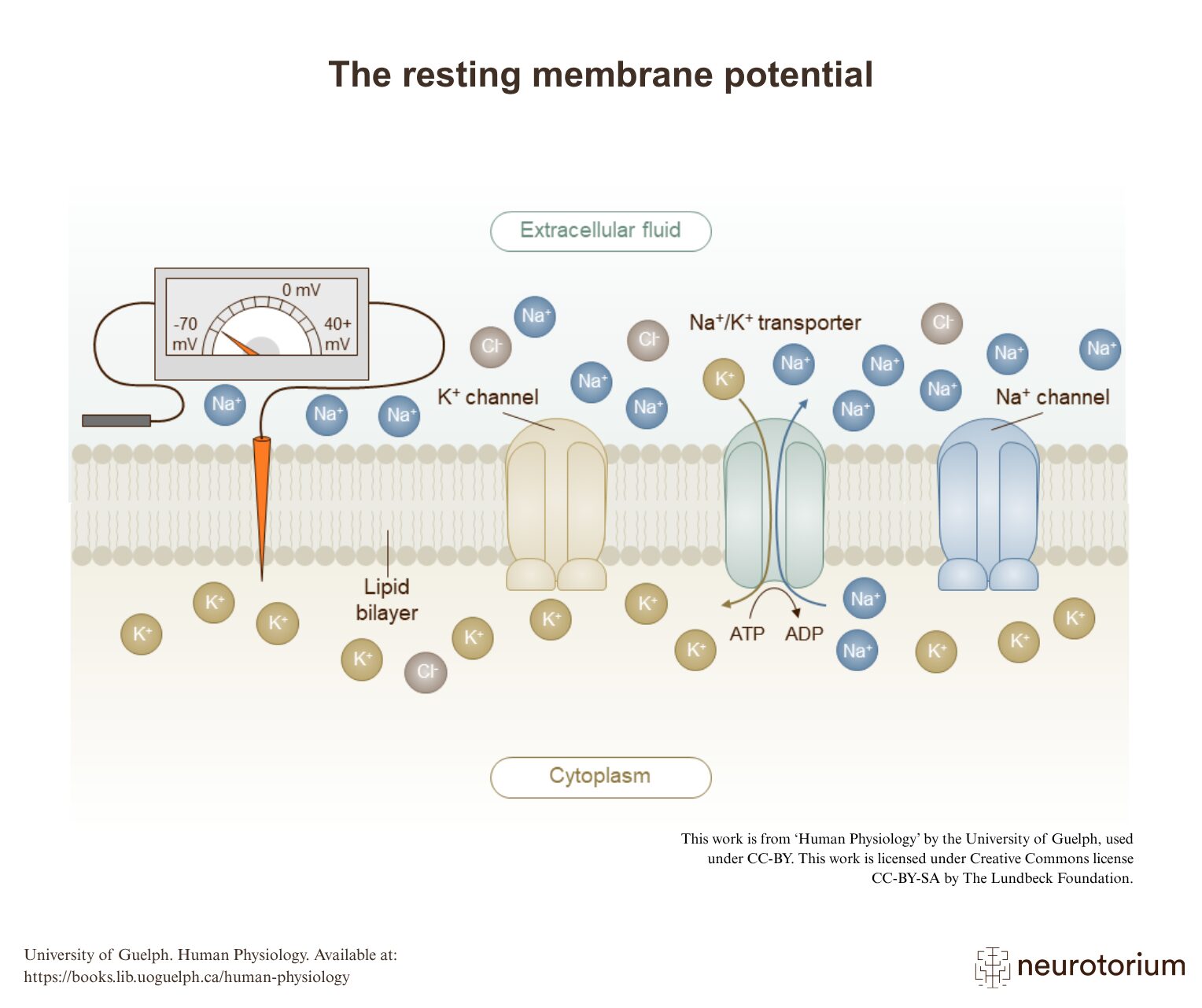
The resting membrane potential is created by an unequal distribution of ions across the neuronal plasma membrane. Ion channels and the sodium-potassium pump maintain higher potassium levels inside the neuron and higher sodium and chloride levels outside.1,2 This creates a negative electrical charge inside the cell, typically around -70 mV in mammalian neurons, and forms the basis for neuronal signalling and action potential generation. An understanding of the resting membrane potential and how action potentials are generated is key to understanding how information is transmitted in the nervous system.1-3
Related content
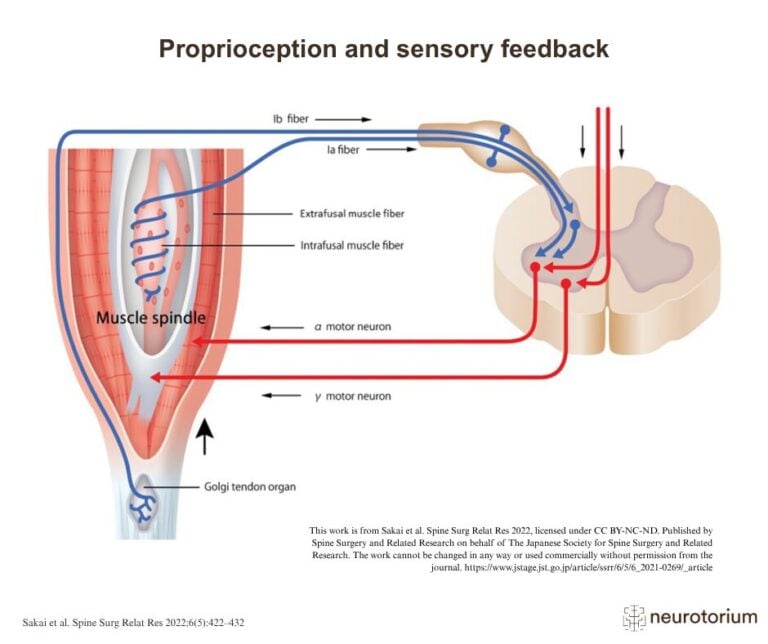
Controlled movement relies on sensory feedback, particularly proprioception (the sense of body position in space and movement).
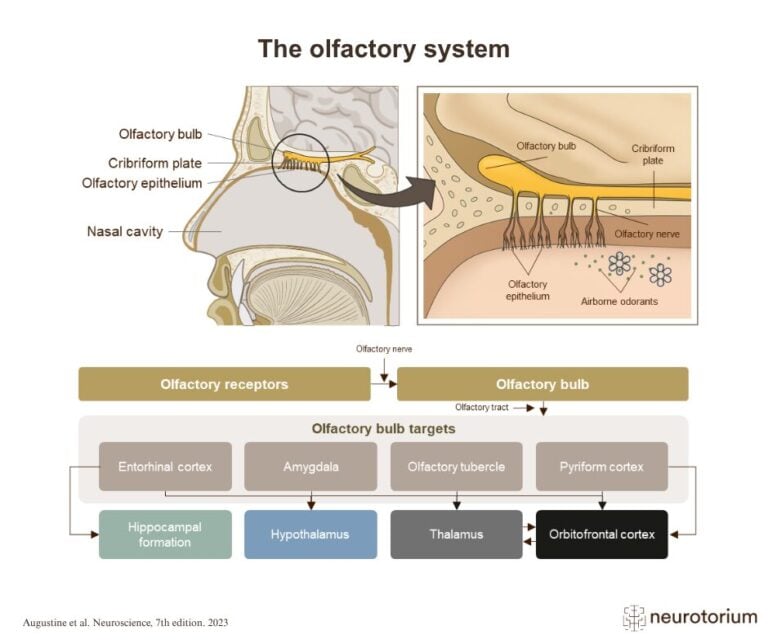
The olfactory system detects airborne odor molecules in the nasal cavity and transmits this information to the olfactory bulb. From there, signals are relayed to several brain regions involved in smell perception, memory, emotion, and behaviour.
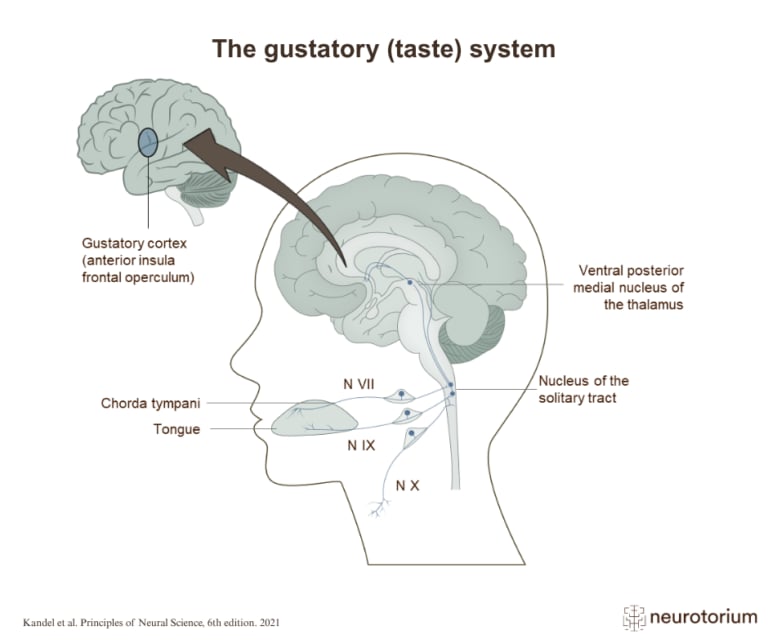
The gustatory system detects taste stimuli on the tongue and relays this information through brainstem and thalamic pathways to the gustatory cortex.