

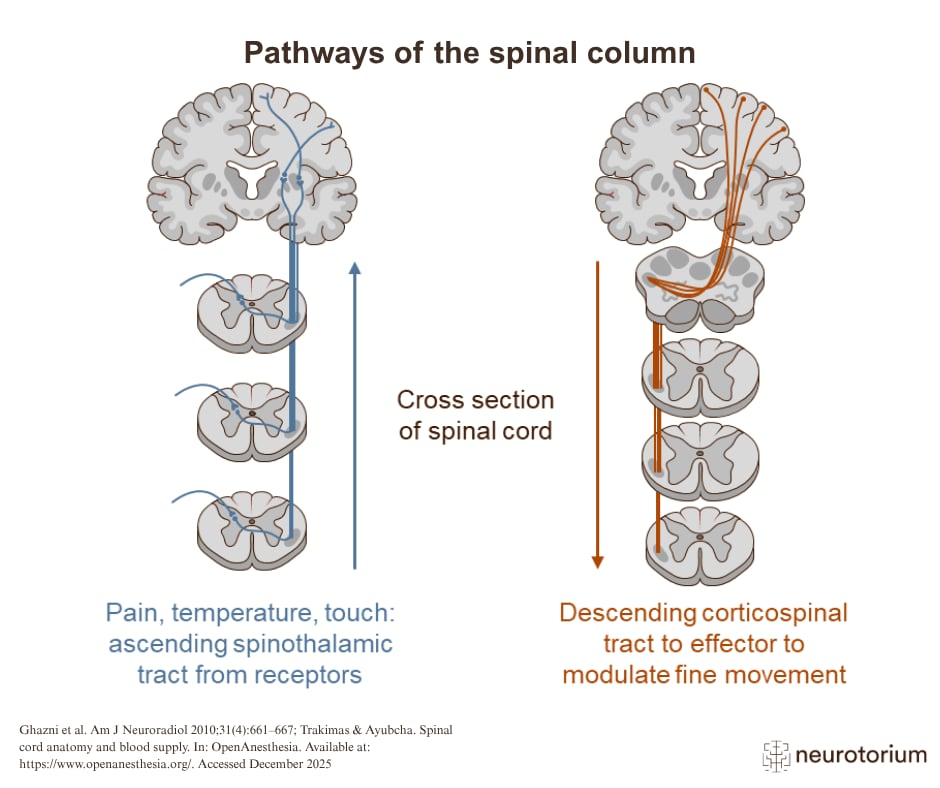
Ascending tracts
The posterior (dorsal) spinocerebellar and anterior (ventral) spinocerebellar tracts are located on the lateral surface of the spinal cord and convey proprioceptive information to the cerebellum.5 The anterolateral system (ALS) conveys nociceptive, thermal and touch information to higher levels of the CNS1,2
Descending tracts
The anterior funiculus contains reticulospinal and vestibulospinal fibres, the anterior corticospinal tract and the medial longitudinal fasciculus.6,7. Descending pathways control the activity of motor neurons to control voluntary movement, posture and balance1
Related content
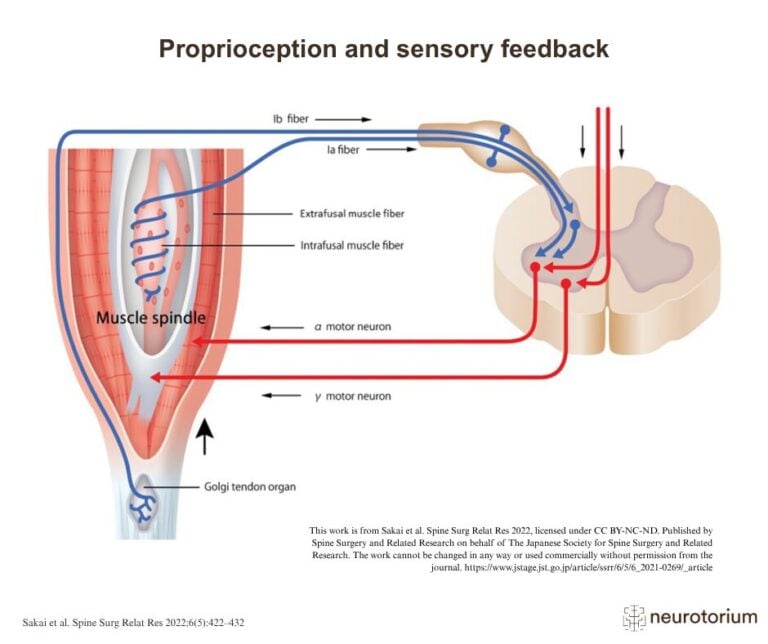
Controlled movement relies on sensory feedback, particularly proprioception (the sense of body position in space and movement).
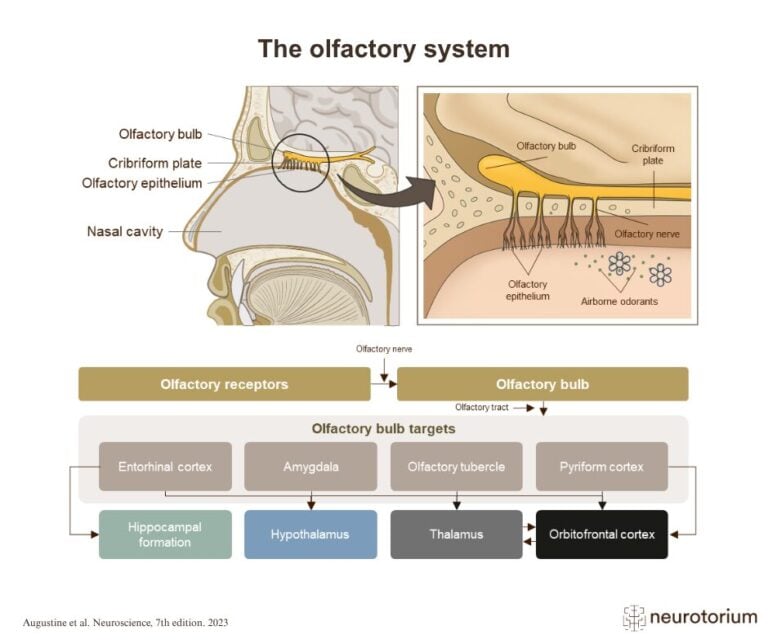
The olfactory system detects airborne odor molecules in the nasal cavity and transmits this information to the olfactory bulb. From there, signals are relayed to several brain regions involved in smell perception, memory, emotion, and behaviour.
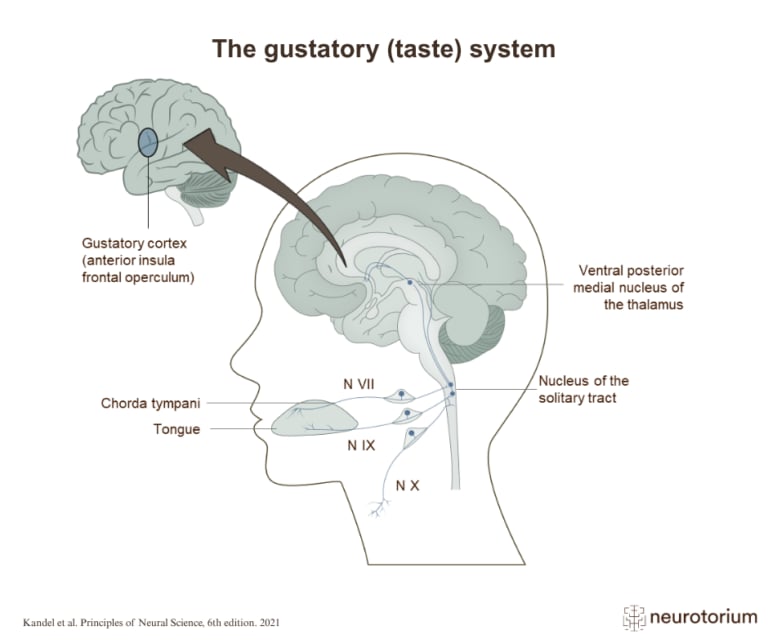
The gustatory system detects taste stimuli on the tongue and relays this information through brainstem and thalamic pathways to the gustatory cortex.