

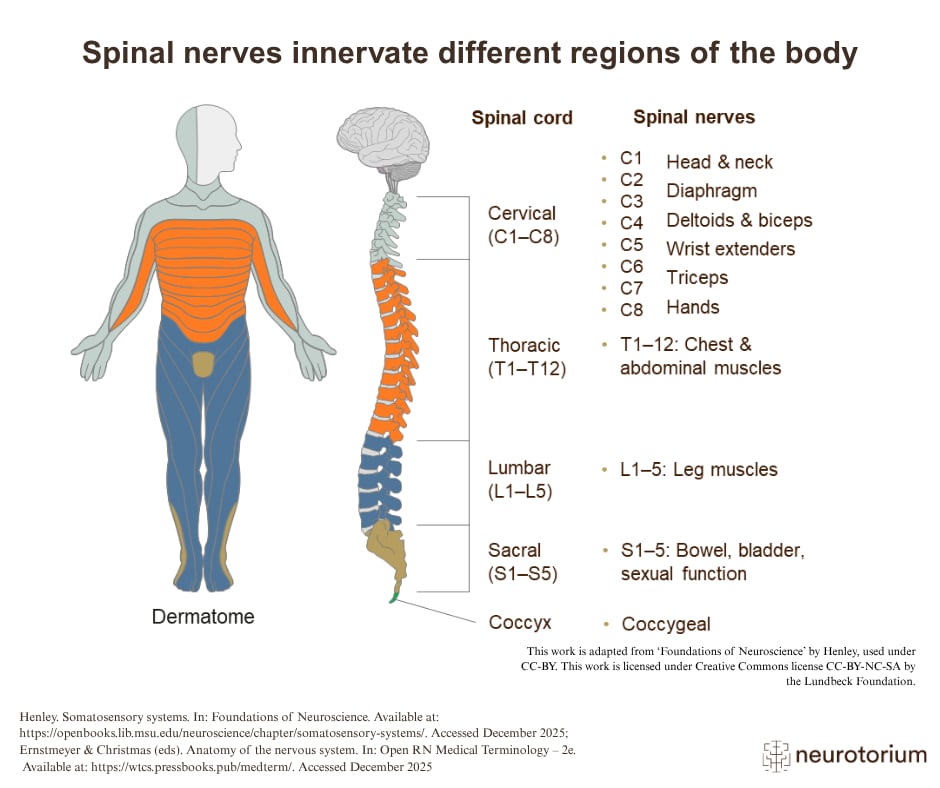
A key feature of spinal cord structure is that it consists of a continuous series of repeating segments.1 Each of these segments performs the same basic types of sensory processing, and contain the same basic circuitry, but they differ in the region of the trunk and limbs that they innervate.1 Each segment gives rise to a pair of spinal nerves that receive and send signals to different regions of the body1
There are 31 segments of the spinal cord grouped into regions:1,3,4
- 8 cervical (C1–C8): head, neck, arms, hands, and diaphragm
- 12 thoracic (T1–T12): chest and upper abdominal muscles
- 5 lumbar (L1–L5): lower back, hips, thighs, and knees
- 5 sacral (S1–S5): pelvic organs, legs and feet
- Below the sacral area there is the coccyx that is innervated by the single coccygeal nerve
Related content
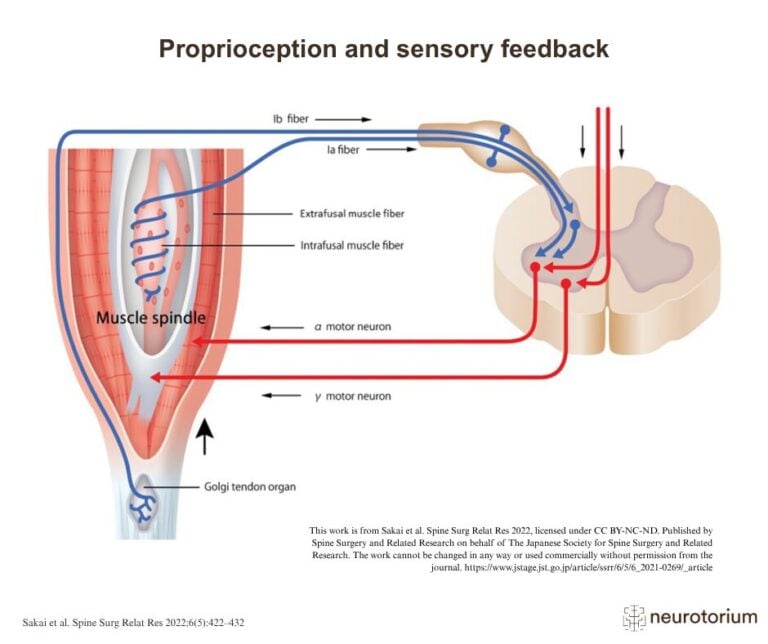
Controlled movement relies on sensory feedback, particularly proprioception (the sense of body position in space and movement).
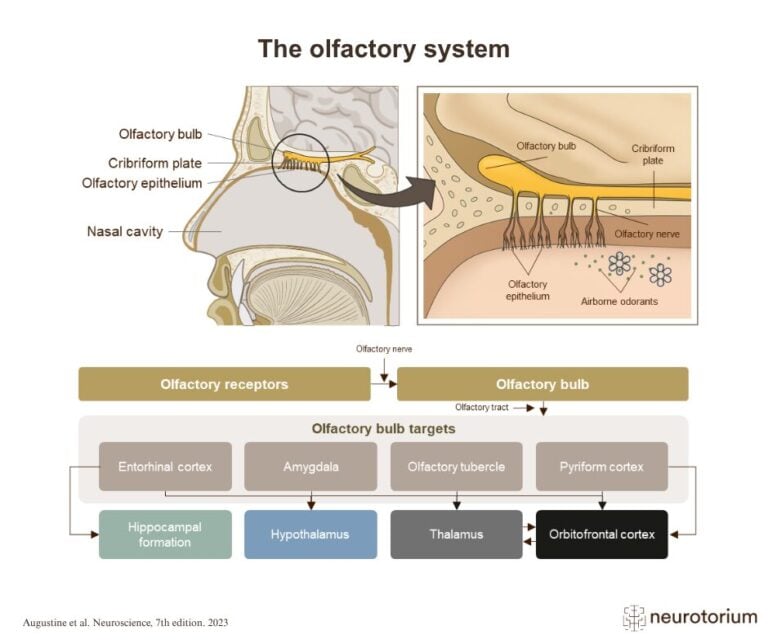
The olfactory system detects airborne odor molecules in the nasal cavity and transmits this information to the olfactory bulb. From there, signals are relayed to several brain regions involved in smell perception, memory, emotion, and behaviour.
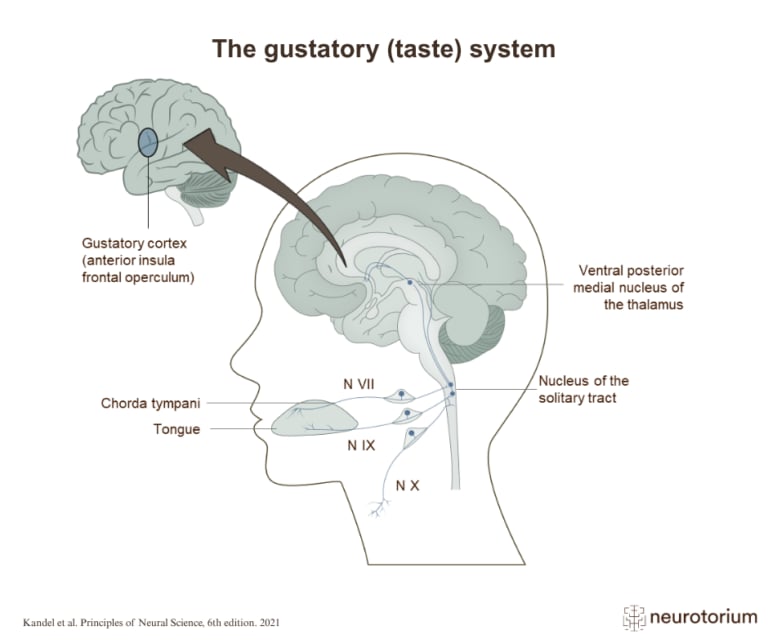
The gustatory system detects taste stimuli on the tongue and relays this information through brainstem and thalamic pathways to the gustatory cortex.