

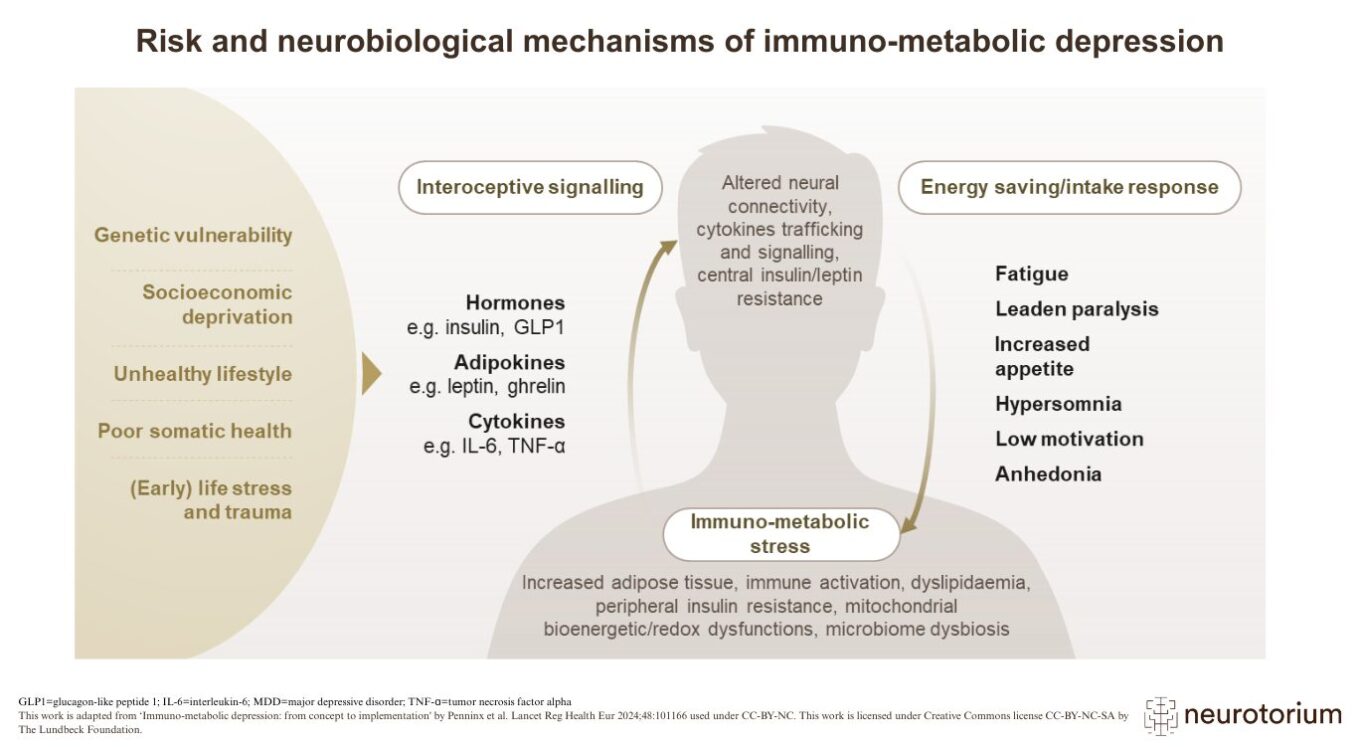
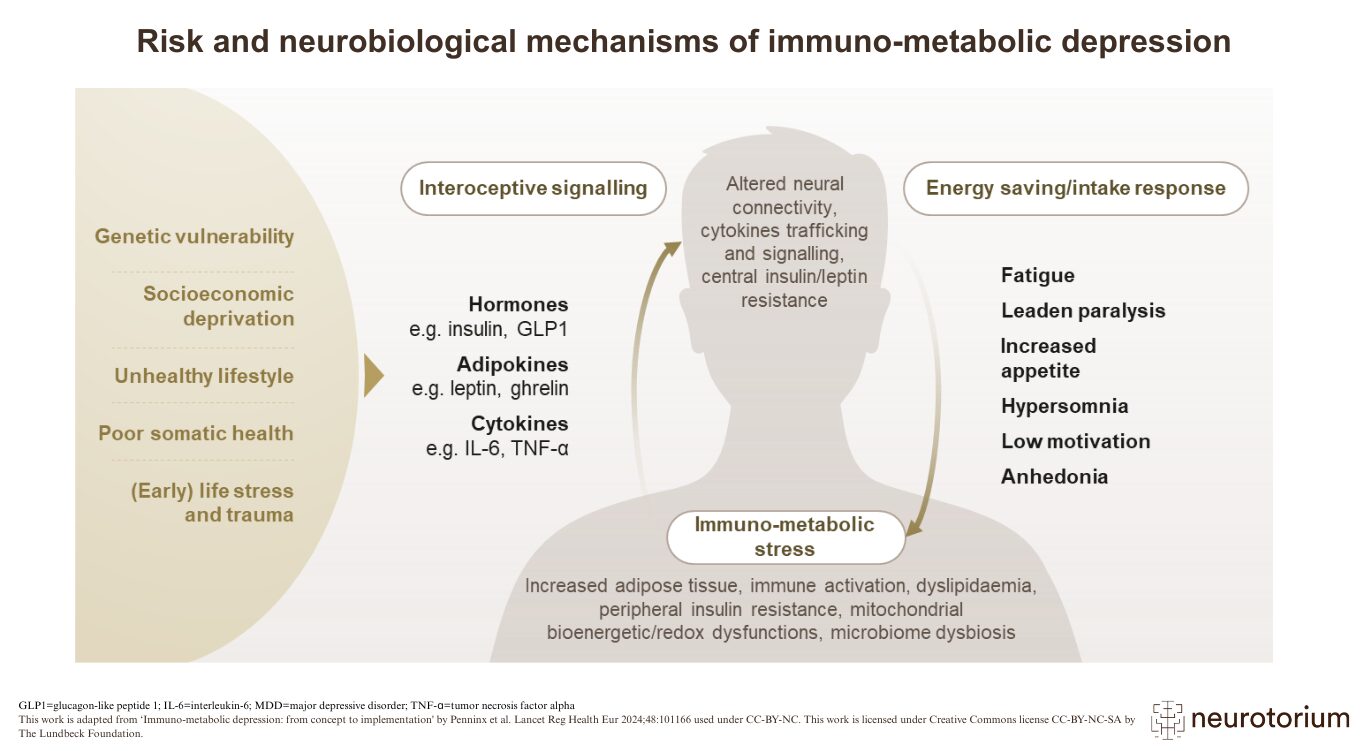
Many elements of immune system activation are linked with depression – indeed, immuno-metabolic dysregulation is seen in 20–30% of people with MDD. People with immuno-metabolic dysregulation in MDD are at risk of comorbidities and appear to respond less well to traditional antidepressants.1
Interoceptive signals provide the brain with information on the balance between energy supply and demand, and the brain responds by triggering appropriate physiological and behavioural reactions intended to save energy or increase energy intake.1 Various factors, including genetic predisposition or environmental challenges (e.g., excessive nutritional intake or stress/trauma) can disrupt this internal homeostasis.1 For example, increased levels of inflammatory markers may result in central insulin or leptin resistance, with the brain misreading interoceptive signals regarding body energy status, and triggering excessive energy-saving or calorie intake-increasing responses, such as increased appetite coupled with reduced activity.1 These may further exacerbate the dysregulation (e.g., further increase in inflammatory signalling), creating a self-sustaining detrimental cycle.1
Related content

Major Depressive Disorder (MDD) is a highly prevalent psychiatric condition with significant individual and socio-economic burden. Despite the broad availability of numerous effective therapeutic interventions, up to 30% of patients fail to achieve adequate symptom relief and are classified as having treatment-resistant depression (TRD). TRD represents a significant clinical challenge, affecting approximately 30% of individuals with MDD who fail to respond to at least two adequate antidepressant trials.
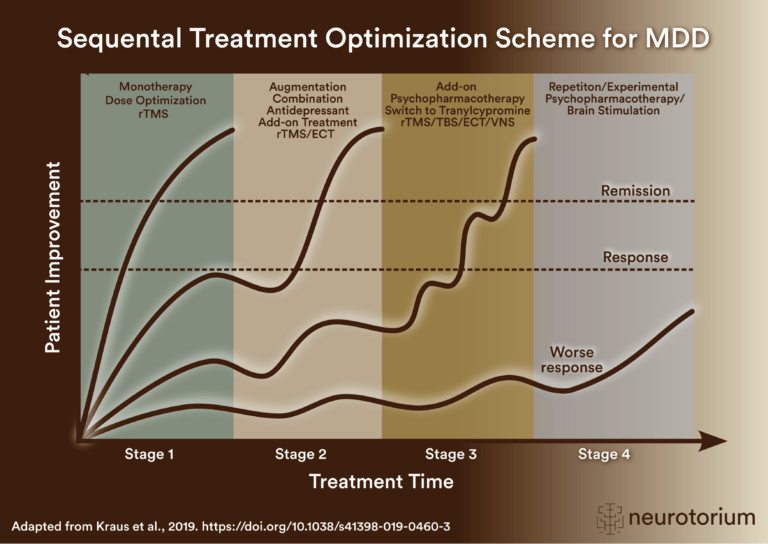
Sequential treatment optimization scheme for major depressive disorder generated according to international evidence.
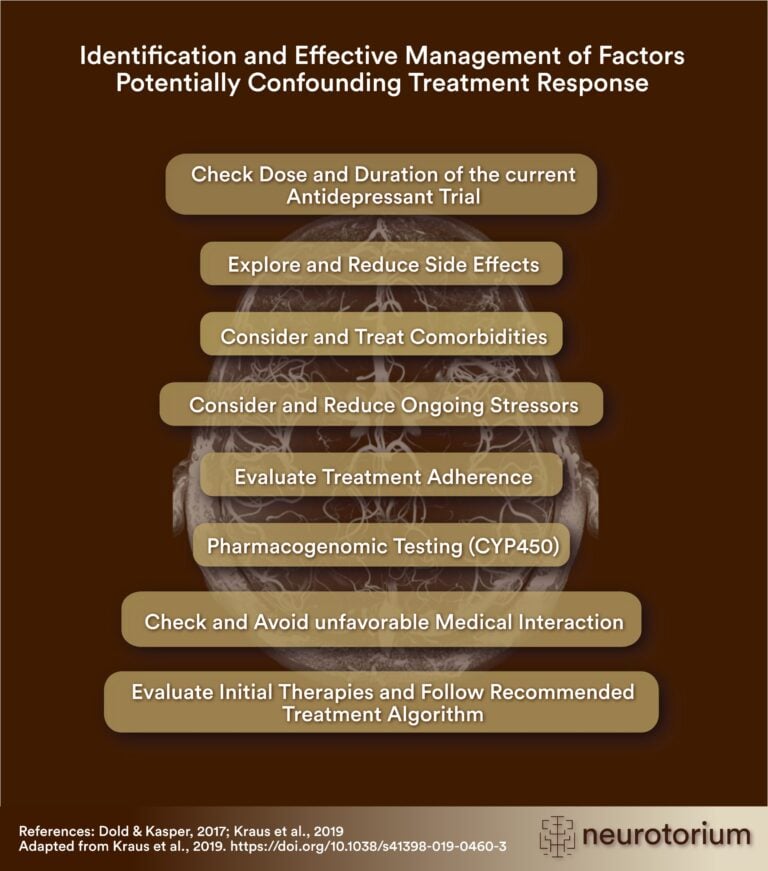
Key steps for managing factors that may confound antidepressant treatment response, including dose, side effects, comorbidities, stressors, adherence, pharmacogenomics, interactions, and treatment algorithms.