

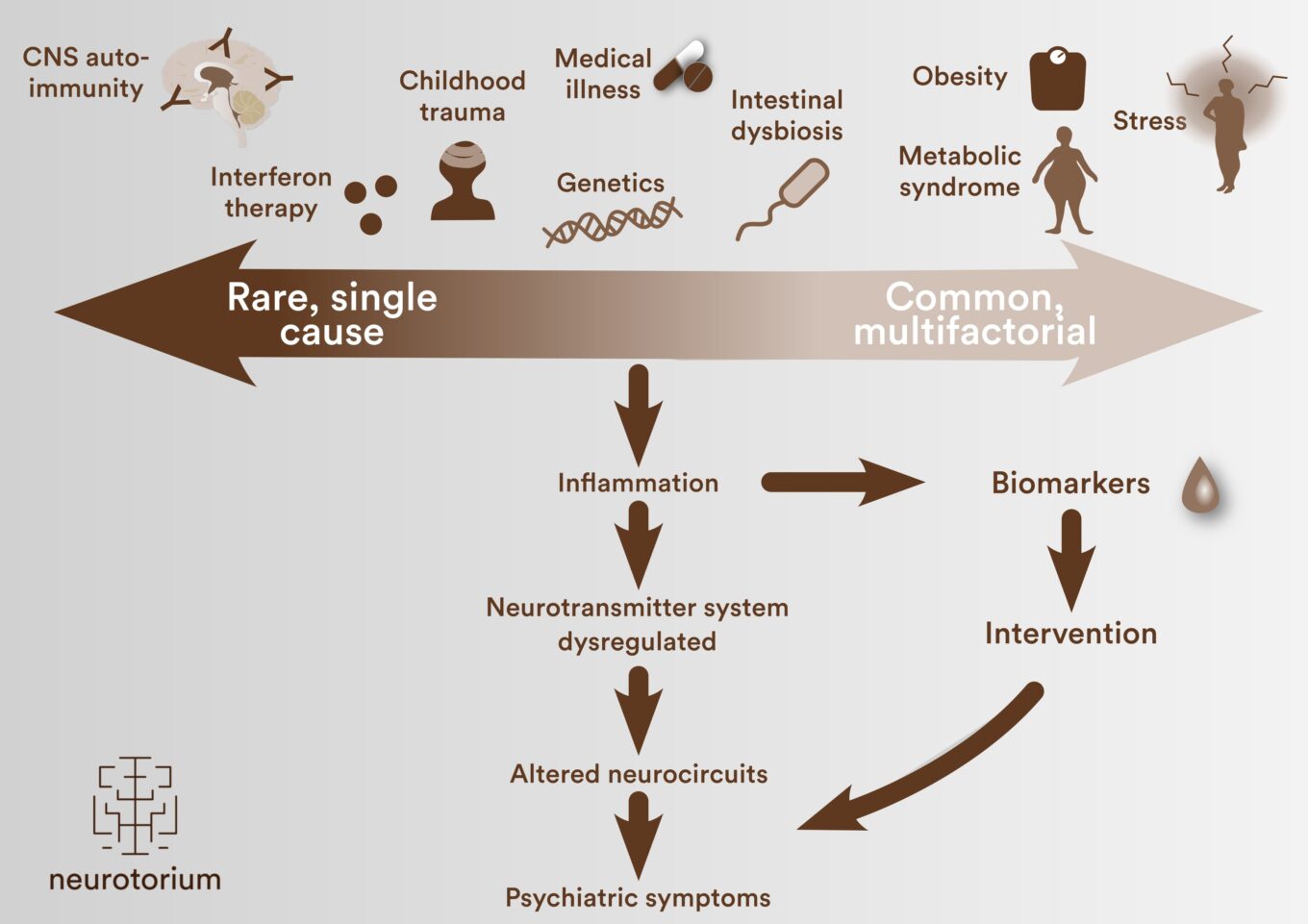
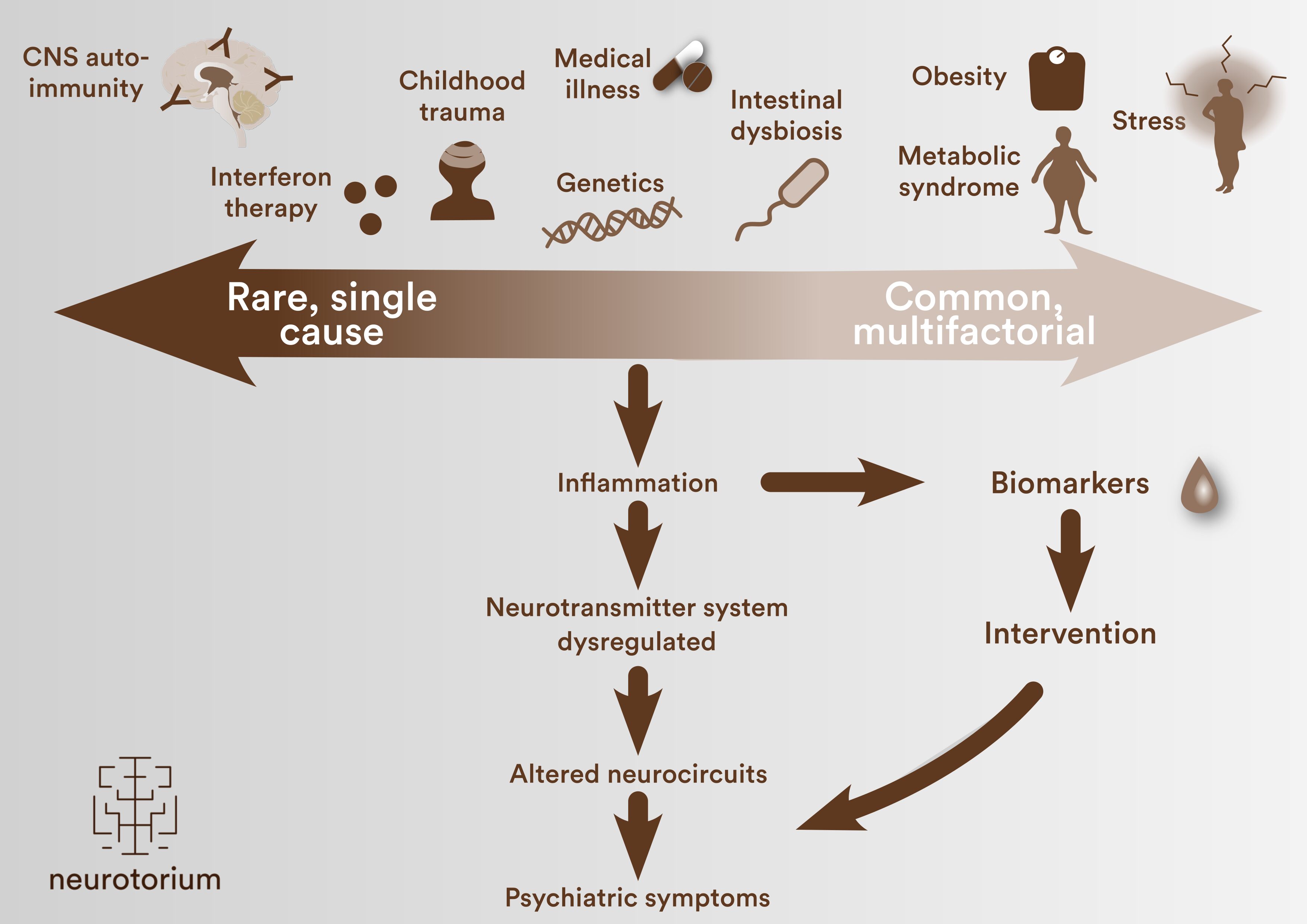
On the continuum of immune-mediated mechanisms contributing to psychiatric symptoms, the relative contribution of immune activation differs across patient groups. At one end (left), rare single-cause processes such as interferon therapy-induced neuropsychiatric effects (e.g. in hepatitis C treatment) act as direct triggers. At the other end (right), common and often multifactorial factors, including obesity, metabolic syndrome, stress and genetic vulnerability, indirectly promote immune dysregulation. Regardless of the initiating cause, inflammation can lead to neurotransmitter system dysregulation and altered neurocircuits, resulting in psychiatric symptoms and depression. Biomarker assessments can help identify these immune-mediated processes and inform targeted intervention strategies.
Related content

Major Depressive Disorder (MDD) is a highly prevalent psychiatric condition with significant individual and socio-economic burden. Despite the broad availability of numerous effective therapeutic interventions, up to 30% of patients fail to achieve adequate symptom relief and are classified as having treatment-resistant depression (TRD). TRD represents a significant clinical challenge, affecting approximately 30% of individuals with MDD who fail to respond to at least two adequate antidepressant trials.
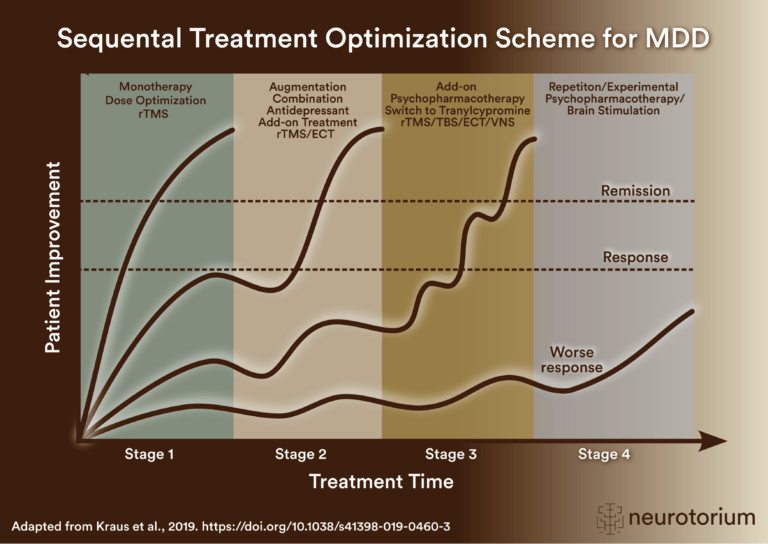
Sequential treatment optimization scheme for major depressive disorder generated according to international evidence.
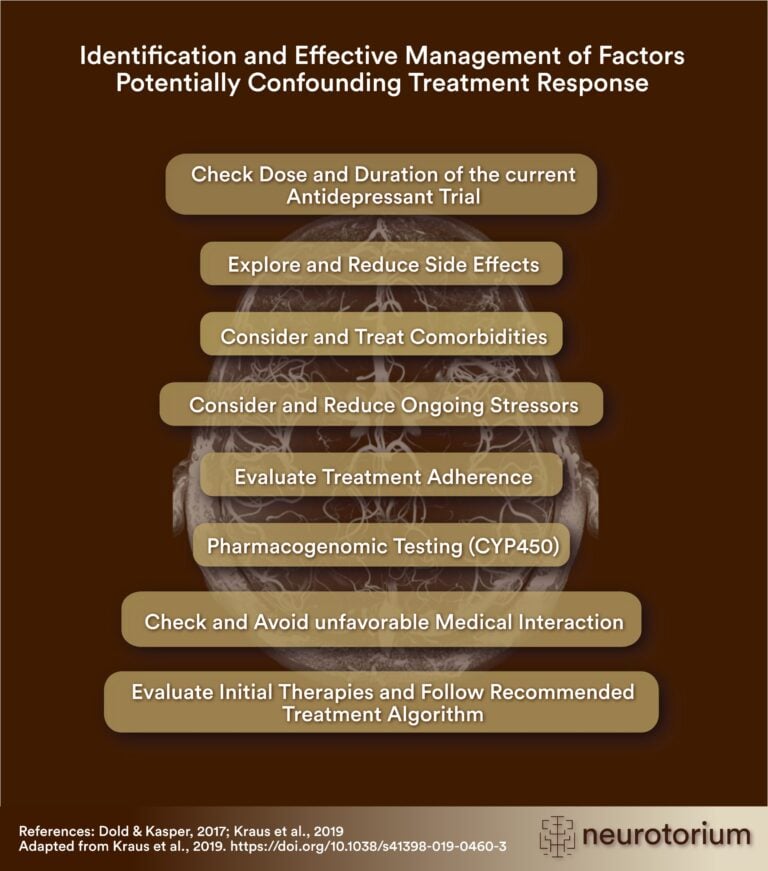
Key steps for managing factors that may confound antidepressant treatment response, including dose, side effects, comorbidities, stressors, adherence, pharmacogenomics, interactions, and treatment algorithms.