

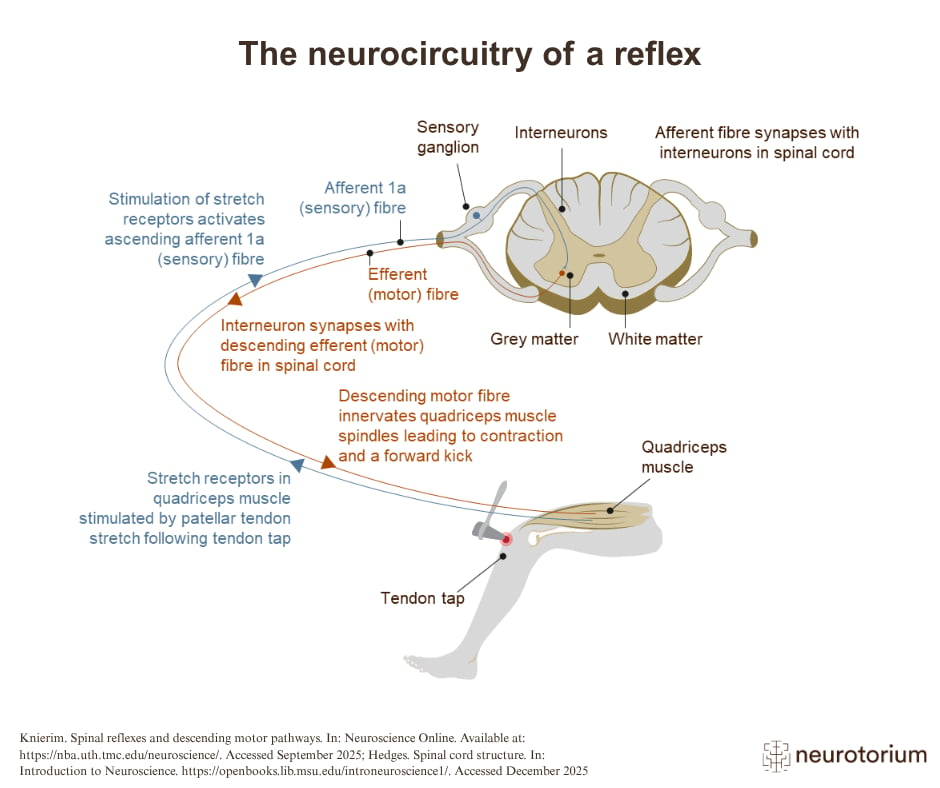
Spinal reflex circuits generate rapid, stereotyped responses; they can operate without cortical initiation (but can be modulated by descending pathways)2-5. Sensory fibres enter the spinal cord and influence spinal motor neurons (either directly or indirectly) that then produce rapid involuntary contractions of skeletal muscles5. Reflexes perform a protective function e.g. withdrawal reflex – pulling away from a painful stimulus.5 The stretch reflex (knee jerk) can be used as a diagnostic tool to assess the integrity of the spinal cord2
Related content
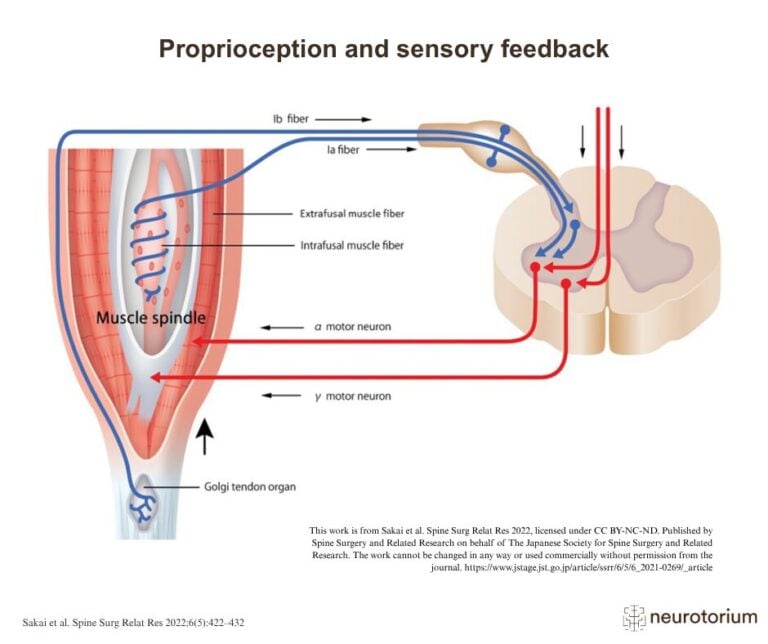
Controlled movement relies on sensory feedback, particularly proprioception (the sense of body position in space and movement).
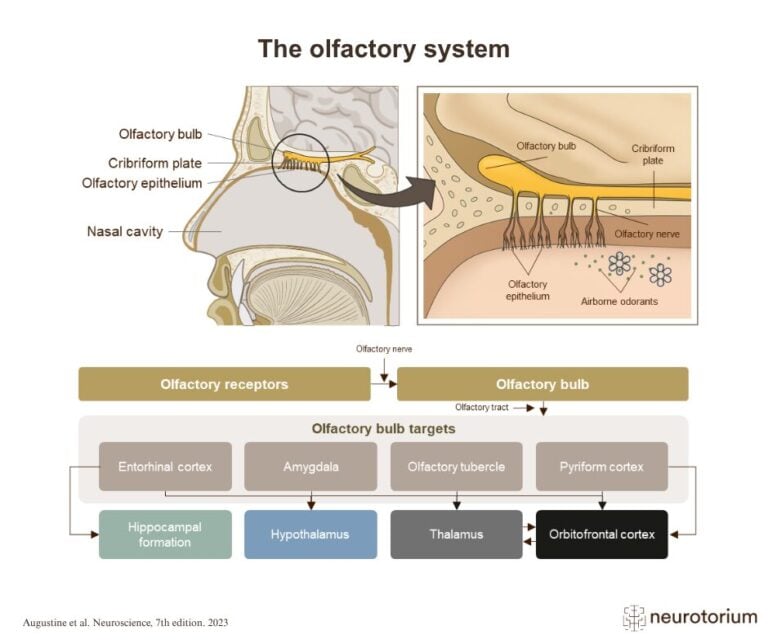
The olfactory system detects airborne odor molecules in the nasal cavity and transmits this information to the olfactory bulb. From there, signals are relayed to several brain regions involved in smell perception, memory, emotion, and behaviour.
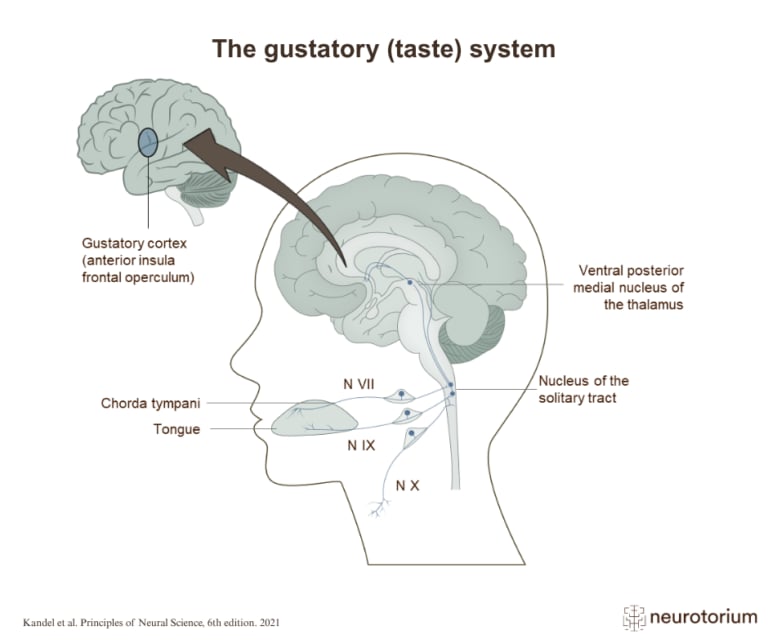
The gustatory system detects taste stimuli on the tongue and relays this information through brainstem and thalamic pathways to the gustatory cortex.