

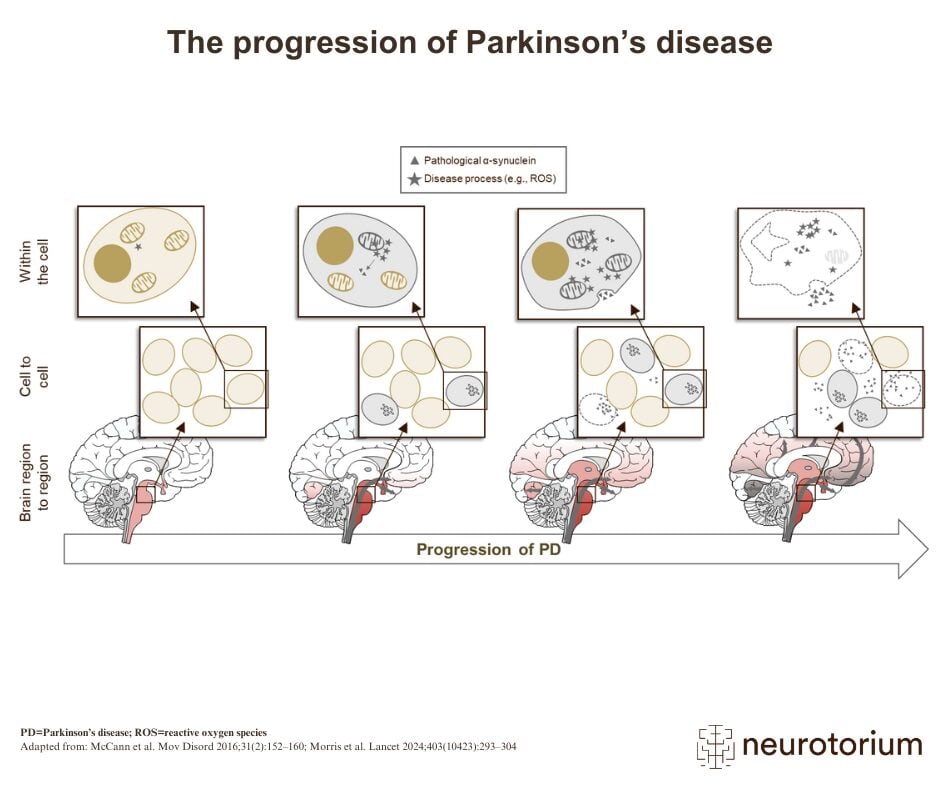
The progression of Parkinson’s disease (PD) pathology occurs on a number of levels: within a cell, between nearby cells, and over longer distances throughout the brain, as well as in tissues and organs outside the brain.
The clinical effects of Parkinson’s disease (PD) are often visually obvious, but the underlying pathology of PD is still not fully understood.1,2 PD pathology is thought to spread from brain region to brain region over multiple long-distance relays during long periods of time, as well as across even longer distances in tissues outside the brain.1,2 To spread between brain regions, the pathology must be transferred from cell to cell; the transfer setting off a series of intracellular changes that progress within the affected cells leading to cell death.1,2 Several mechanisms have been implicated in the cellular pathology of PD, including mitochondrial dysfunction and impairments in autophagy.1,2
Related content
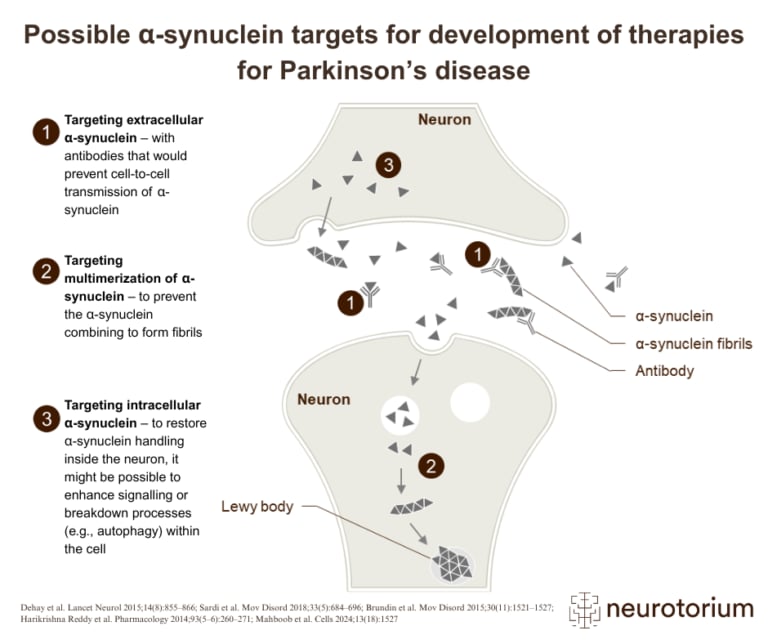
Overview of three therapeutic strategies targeting alpha-synuclein in the development of disease-modifying treatments for Parkinson’s disease
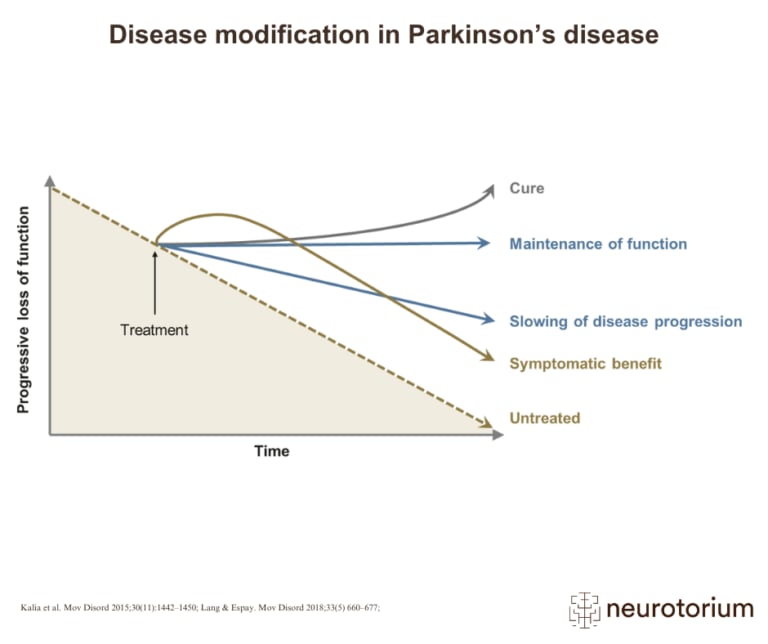
Graphical representation of how various treatment strategies can impact disease progression in Parkinson’s disease, from symptom relief to potential cure
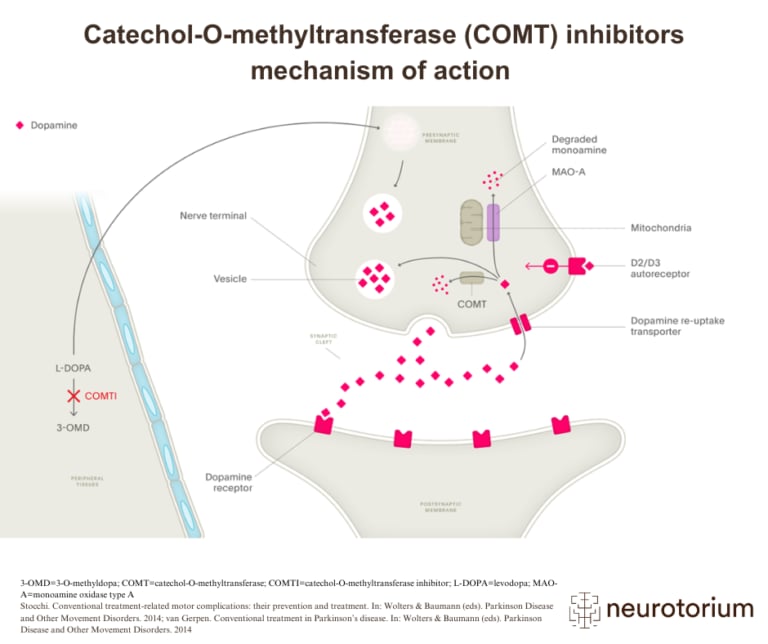
Illustration of how COMT inhibitors increase dopamine availability in Parkinson’s disease by preventing the breakdown of L-DOPA