

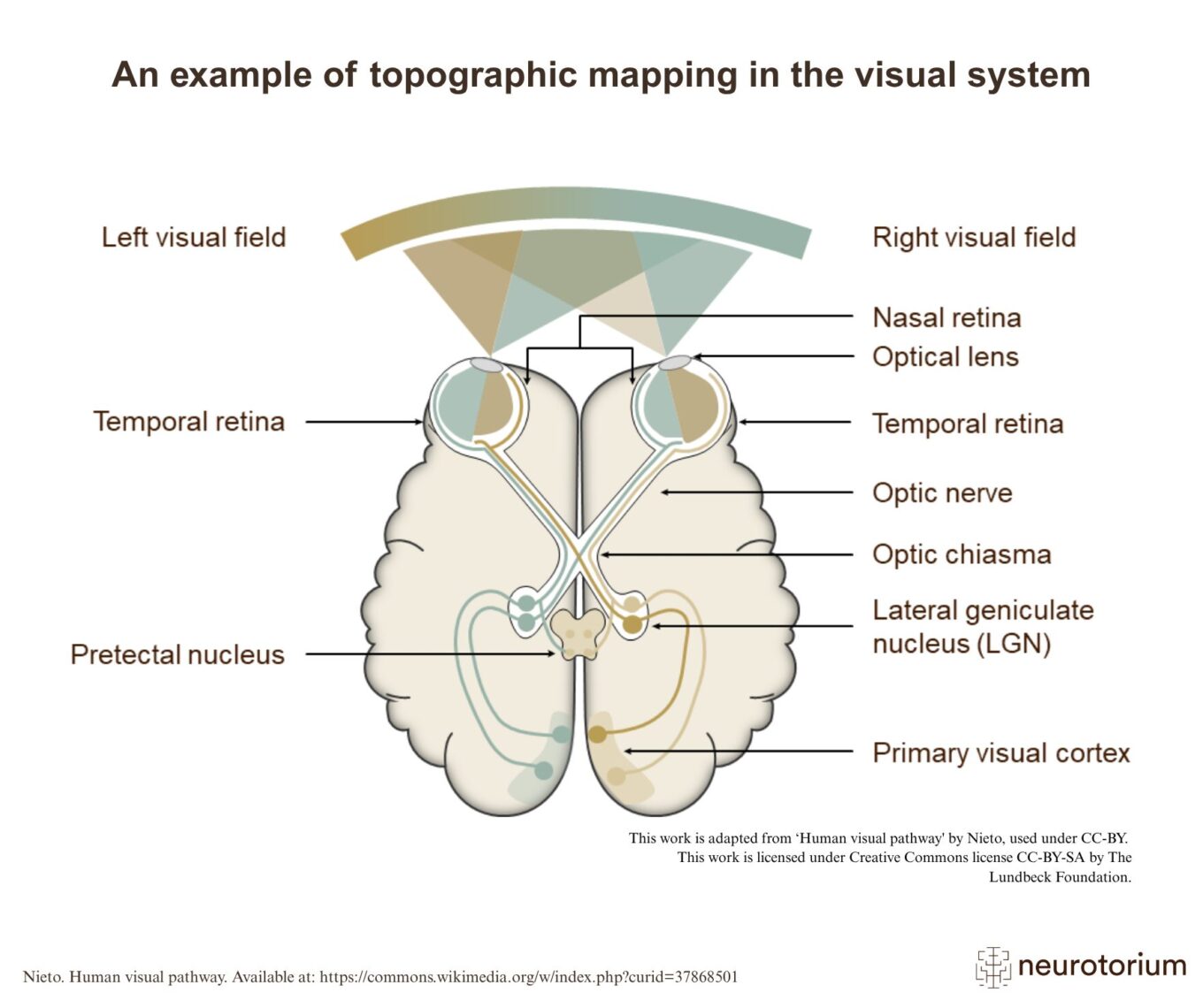
‘Slowly adapting receptors’ respond to prolonged and constant stimulation, and generate action potentials throughout the entire stimulation period; ‘rapidly adapting receptors’ fire only at the beginning and at the end of a stimulus, and stop firing in response to stimulation whose frequency does not change.1 Rapidly and slowly adapting receptors illustrate another key aspect of sensory coding: neurons report on important characteristics of the stimuli perceived not only when they fire, but also when they slow down or stop.1
Related content
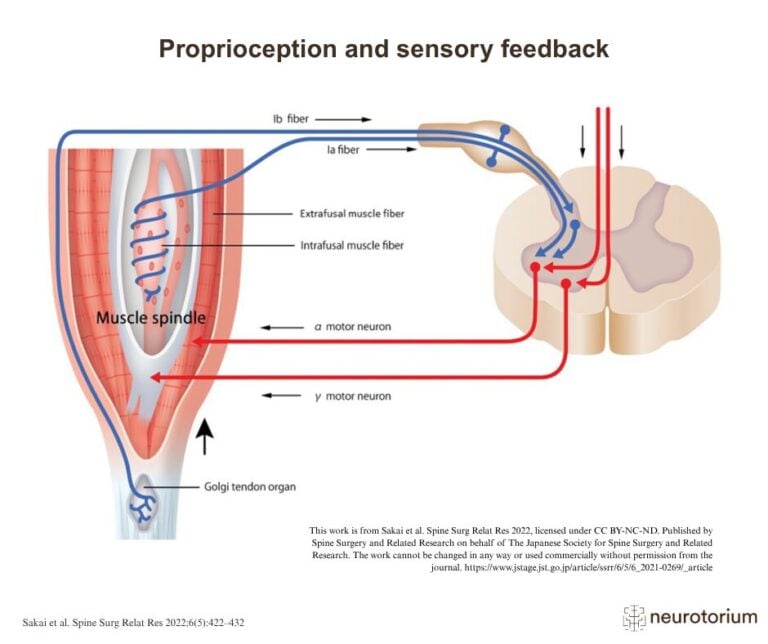
Controlled movement relies on sensory feedback, particularly proprioception (the sense of body position in space and movement).
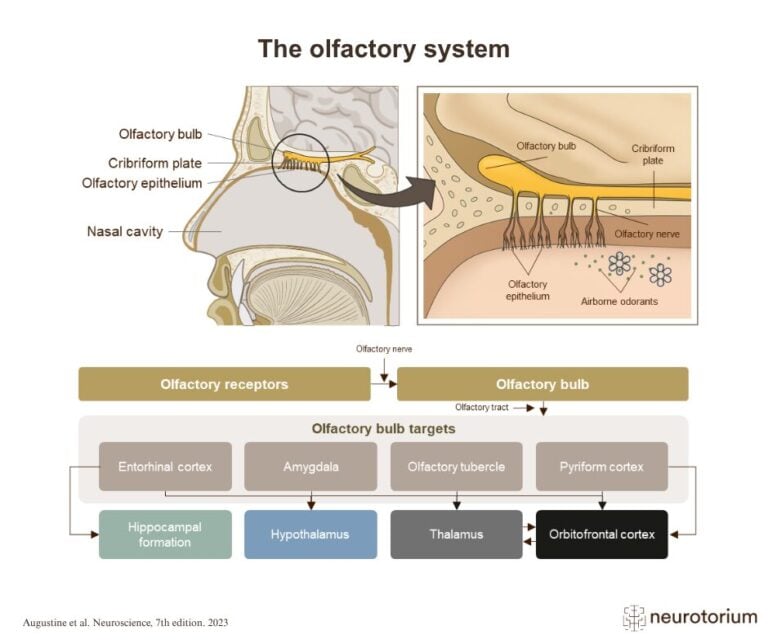
The olfactory system detects airborne odor molecules in the nasal cavity and transmits this information to the olfactory bulb. From there, signals are relayed to several brain regions involved in smell perception, memory, emotion, and behaviour.
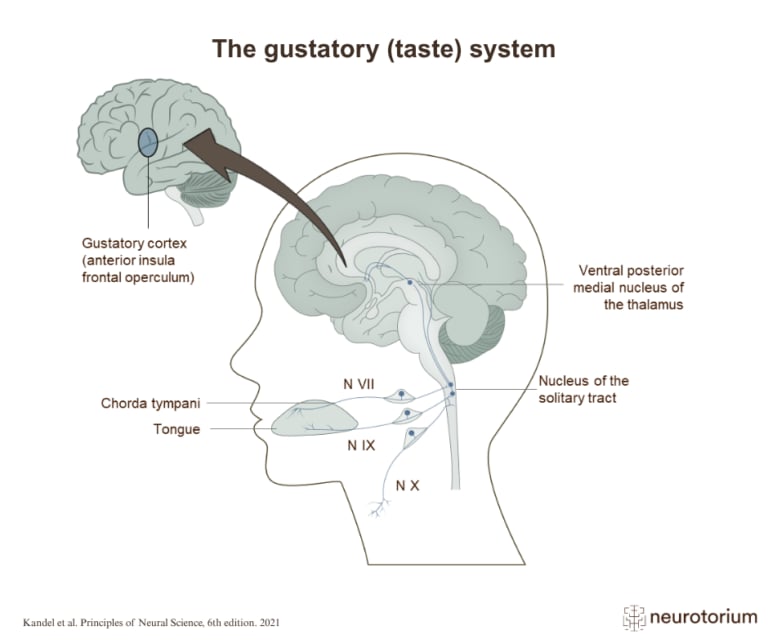
The gustatory system detects taste stimuli on the tongue and relays this information through brainstem and thalamic pathways to the gustatory cortex.