

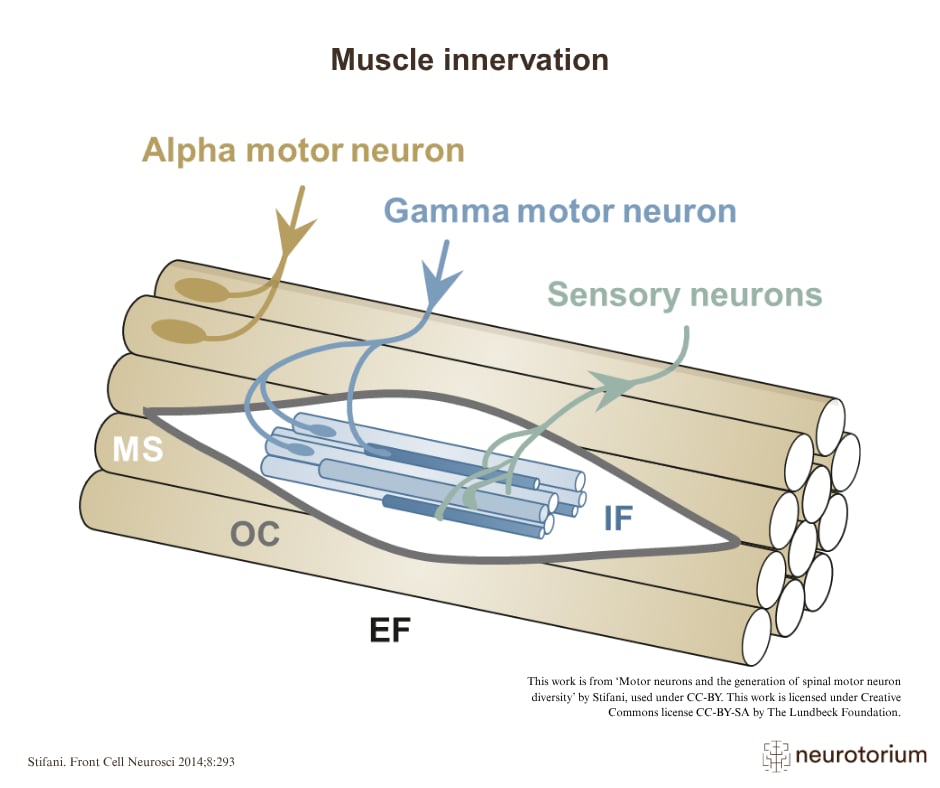
Alpha motor neurons innervate skeletal muscle fibres, leading to muscle contraction1-3
• They are lower motor neurons and form the final pathway in the motor systems for producing voluntary movement4
• Alpha neurons may also receive innervation directly from sensory neurons, enabling spinal reflexes2
Gamma motor neurons control muscle spindle sensitivity, which helps regulate muscle tone and proprioception, and they are key for executing movement and maintaining balance and posture1,2,5,6
• They also maintain the equilibrium between muscle contraction and relaxation1
• They modulate the activity of stretch reflexes1,5
Precise coordination between alpha and gamma motor neurons is required for neuromechanical efficiency during the execution of movements1
Related content
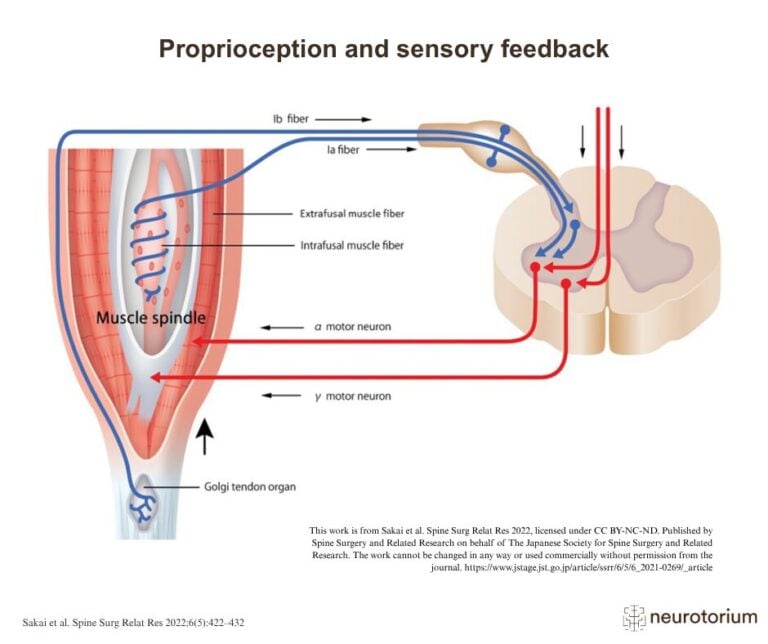
Controlled movement relies on sensory feedback, particularly proprioception (the sense of body position in space and movement).
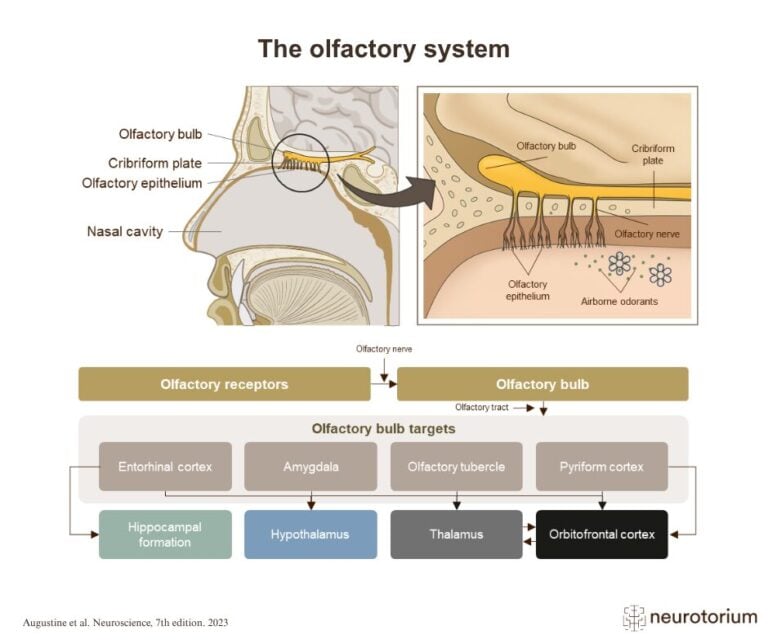
The olfactory system detects airborne odor molecules in the nasal cavity and transmits this information to the olfactory bulb. From there, signals are relayed to several brain regions involved in smell perception, memory, emotion, and behaviour.
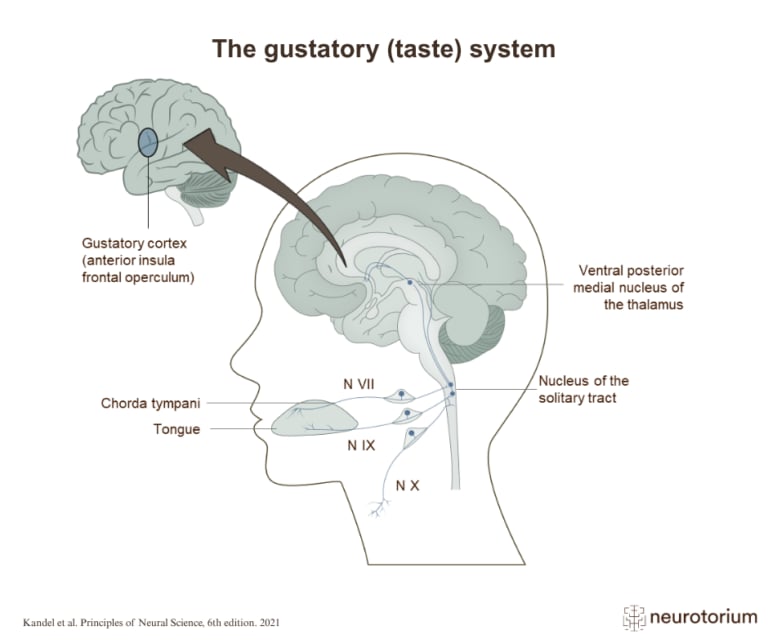
The gustatory system detects taste stimuli on the tongue and relays this information through brainstem and thalamic pathways to the gustatory cortex.