

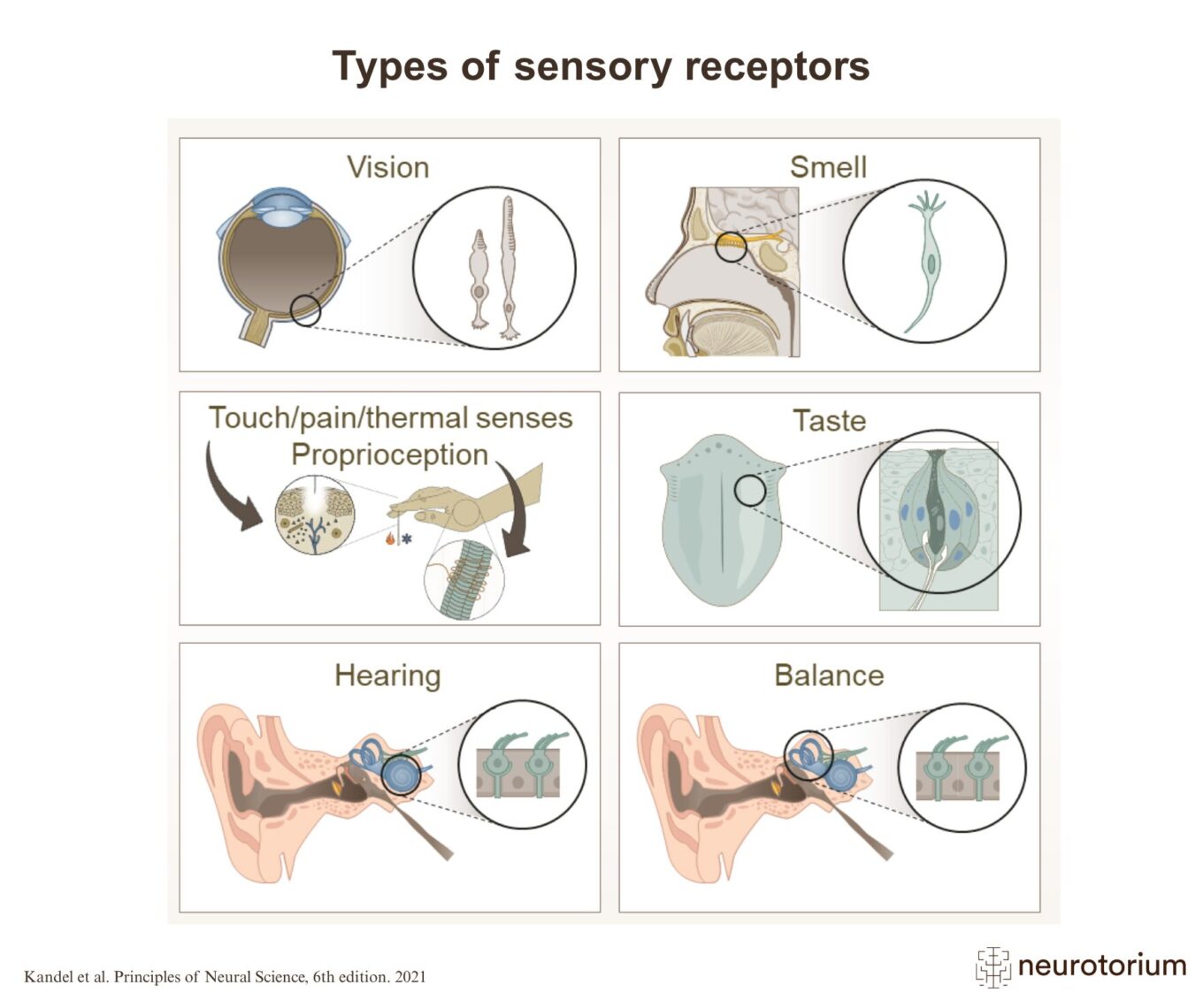
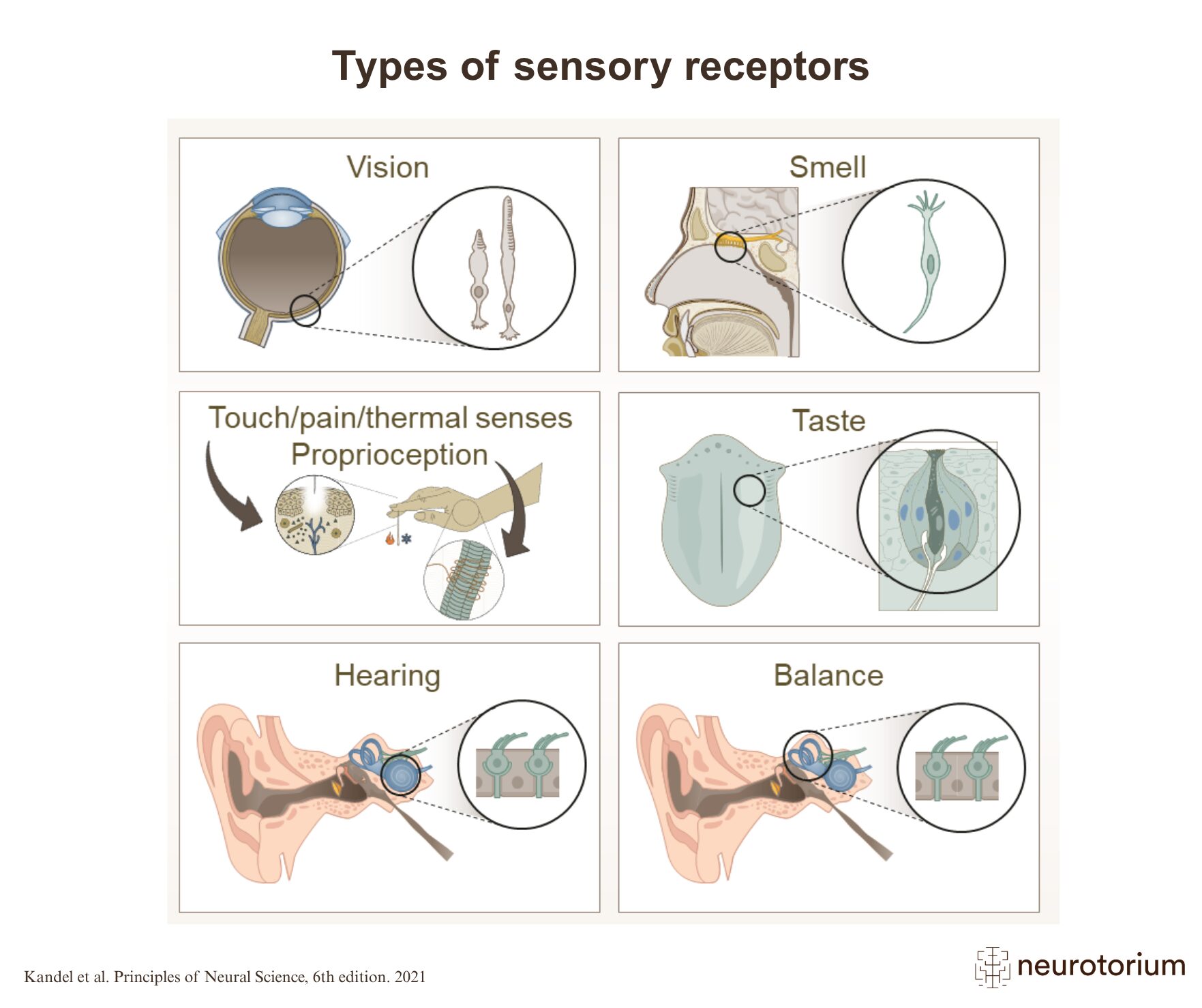
Receptors are crucial for transducing chemical, mechanical, thermal or light stimuli into signals that the rest of the nervous system will understand.2 They are highly specialized in their transduction: even receptor classes that are part of the same (e.g., somatosensory) system are specifically sensitive to one type of stimulus (e.g., heat), and not another (e.g., muscle stretch), and there is a correlation between the number of receptor types of a given sensory system, and the types of stimuli the system can detect.2 The specificity in receptor response is underpinned by differences in receptor structure and chemistry; for example, the variation in the sensitivity of individual olfactory sensory neurons to particular odorants is caused by differences in the primary sequence of a single receptor protein.2
Related content
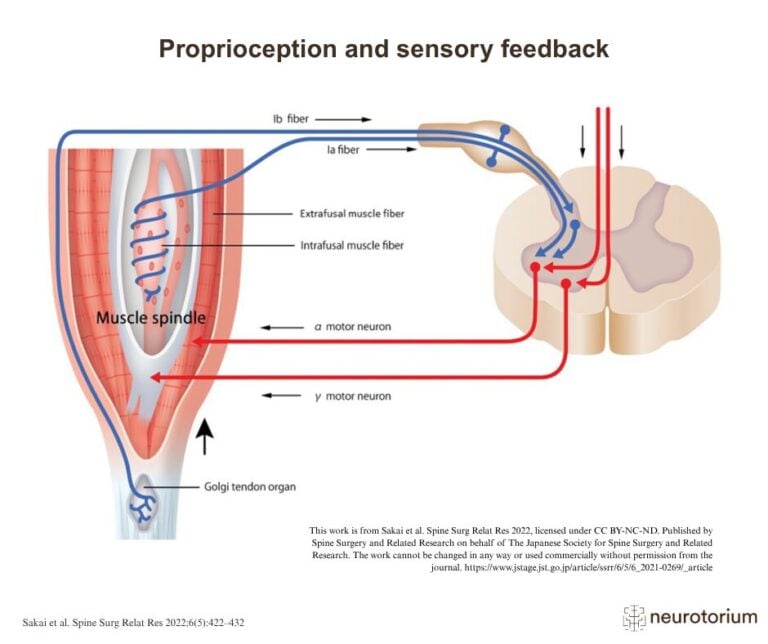
Controlled movement relies on sensory feedback, particularly proprioception (the sense of body position in space and movement).
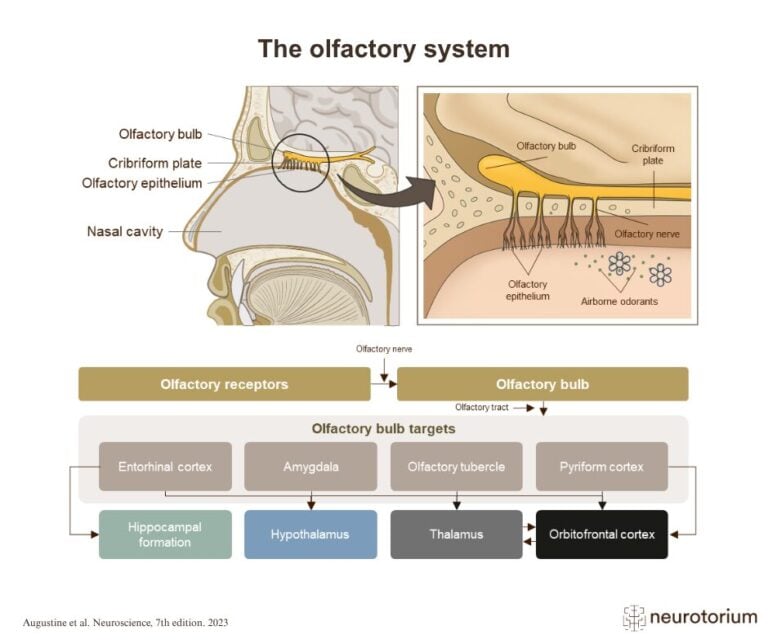
The olfactory system detects airborne odor molecules in the nasal cavity and transmits this information to the olfactory bulb. From there, signals are relayed to several brain regions involved in smell perception, memory, emotion, and behaviour.
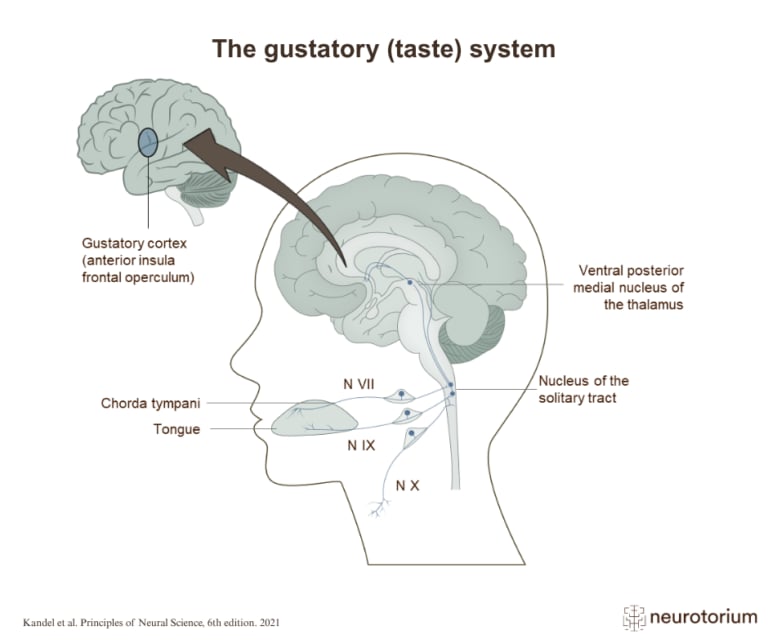
The gustatory system detects taste stimuli on the tongue and relays this information through brainstem and thalamic pathways to the gustatory cortex.