

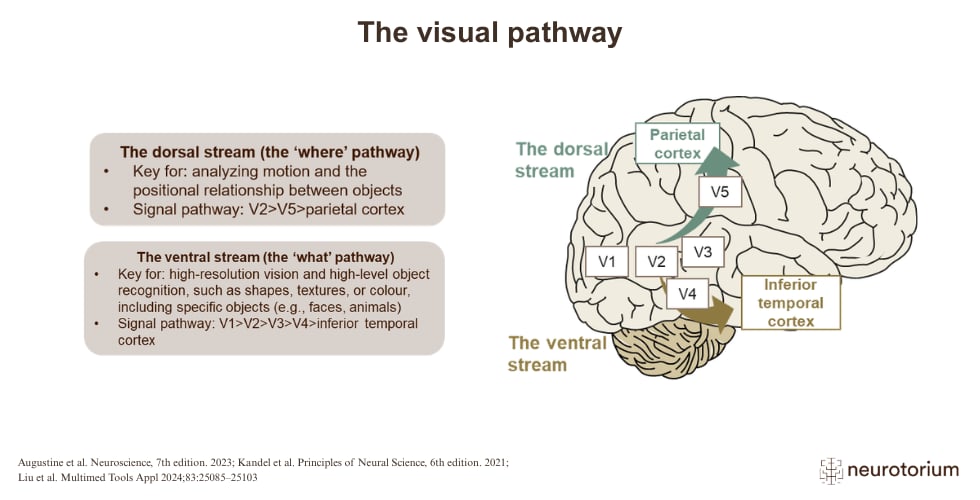
A greater portion of the brain is devoted to processing visual information than to any other sensory function:2 almost half of the cerebral cortex.1
Visual/light input is crucial for multiple other key biological functions apart from visual perception.1 An important example includes the circadian rhythms, which drive a wide range of autonomic, endocrine and behavioural functions, and control body temperature.1 Circadian rhythms are regulated by the suprachiasmatic nucleus located in the hypothalamus above the optic chiasm.1 In most people, the coordinated activity of suprachiasmatic neurons results in an approximately 24.1 h daily rhythm in cells across the body.1 However, direct input from a special class of retinal ganglion cells is crucial to signal light levels to the suprachiasmatic clock to entrain it to the external world, and to allow a person to adjust to seasonal variations in sunrise and sunset.1 Blind people in whom the specialized retinal ganglion cells are damaged lack the visual input to their suprachiasmatic nucleus, frequently resulting in a non–24-hour sleep–wake rhythm disorder, in which their circadian rhythms drift, progressively becoming out of synch with the rest of the world.1
Related content
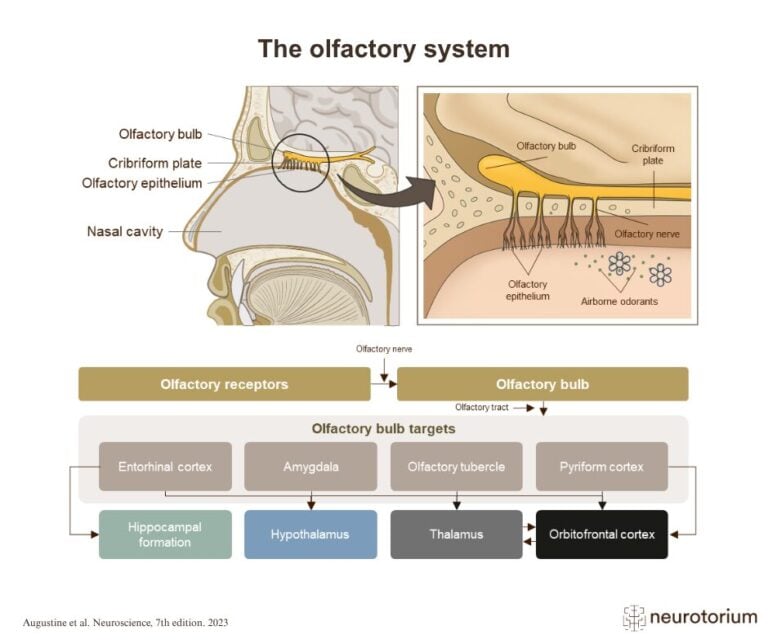
The olfactory system detects airborne odor molecules in the nasal cavity and transmits this information to the olfactory bulb. From there, signals are relayed to several brain regions involved in smell perception, memory, emotion, and behaviour.
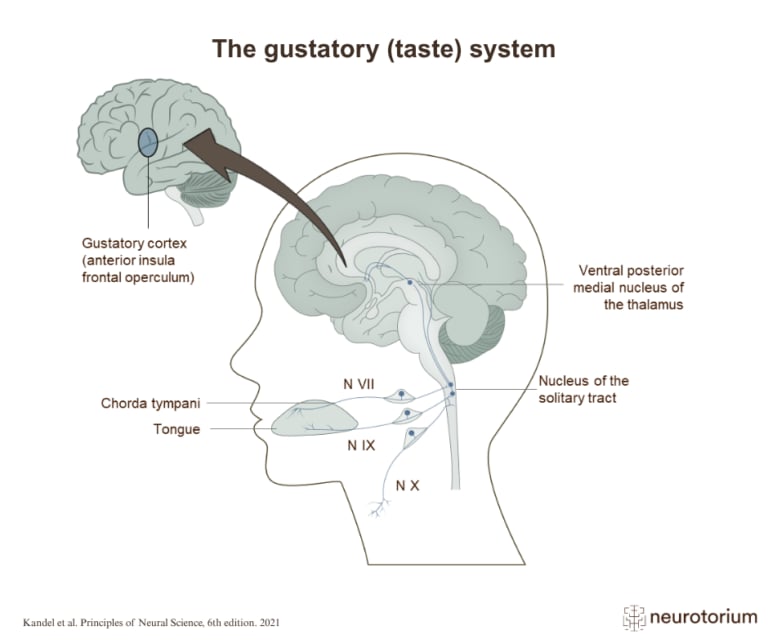
The gustatory system detects taste stimuli on the tongue and relays this information through brainstem and thalamic pathways to the gustatory cortex.
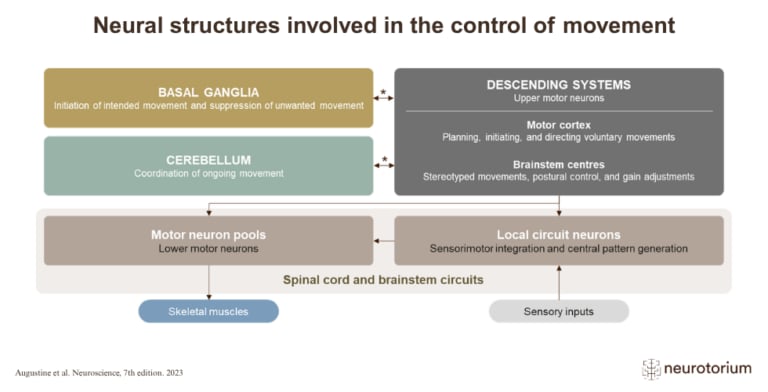
Movement is controlled by a network of brain and spinal cord structures that work together to plan, initiate, coordinate, and execute actions.