

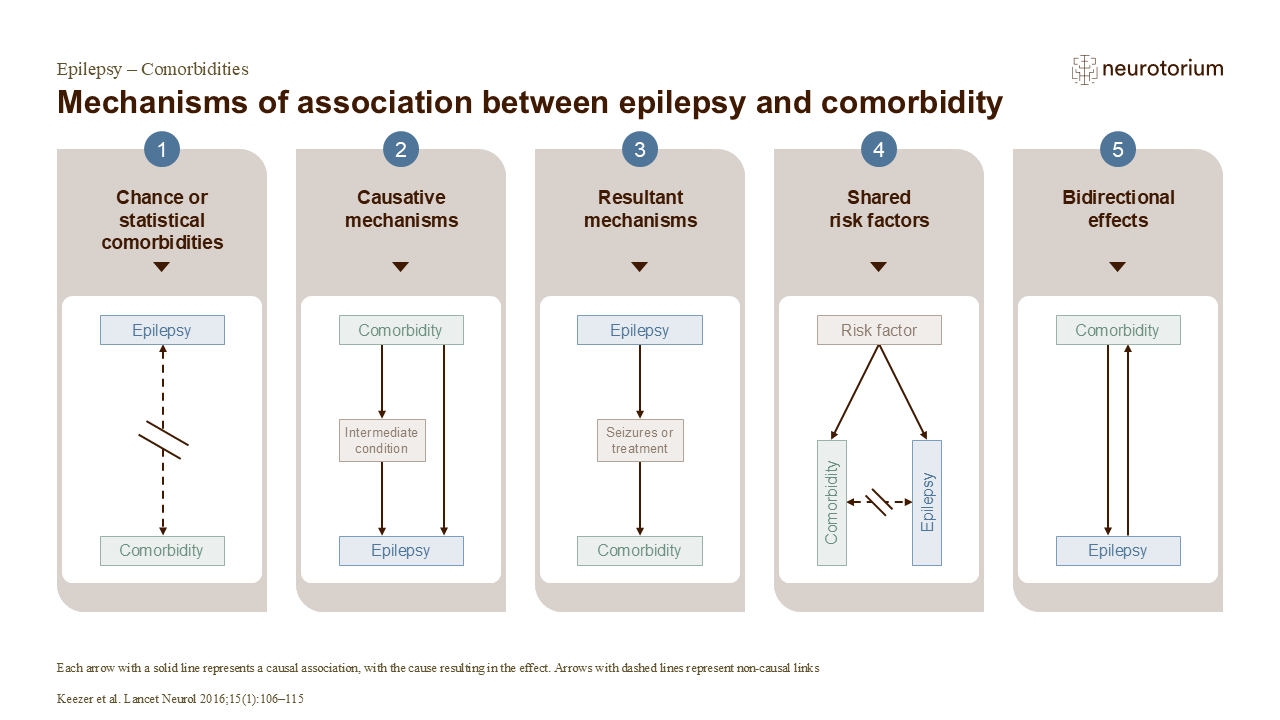
Chance comorbidities are conditions that are as frequent in people with epilepsy as would be expected in the general population; in statistical comorbidities, non-causal associations between epilepsy and a comorbid condition arise as a result of information or selection bias rather than a true causal link.1
In a causative association between a comorbidity and epilepsy, comorbidity appears first and then gives rise to epilepsy directly (e.g., cerebrovascular disease) or indirectly (e.g., cigarette smoking can indirectly cause epilepsy by increasing the risk of cancer or stroke).1 In a resultant association between epilepsy and a comorbidity, the temporal link is reversed: for example, epilepsy may lead to aspiration pneumonia or seizure-related fractures.1
Moreover, epilepsy and other comorbid conditions may not have a direct association with each other, but they may share genetic, environmental, structural or physiological risk factors.1
Finally, the relationship between epilepsy and certain comorbidities may be bidirectional, i.e., either condition can cause the other; however, it is crucial to distinguish between truly bidirectional causality and varying temporal sequence of epilepsy and its comorbidities between different people.1
Reference: