

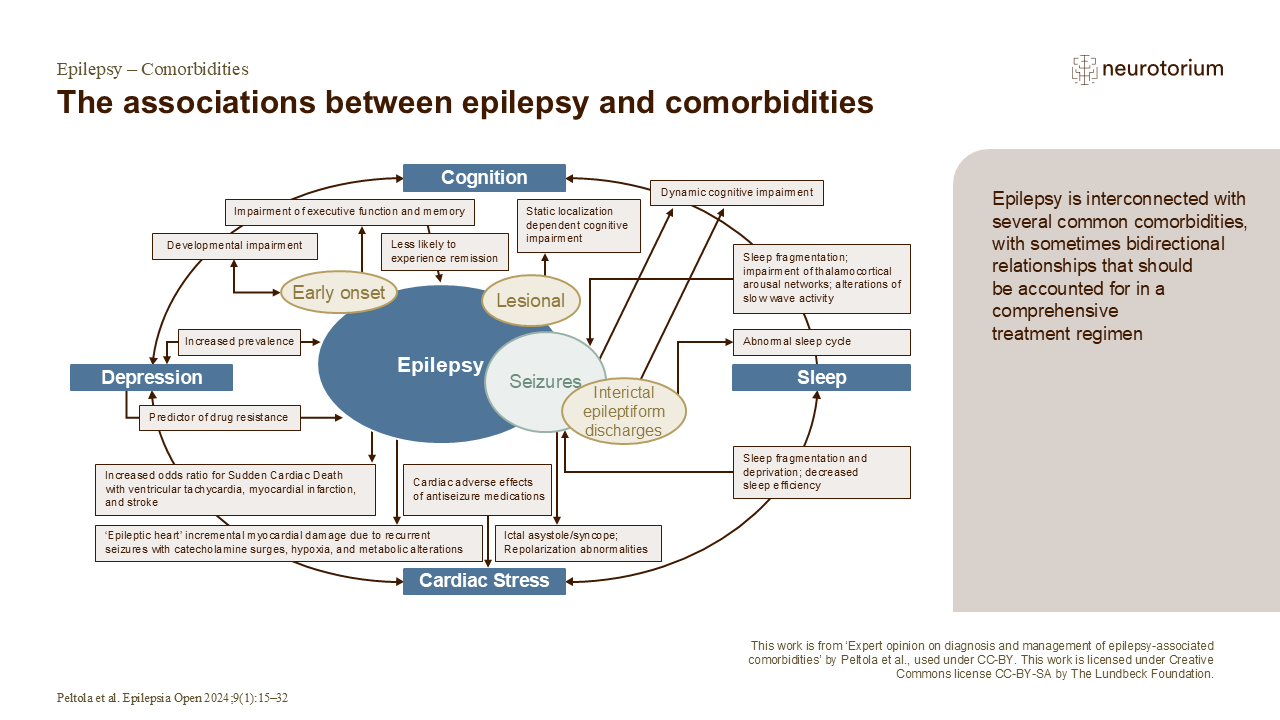
There is a complex relationship between epilepsy and sleep. Seizures occurring during wakefulness may disrupt sleep structure the following night (increased/decreased stages and rapid eye movement sleep onset and duration).1 Interictal epileptic discharges, arousals and microarousals can increase the intensity and length of sleep-related seizures.1
Epilepsy itself, acute seizures, and certain antiseizure medications can affect autonomic control of the heart and lungs, as well as physically damaging the structure of the cardiovascular system.1 The majority of people with epilepsy report cardiac comorbidities, including arrhythmias, ventricular fibrillation, coronary heart disease, angina pectoris, and myocardial infarction.1
There is a strong relationship between epilepsy and cognitive impairment, which may be due to a common underlying pathological process.1 Over time, cognitive decline results from a synergy between lesions present both at the time of epilepsy diagnosis and after epilepsy diagnosis, together with aging.1
The relationship between epilepsy and depression is bidirectional: the presence of depression is associated with an increased risk of epilepsy and refractory seizures, while epilepsy is linked to depression severity.1
Reference: