
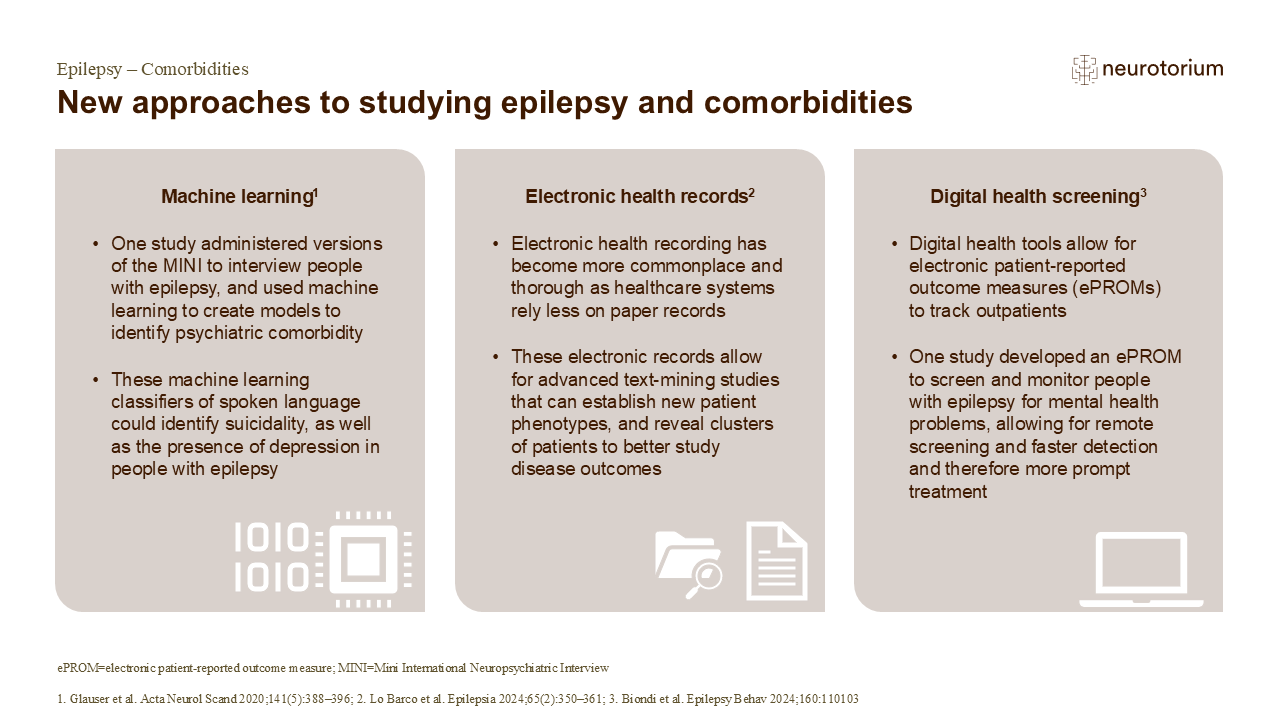
The MINI involves asking subjects five open-ended questions to harvest the language that would serve as the input to the machine-learning model: Do you have hope? Do you have any secrets? Are you angry? Do you have any fear? Does it hurt emotionally?1 All interviews were conducted by one of two experienced interviewers (a certified clinical research professional or a research nurse practitioner).1

References:

1.Glauser T, Santel D, DelBello M, et al. Identifying epilepsy psychiatric comorbidities with machine learning. Acta Neurol Scand 2020; 141 (5): 388–396.

2.Lo Barco T, Garcelon N, Neuraz A, Nabbout R. Natural history of rare diseases using natural language processing of narrative unstructured electronic health records: the example of Dravet syndrome. Epilepsia 2024; 65 (2): 350–361.

3.Biondi A, Winsor AA, Ebelthite C, et al. A comprehensive digital mental health screening tool for people with epilepsy: a feasibility study in UK outpatients. Epilepsy Behav 2024; 160: 110103.