

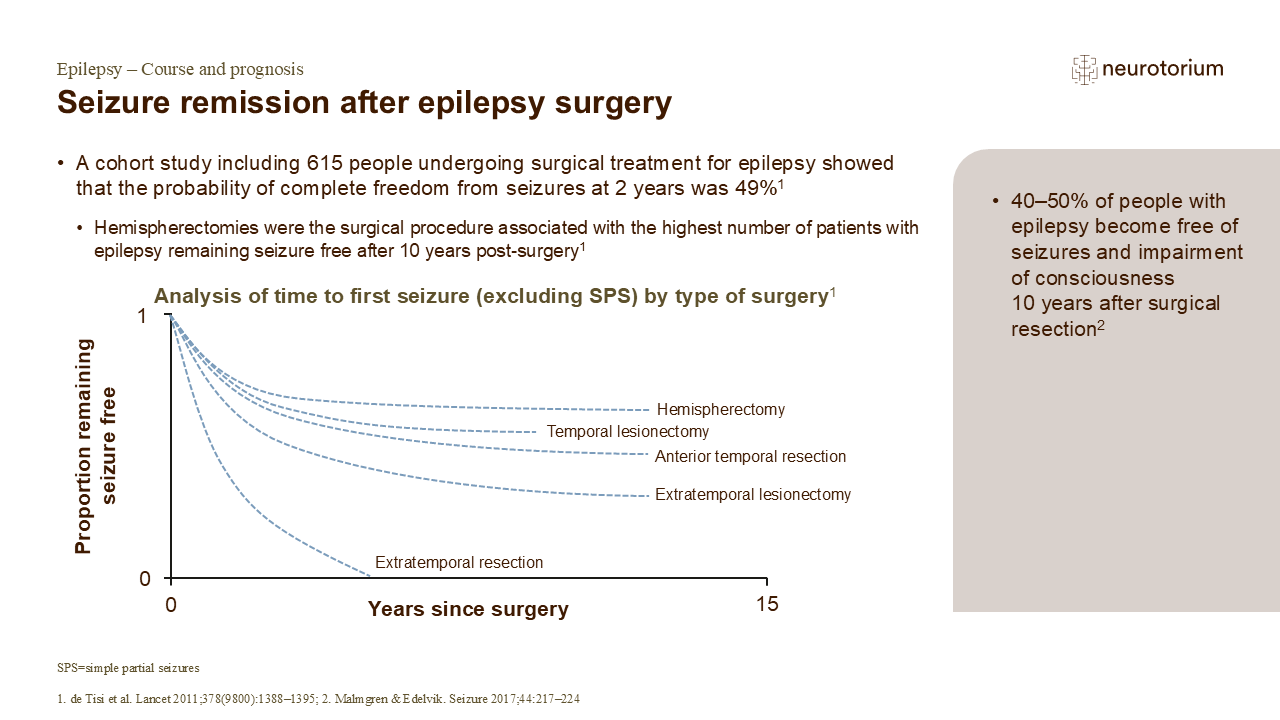
The proportion of patients remaining seizure free depended on outcome classification: while 49% of patients were entirely free of seizures at 2 years after surgery, 63% of patients were free of seizures other than short partial seizures (SPS) at 2 years after surgery, 52% at 5 years, and 47% after 10 years.1
Apart from the type of surgical procedure undergone by patients with epilepsy, their age at surgery was also shown to impact their risk of subsequent seizure recurrence, with increases in age at surgery directly correlated with increased seizure recurrence.1 Moreover, allowing for age at surgery for patients undergoing anterior temporal resection, pathological findings impacted the time to first subsequent seizure: patients with focal cortical dysplasia and those with other changes (including other malformations and no detected abnormality) had significantly earlier relapses than patients with hippocampal sclerosis.1
References: