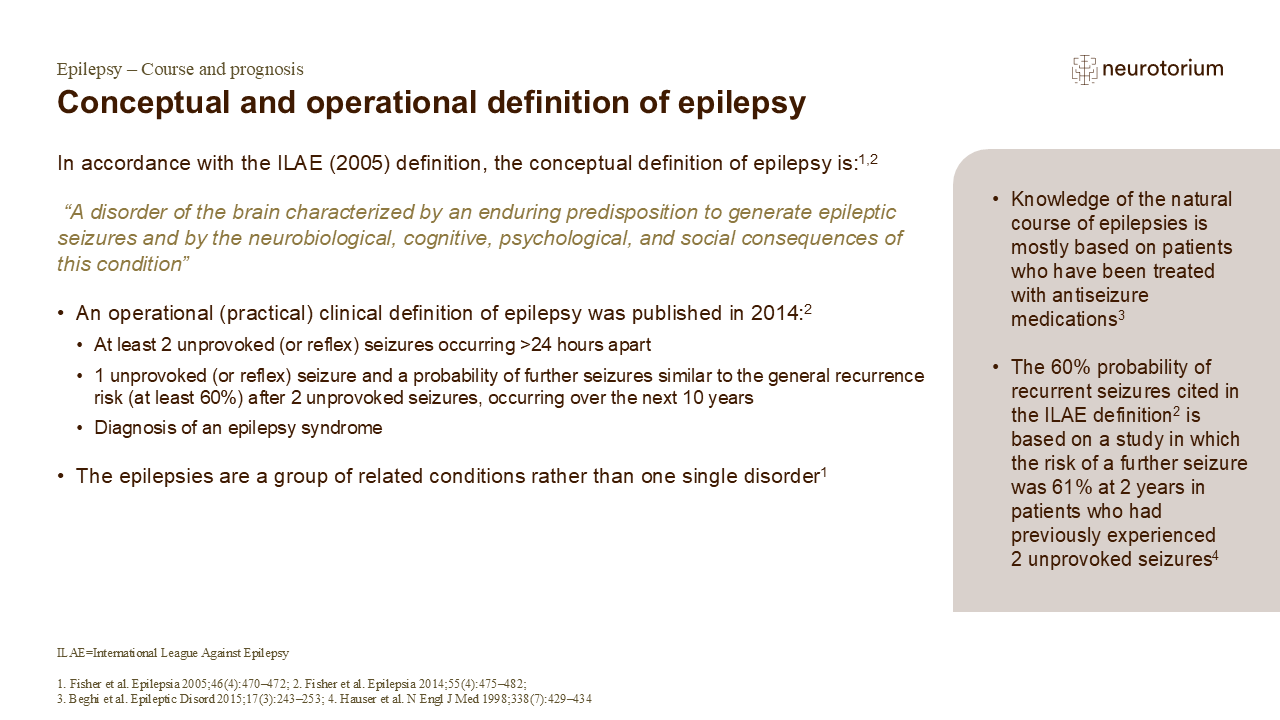
Epilepsy is a diverse group of disorders that share an abnormally increased predisposition to seizures.1 Other elements commonly associated with a diagnosis of epilepsy include enduring alterations in the brain that increase the likelihood of future seizures, and behavioural or cognitive disturbances.1
References:
1.Fisher RS, van Emde Boas W, Blume W, et al. Epileptic seizures and epilepsy: definitions proposed by the International League Against Epilepsy (ILAE) and the International Bureau for Epilepsy (IBE). Epilepsia 2005; 46 (4): 470‒472.
2.Fisher RS, Acevedo C, Arzimanoglou A, et al. ILAE official report: a practical clinical definition of epilepsy. Epilepsia 2014; 55 (4): 475‒482.
3.Beghi E, Giussani G, Sander JW. The natural history and prognosis of epilepsy. Epileptic Disord 2015; 17 (3): 243‒253.
4.Hauser WA, Rich SS, Lee JR, et al. Risk of recurrent seizures after two unprovoked seizures. N Engl J Med 1998; 338 (7): 429‒434.