

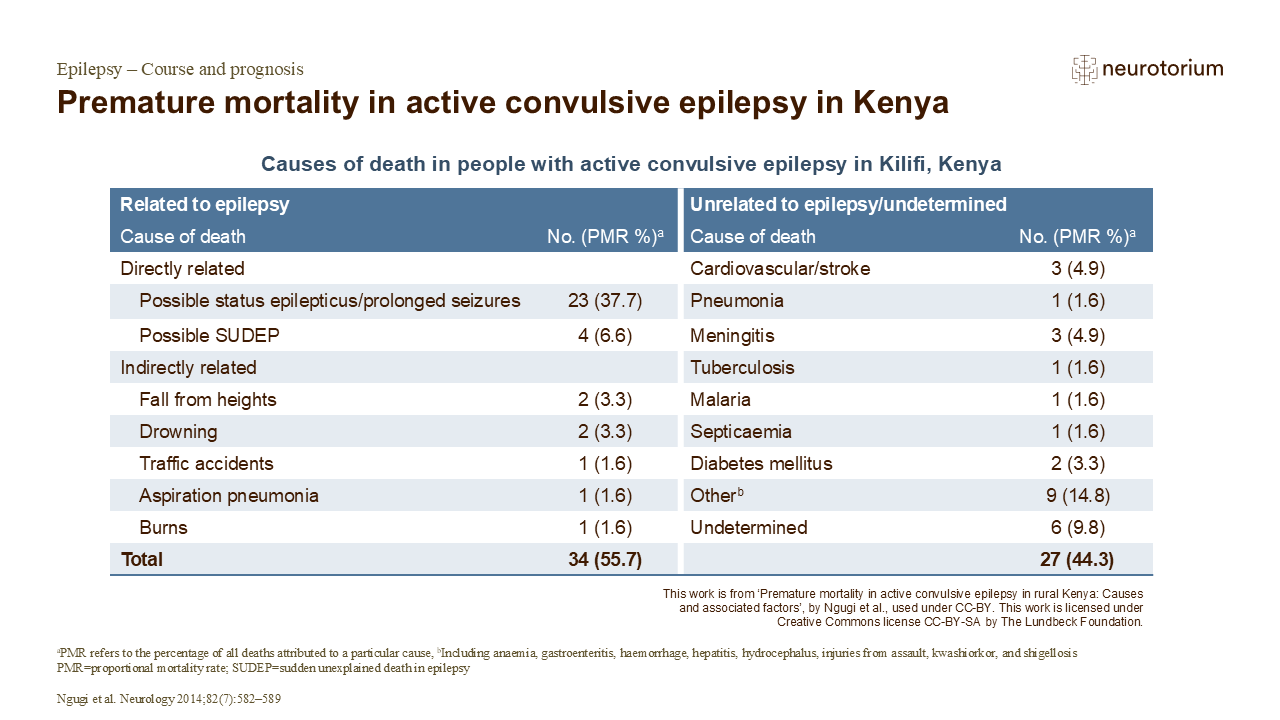
This study was conducted in the Kilifi region of Kenya that covers a population of more than 233,300 people.1 At the first stage of the study a survey of the heads of households were asked 2 questions to identify potential family members with active convulsive epilepsy.1 At the second stage, those who had been identified completed a more detailed epilepsy screening tool and evaluation by an epilepsy specialist healthcare provider.1 Participants were followed-up until death or censored if they had migrated out of the area.1 The cause of death was ascertained from the bereaved relatives, as death certificates are destroyed after the funeral in this region.1 The most common reported cause of death was status epilepticus or prolonged seizures, followed by SUDEP.1
Reference: