

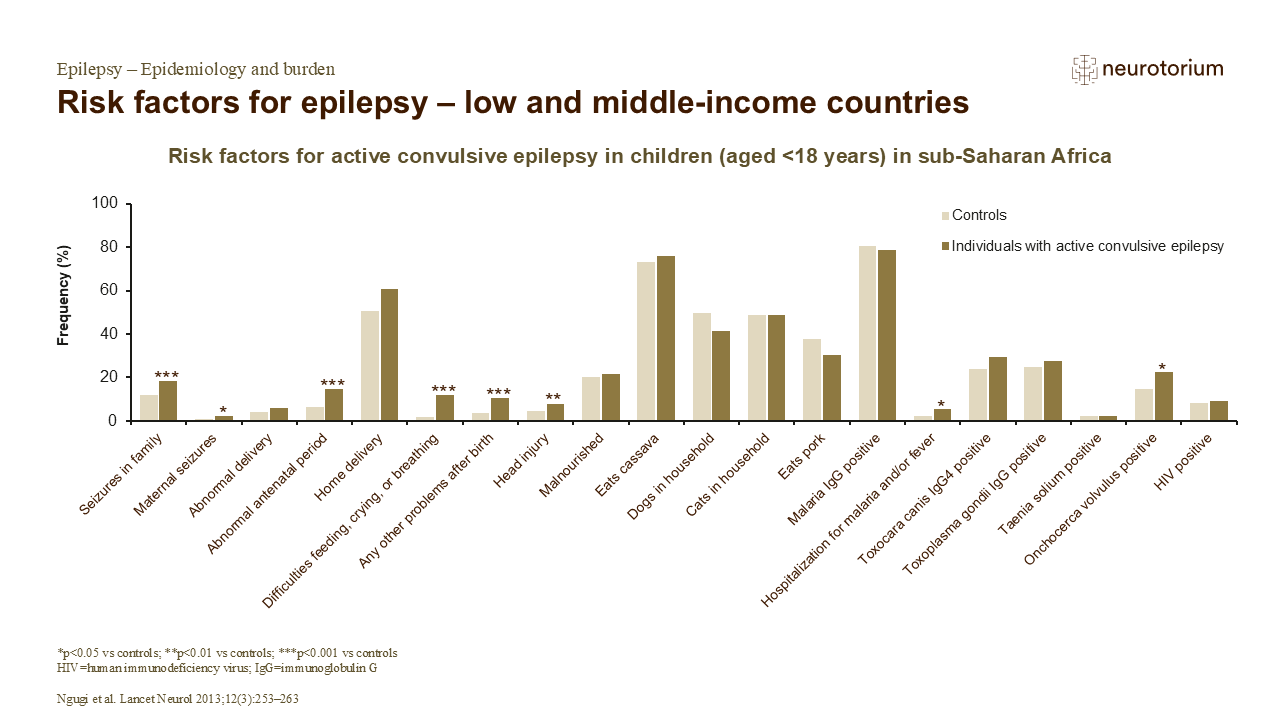
Data for this analysis were provided by large population-based cross-sectional and case‒control studies conducted in regions within Kenya (2007‒2008), South Africa (2008‒2009), Uganda (2009), Tanzania (2009), and Ghana (2010‒2011).1 Only cases of active, convulsive epilepsy were included as they were most reliably detected and reported.1 When compared with controls, in children aged <18 years with epilepsy, the frequency of the following were significantly higher: a family history of seizures, maternal seizures, an abnormal antenatal period, difficulties feeding, crying or breathing, any other problems after birth, head injury, hospitalization for malaria and/or fever, and positivity for the worm Onchocerca volvulus.1
Reference: