


Index for
slide deck
Introduction

Introduction
Epidemiology of epilepsy
Epidemiology of epilepsy
Epilepsy is a common disorder with a substantial burden
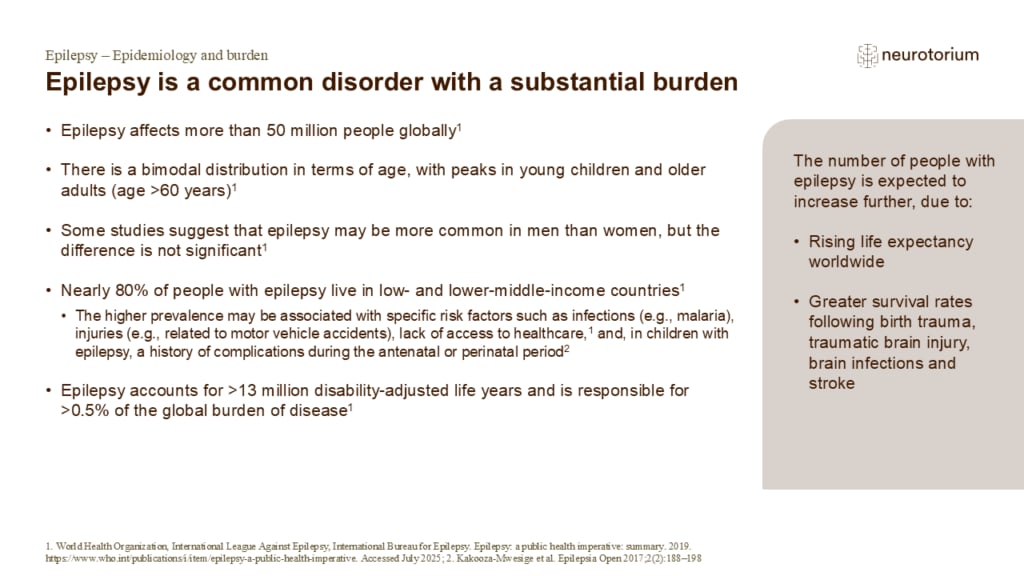
In 2019, WHO published a snapshot of the global epidemiology and burden of epilepsy.1 Although epilepsy affects more than 50 million people worldwide, it was estimated that the majority reside in low- and middle-income countries.1 It was anticipated that the burden of epi…
There are barriers to accurate estimation of epilepsy burden
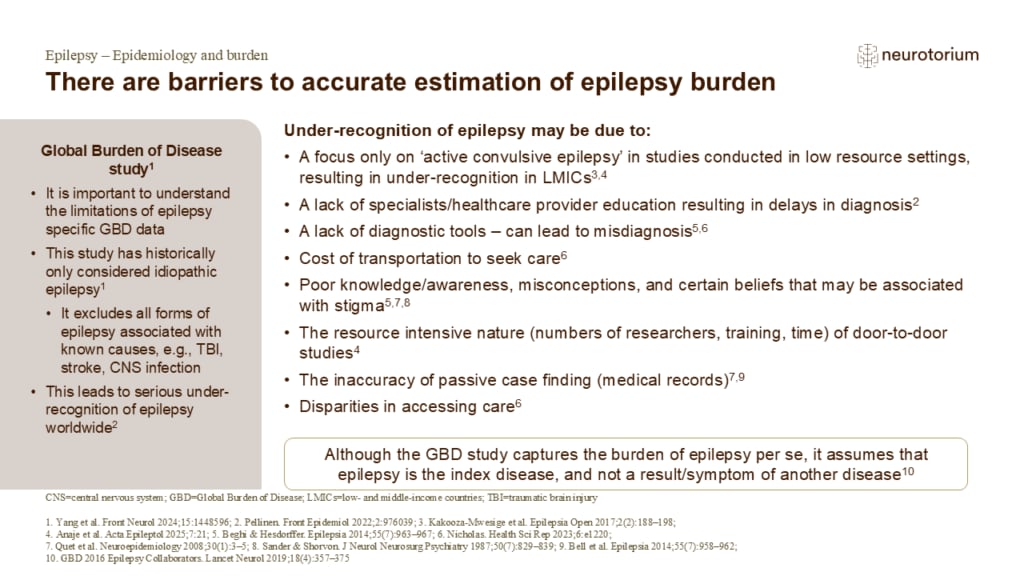
Under-recognition of epilepsy is an issue in low resource settings, with multiple factors involved.2,5,6 From the healthcare system perspective, the diagnosis of epilepsy may be delayed or missed due to inadequate healthcare provider training, and a lack of diagnostic too…
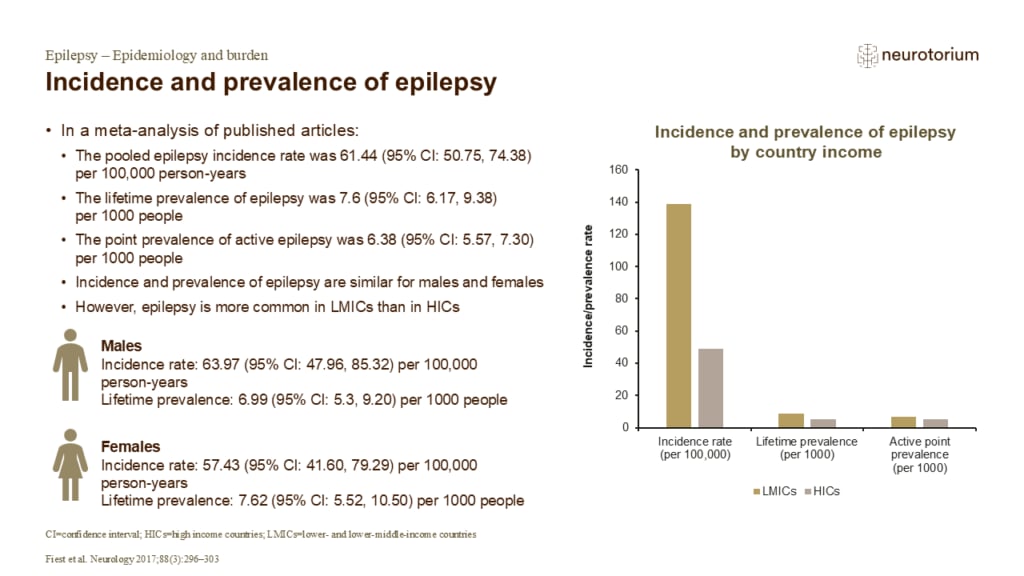
Incidence and prevalence of epilepsy
This meta-analysis used data from >200 studies to estimate the incidence and prevalence of epilepsy.1 There was a substantial difference between LMICs and HICs with respect to the incidence of epilepsy –139 and 49 per 100,000 person-years respectively, as shown on the gra…
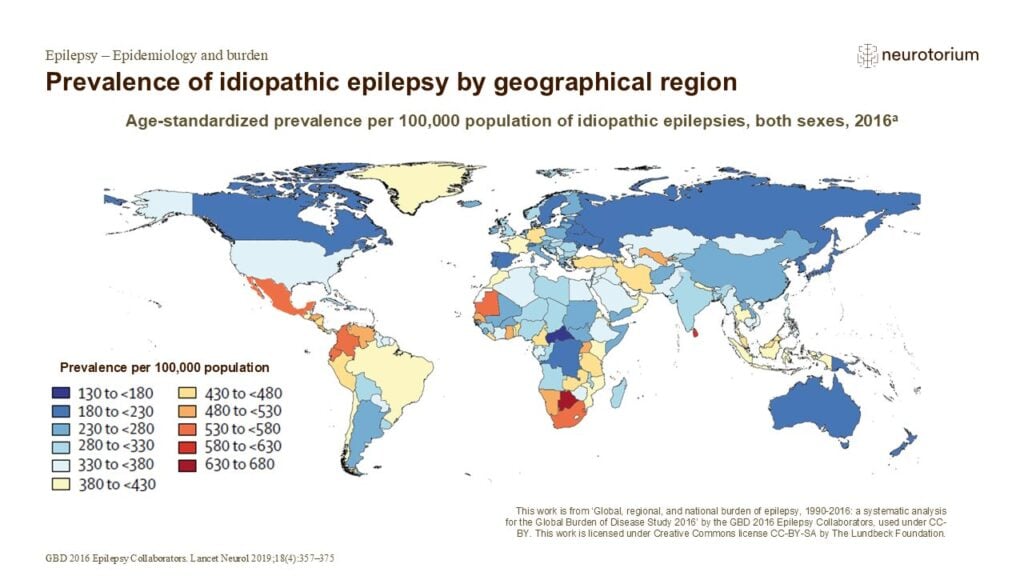
Prevalence of idiopathic epilepsy by geographical region
The Global Burden of Disease (GBD) collaborators undertook a systematic analysis of epidemiological data published between 2011 and 2016 to determine the global and country-level prevalence of epilepsy between 1990 and 2016.1 As can be seen from the map, high prevalence o…
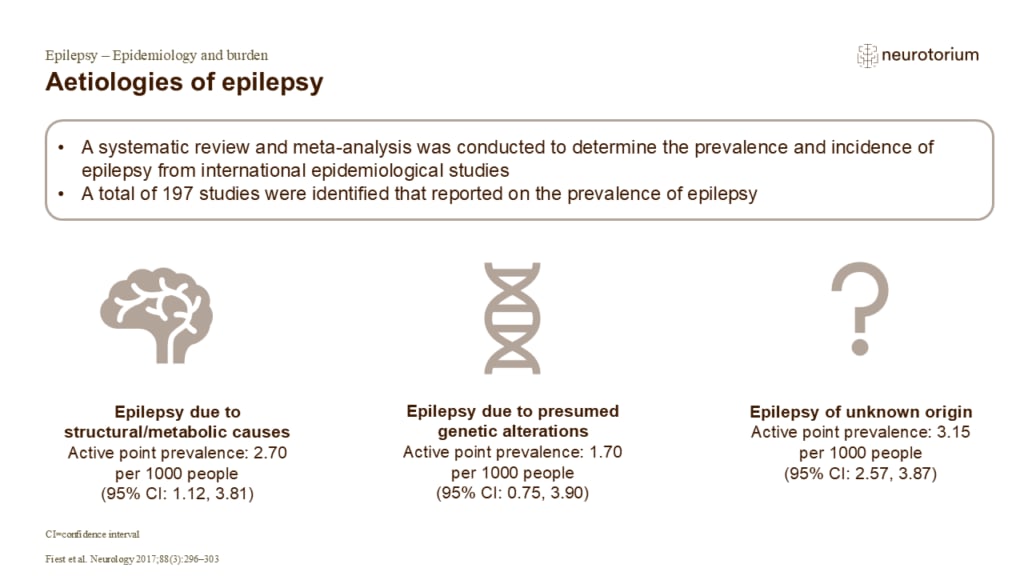
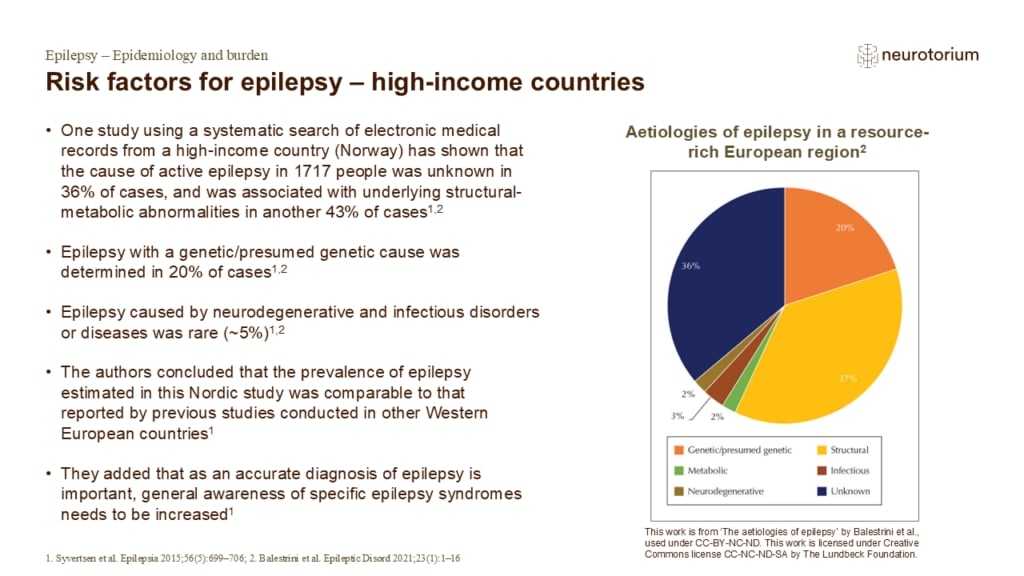
Risk factors for epilepsy – high-income countries
Risk factors for epilepsy – low and middle-income countries
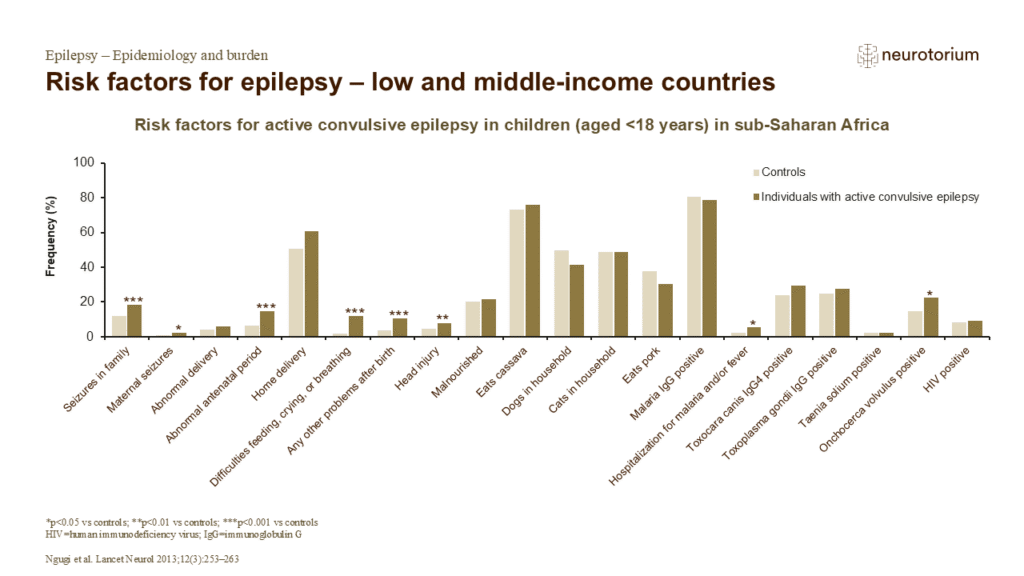
Data for this analysis were provided by large population-based cross-sectional and case‒control studies conducted in regions within Kenya (2007‒2008), South Africa (2008‒2009), Uganda (2009), Tanzania (2009), and Ghana (2010‒2011).1 Only cases of active, convulsive epilep…
Risk of epilepsy associated with CNS infections
The burden of epilepsy
The burden of epilepsy
Stigma in epilepsy
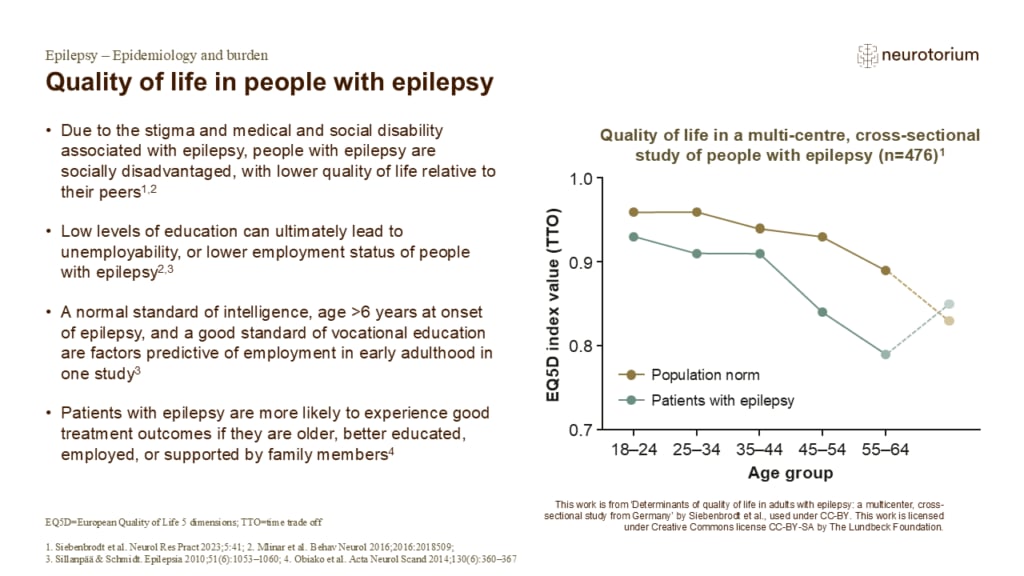
Quality of life in people with epilepsy
A cross-sectional German study including 476 people with epilepsy evaluated the determinants of the health-related quality of life (HRQoL) in people with epilepsy.1 Study findings showed that factors predictive of a significantly reduced HRQoL in people with epilepsy incl…
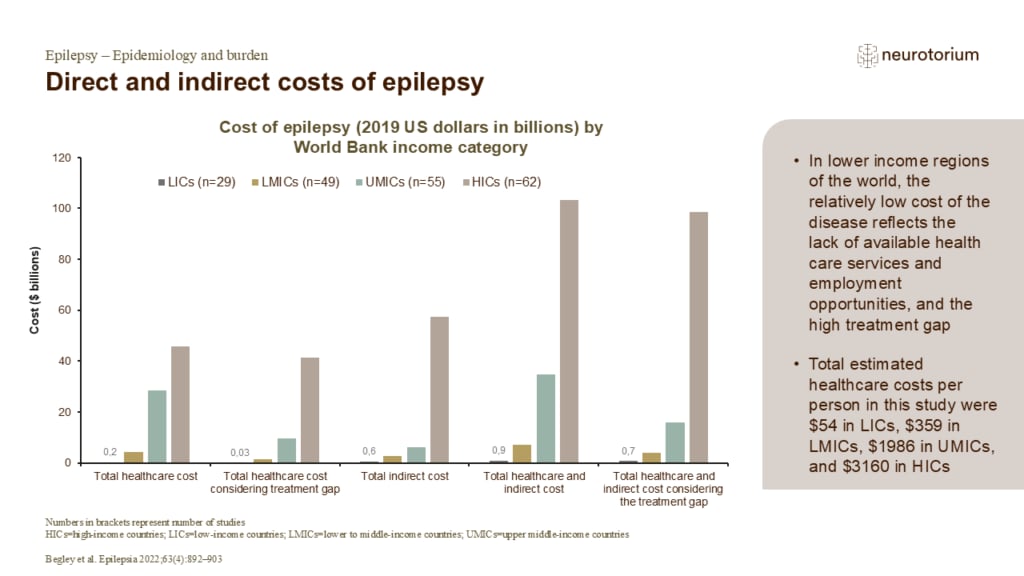
Direct and indirect costs of epilepsy
A systematic review of epilepsy cost-of-illness studies was conducted, with adjustments made to generate single per-person and epilepsy-attributable total healthcare and indirect costs, and estimated costs for countries with missing data according to those of countries in…
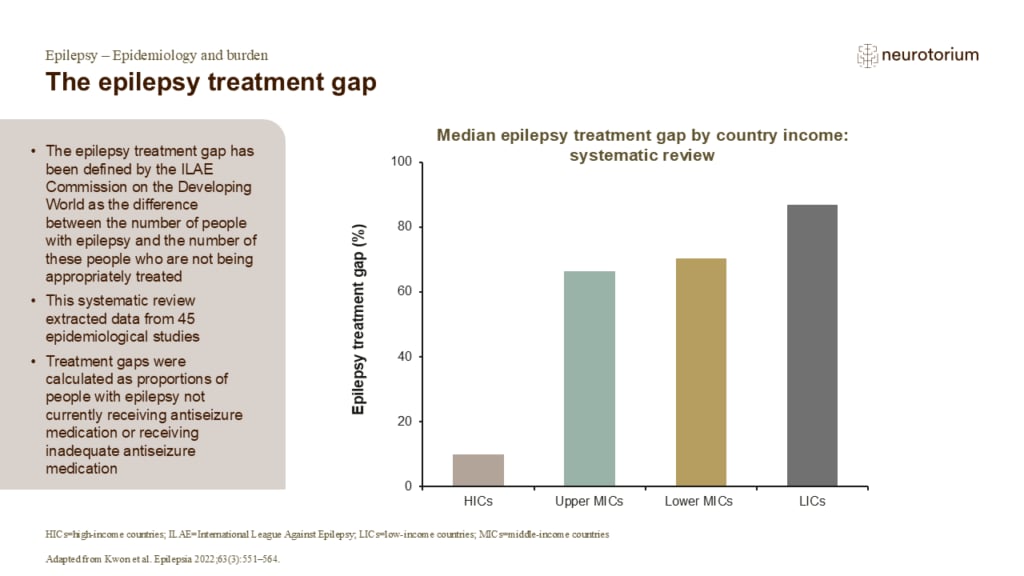
The epilepsy treatment gap
The ILAE Commission on the Developing World has defined the epilepsy treatment gap as the difference between the number of people with epilepsy and those who actually receive antiseizure medication.1 In a systematic review of 45 epidemiological studies, the estimated epil…
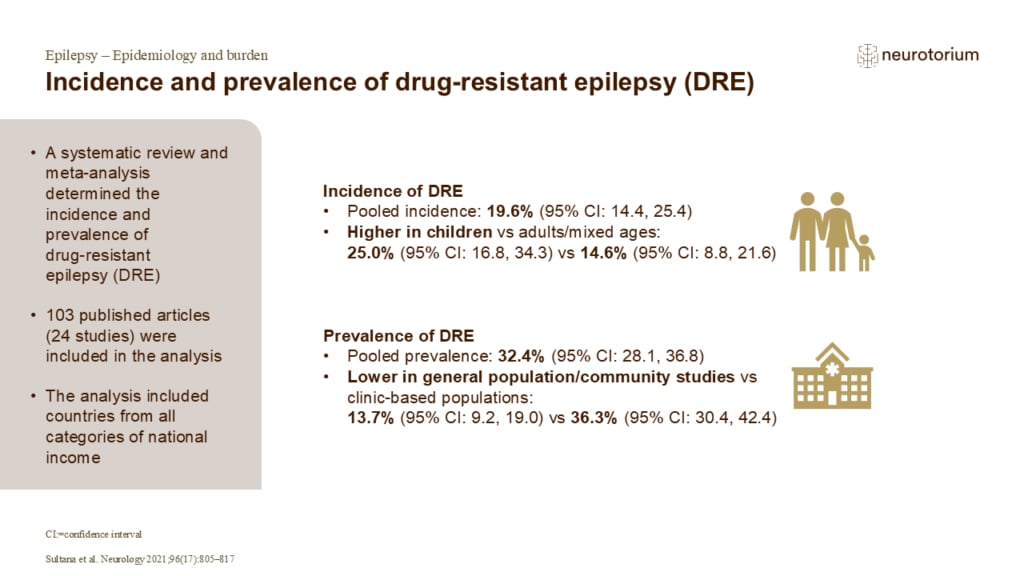
Incidence and prevalence of drug-resistant epilepsy (DRE)
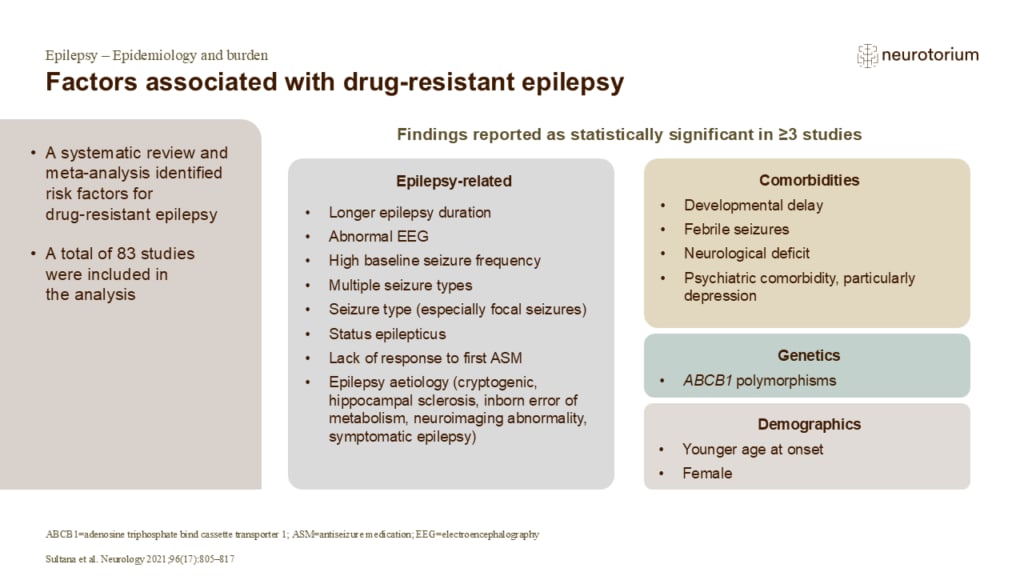
Factors associated with drug-resistant epilepsy
In the same meta-analysis, 83 studies were analyzed to determine specific factors associated with drug-resistant epilepsy.1 With respect to polymorphisms in the ABC1 gene, C345T, C1234T, and G2677T were found to be statistically significant in multiple studies.1
Reference…
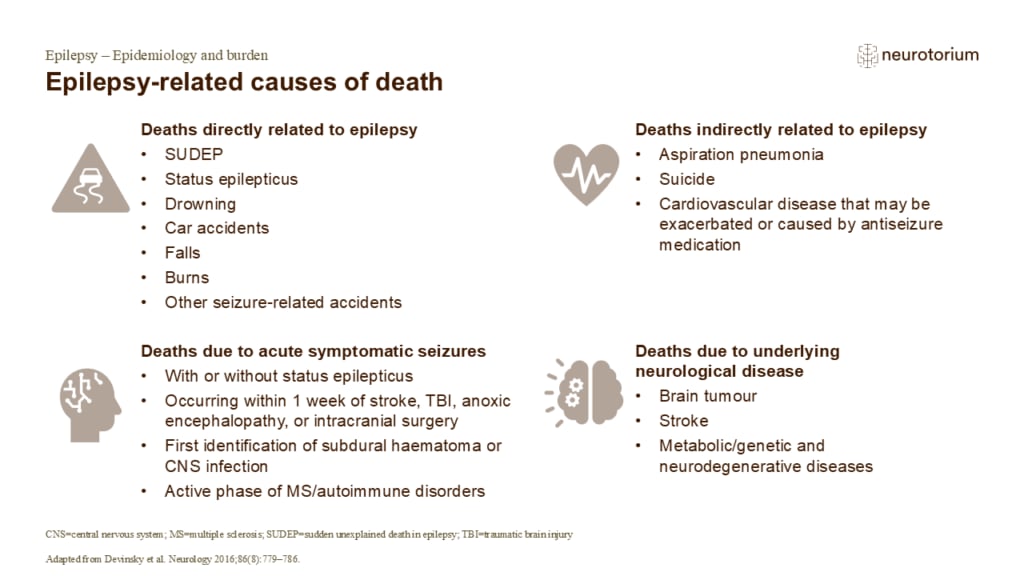
Epilepsy-related causes of death
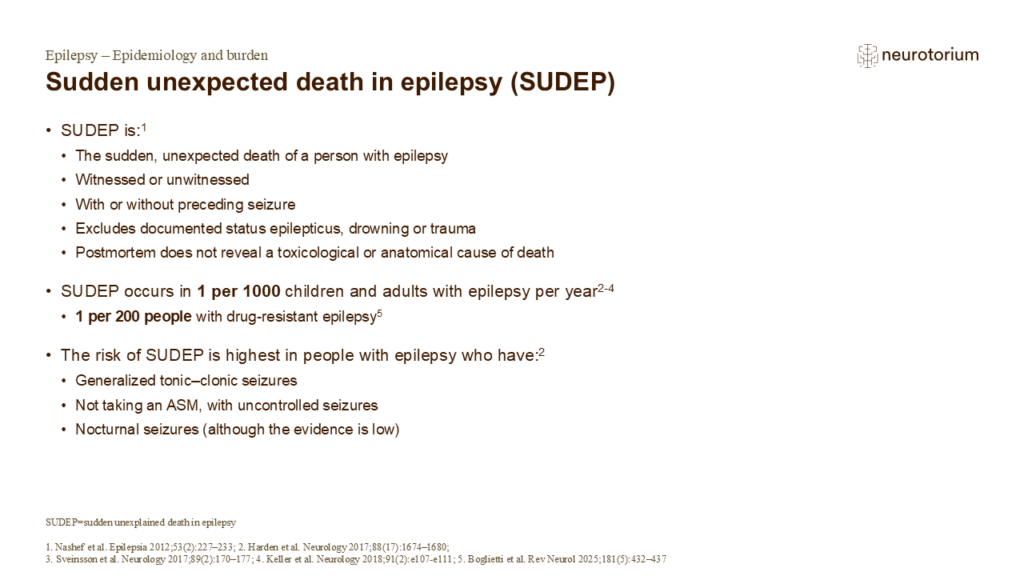
Sudden unexpected death in epilepsy (SUDEP)
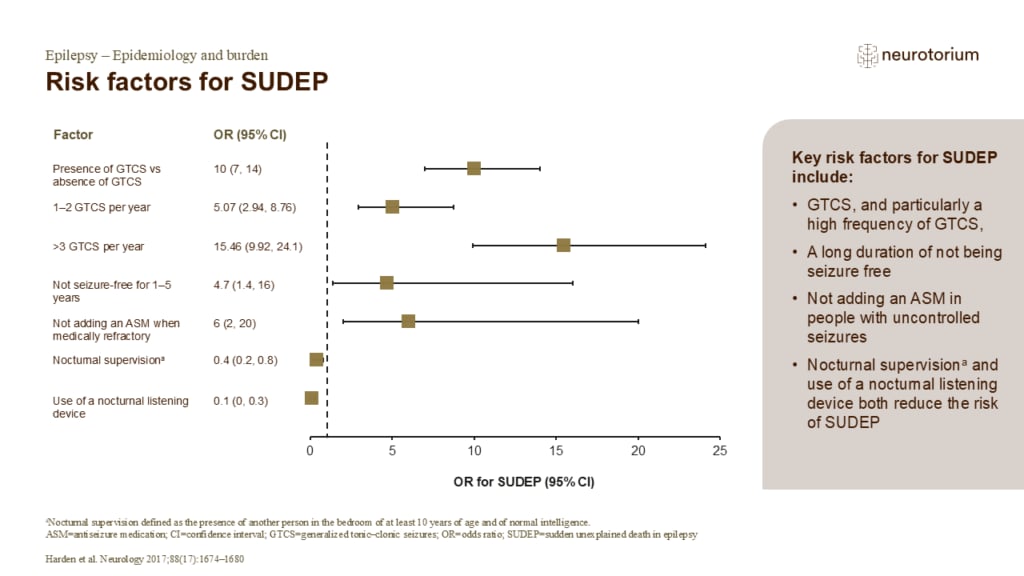
Risk factors for SUDEP
The American Academy of Neurology and the American Epilepsy Society used two systematic searches of the literature: firstly for articles from the earliest available to November 2010, and this was repeated for articles published between November 2015 and April 2015 to info…
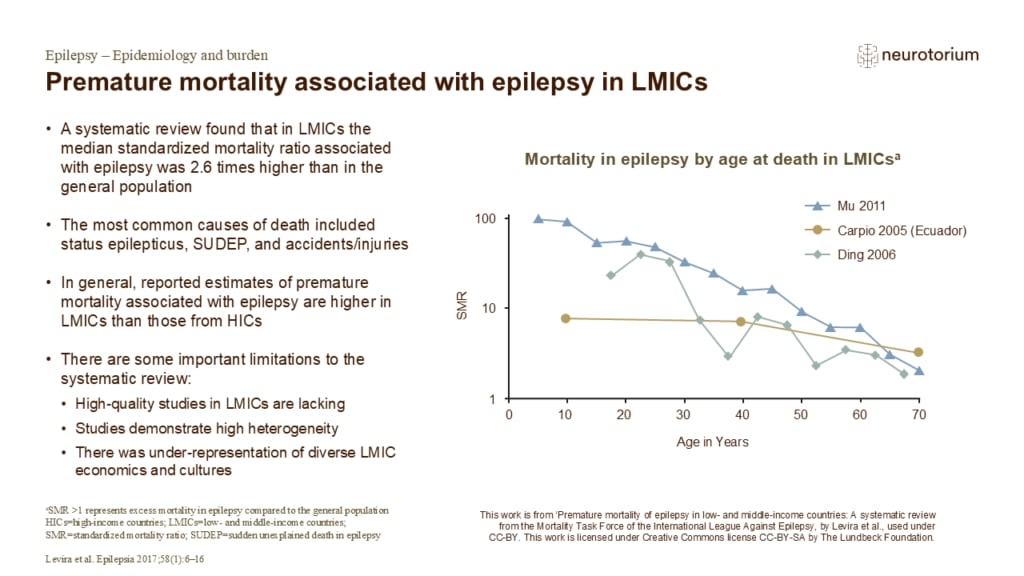
Premature mortality associated with epilepsy in LMICs
In a systematic review, three studies from LMICs were identified that showed SMRs were highest in the youngest age groups, with a marked decline after early adulthood.1
Reference:
1.Levira F, Thurman DJ, Sander JW, et al. Premature mortality of epilepsy in low- and middle…
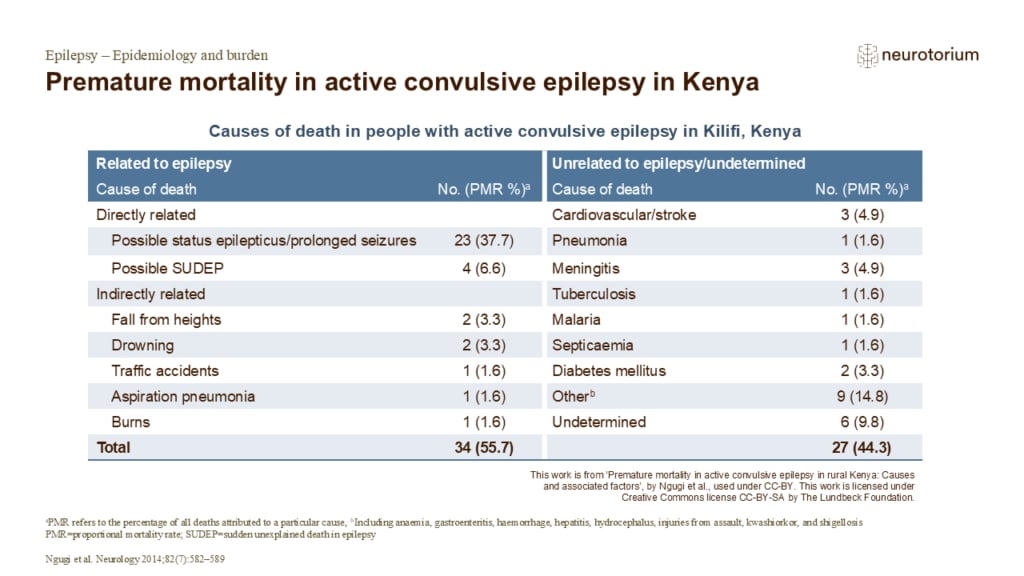
Premature mortality in active convulsive epilepsy in Kenya
This study was conducted in the Kilifi region of Kenya that covers a population of more than 233,800 people.1 At the first stage of the study a survey of the heads of households were asked 2 questions to identify potential family members with active convulsive epilepsy.1 …
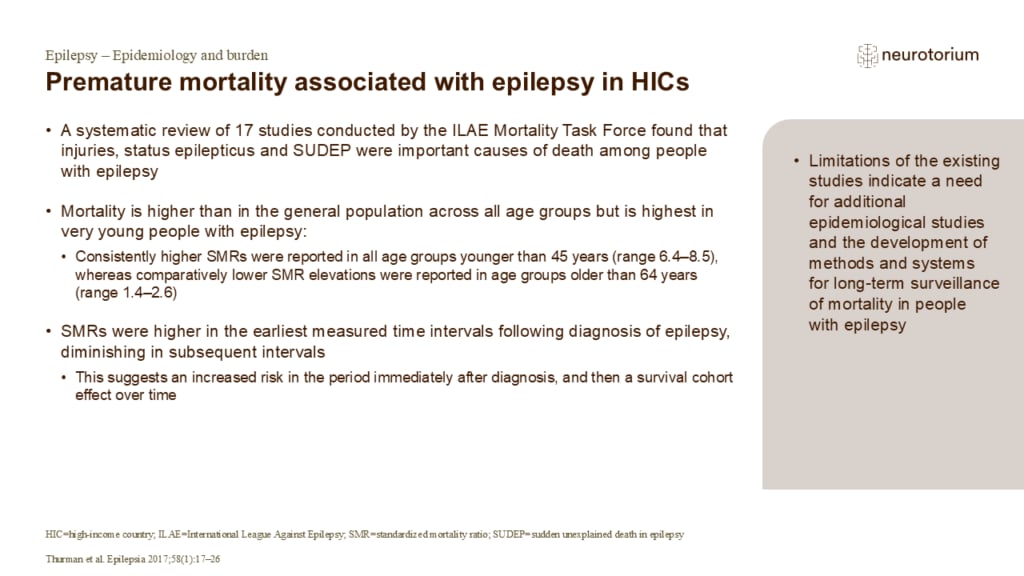
Premature mortality associated with epilepsy in HICs
This systematic review assessed the SMR for people with epilepsy according to age category and time since diagnosis in HICs.1 Although the SMRs were higher in all groups of people with epilepsy, the highest were observed for individuals aged younger than 45 years (6.4‒8.5…
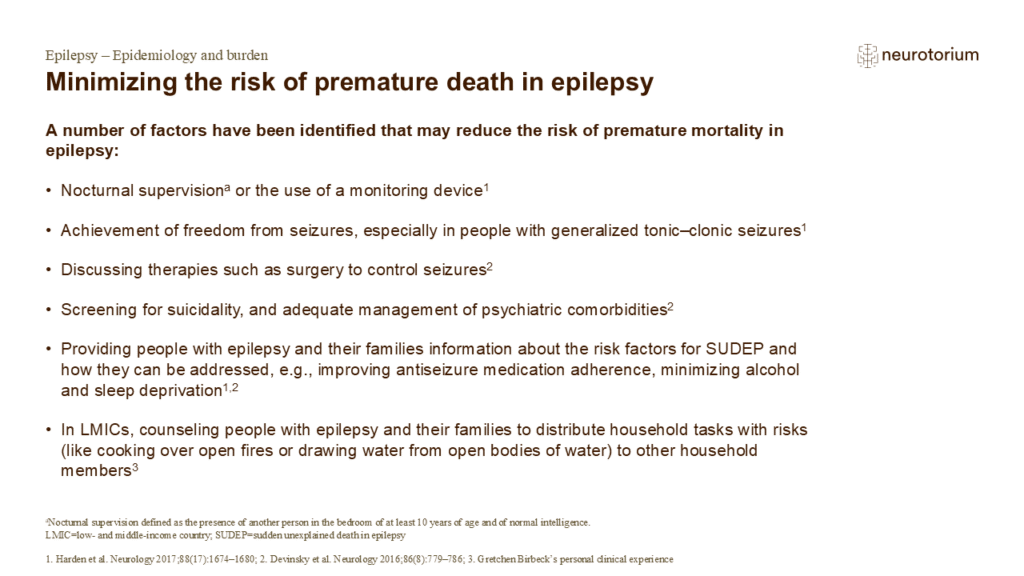
Minimizing the risk of premature death in epilepsy
Related content

In this video, Professor Dr. Nathalie Jetté reviews depression as a common yet often under-recognized comorbidity in epilepsy.

In this video, Professor Dr. Gretchen Birbeck examines epilepsy-associated stigma as a global public-health challenge

In this video, Professor Dr. Jacqueline French reviews practical, first-line decision-making for anti-seizure medication selection