

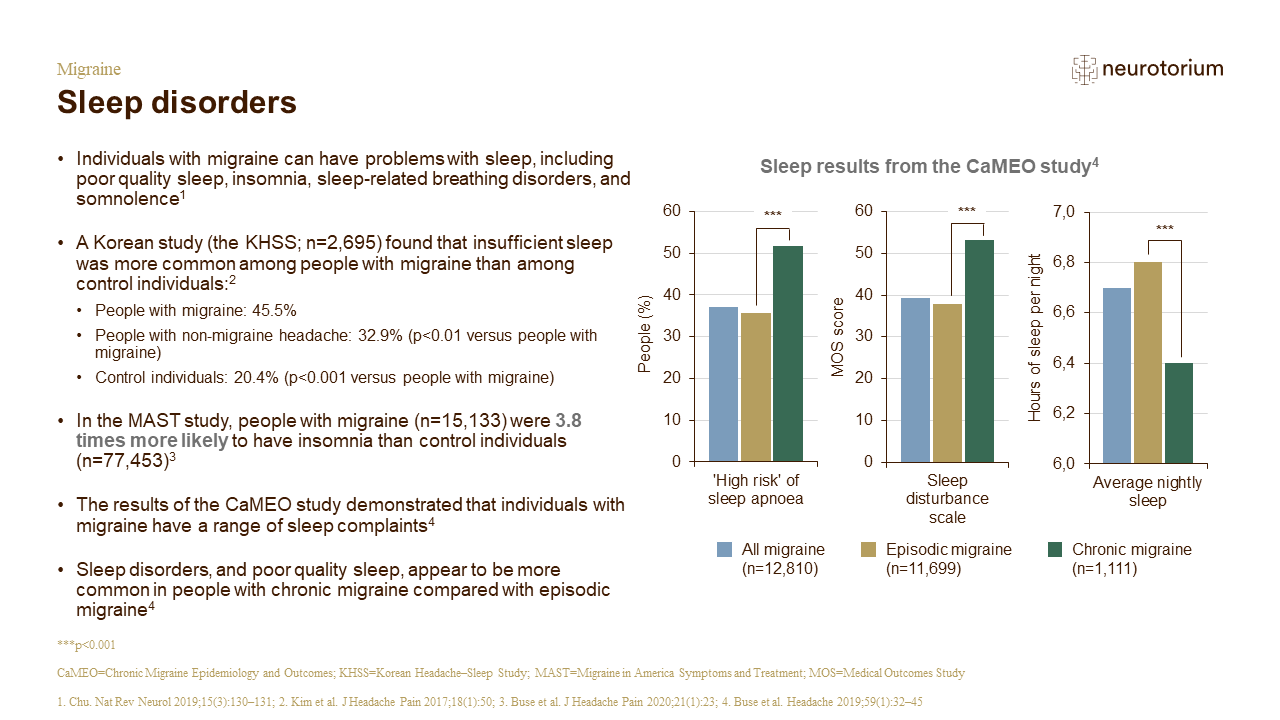
The Chronic Migraine Epidemiology and Outcomes (CaMEO) study was a web-based survey in the USA, analysing migraine symptoms, disease burden, and the impact of migraine on healthcare resource use.[Buse et al., 2019] Data from the CaMEO study were used to assess the prevalence of sleep disorders among people with migraine, using self-report metrics such as the Medical Outcomes Study (MOS) scale.[Buse et al., 2019]
The MOS scale consists of 12 items to measure 6 sleep dimensions: initiation (time to fall asleep), quantity (hours of sleep each night), maintenance, respiratory problems, perceived adequacy, and somnolence (the last 4 items are reported using a 6-item Likert scale ranging from ‘all of the time’ to ‘none of the time’).[Buse et al., 2019; Hays et al., 2005]
Other references used on slide:
Buse DC, Reed ML, Fanning KM, et al. Comorbid and co-occurring conditions in migraine and associated risk of increasing headache pain intensity and headache frequency: results of the Migraine in America Symptoms and Treatment (MAST) study. J Headache Pain 2020; 21 (1): 23.