

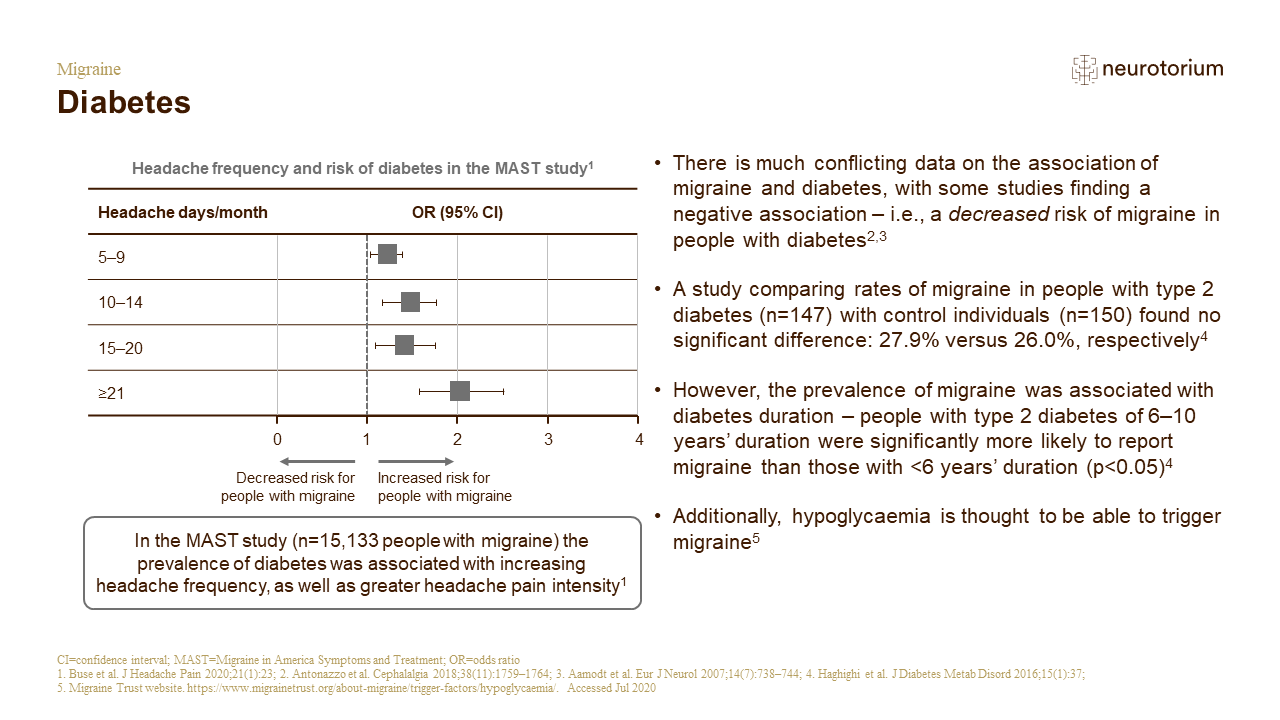
As outlined on the slide, there are conflicting data about whether diabetes might increase or decrease the risk of migraine, and vice versa.[Aamodt et al., 2007; Antonazzo et al., 2018; Buse et al., 2020; Haghighi et al., 2016] Because hypoglycaemia is thought to be able to trigger migraine, it is important for individuals with migraine to consider their blood sugars.[Migraine Trust] Dieting, skipping meals, and eating high-sugar foods are all thought to act as migraine triggers.[Migraine Trust] In people for whom blood sugar levels appear to trigger migraines, management of diet may be a useful tool for controlling migraines, e.g., eating low-sugar meals, and a well-balanced diet.[Migraine Trust]
Migraine Trust website. https://migrainetrust.org/live-with-migraine/self-management/common-triggers/. Accessed Feb 2022.