

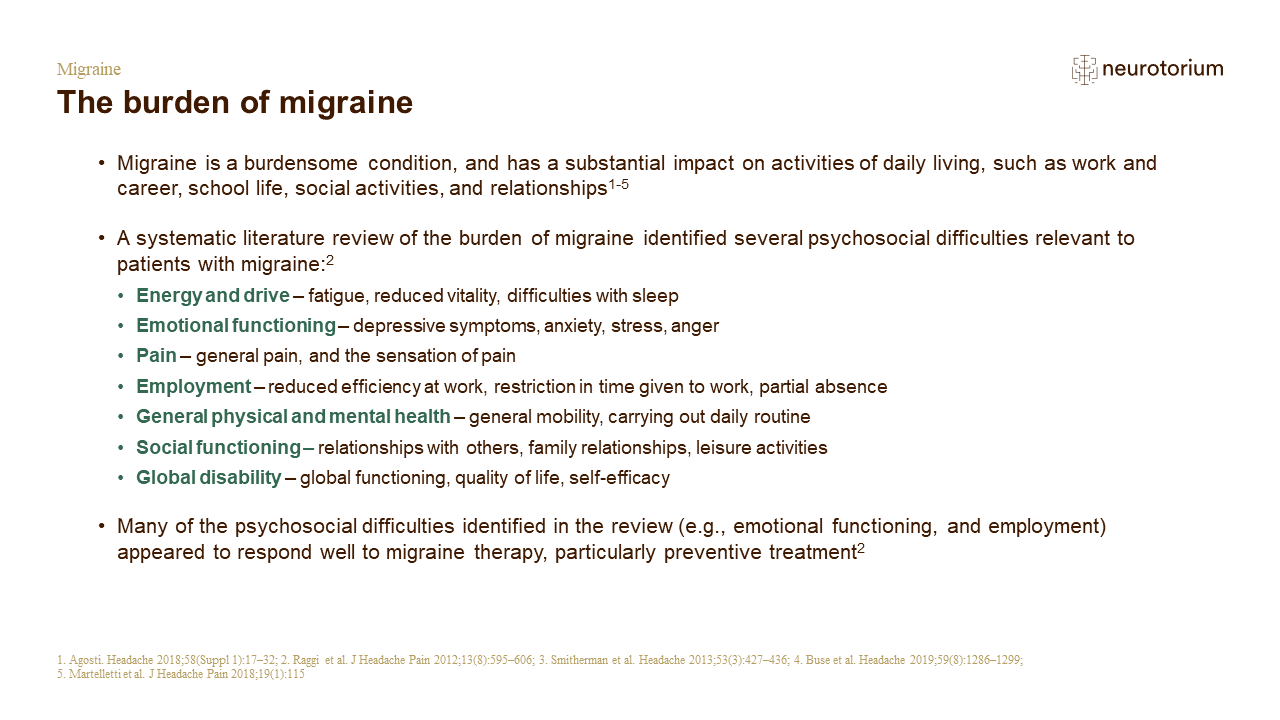
This systematic literature review incorporated information from 51 publications, and identified 34 ‘psychosocial difficulties’ associated with migraine, which were reported a total of 231 times across the included studies.[Raggi et al., 2012] These psychosocial difficulties were categorised according to the World Health Organization’s International Classification of Functioning, Disability and Health (ICF) framework, using established methods.[Raggi et al., 2012] As shown on the slide, the results highlighted the many burdensome psychosocial difficulties that are associated with migraine.[Raggi et al., 2012]
There are patient-reported outcome (PRO) scales that can be used to assess the burden of migraine on an individual.[Haywood et al., 2018] A review of PROs assessing the impact of headaches found 11 headache- or migraine-specific scales that measure patient impact.[Haywood et al., 2018] Of these scales, the Migraine-Specific Quality of Life Questionnaire (MSQ) and the Headache Impact Test – 6-item (HIT-6) had the greatest evidence base.[Haywood et al., 2018]
Other reference used on slides:
Agosti R. Migraine burden of disease: from the patient’s experience to a socio-economic view. Headache 2018; 58 (Suppl 1): 17–32.