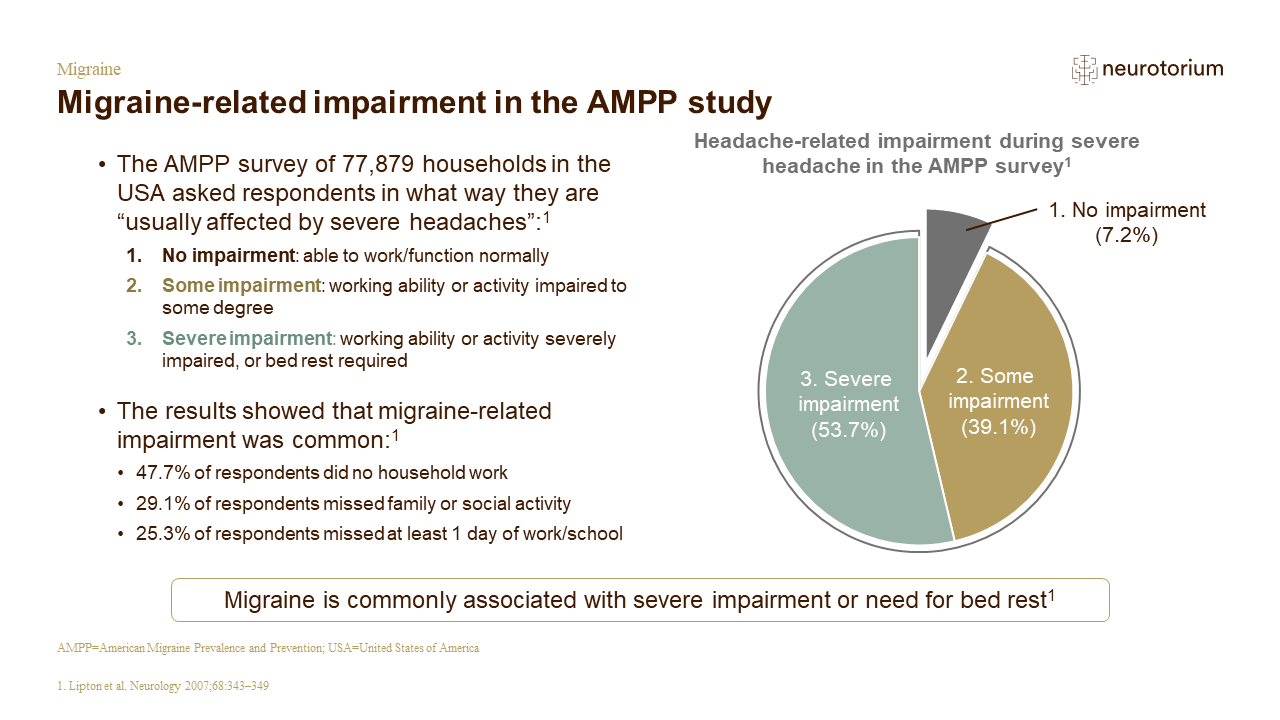
The American Migraine Prevalence and Prevention (AMPP) study began in 2004, and involved posting questionnaires to 120,000 households in the USA, from which 77,879 responses were received.[Silberstein et al., 2007; AMF website] The questionnaire included questions about headache frequency, severity, medication use, and impact on daily functioning.[Silberstein et al., 2007; AMF website] During a second phase of the study, 24,000 of the respondents who reported ‘severe’ headache were contacted for a follow-up, more detailed survey.[Silberstein et al., 2007; AMF website] The results of the AMPP study showed that migraine is a frequent and under-recognised condition in the USA.[Silberstein et al., 2007] Furthermore, migraine-related impairment was common, including missing work or school, or reduced productivity at work or school.[Lipton et al., 2007] In total, 53.7% of respondents reported that, during a severe headache, they experienced severe functional impairment, or required bed rest.[Lipton et al., 2007]
Migraine-related impairment in the AMPP study