

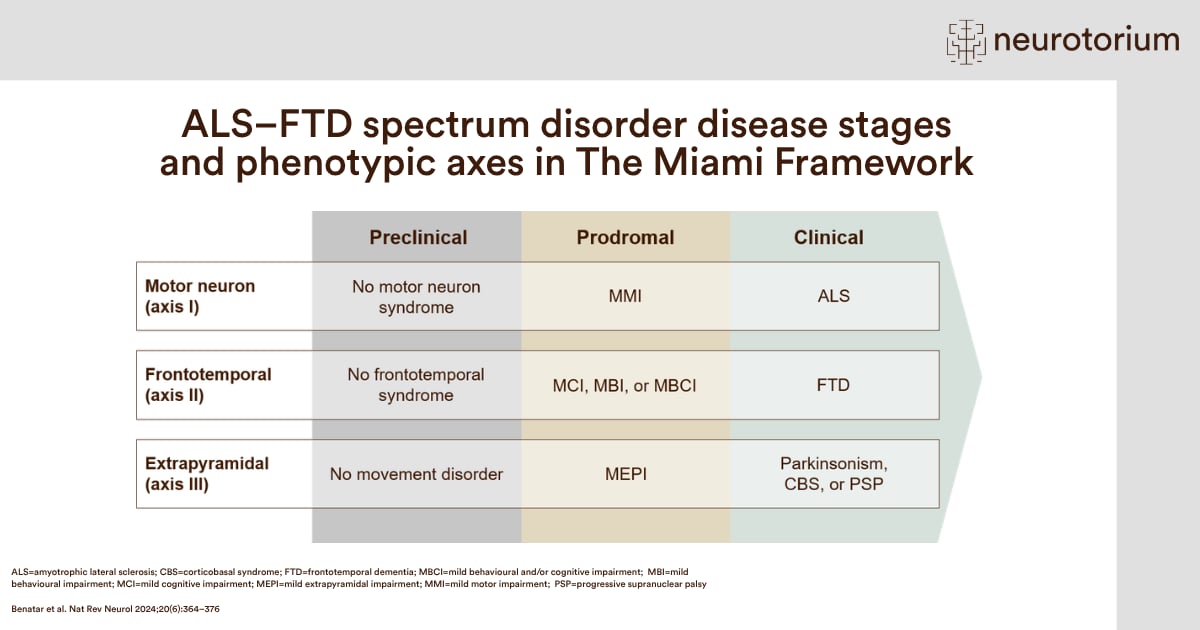
The Miami Framework conceptualizes amyotrophic lateral sclerosis–frontotemporal dementia (ALS–FTD) as a spectrum disorder that progresses along a continuum from preclinical, to prodromal, to clinically manifest disease.1 In the preclinical stage, there are ongoing neuropathological processes, but no clinical abnormalities are detectable.1,2 As the disease progresses to the prodromal stage, there is a subtle onset of clinical symptoms but these remain insufficient in severity to indicate clinically manifest disease.1,2
The framework describes three phenotypic axes: motor neuron dysfunction (Axis I), frontotemporal dysfunction (Axis II), and extrapyramidal dysfunction (Axis III).1 Within each axis, individuals may progress independently from preclinical to prodromal and then clinical disease. Consequently, being in a prodromal stage in one axis does not imply a similar stage in another, and pathology may be present in one, two, or all three axes simultaneously.1
Related content
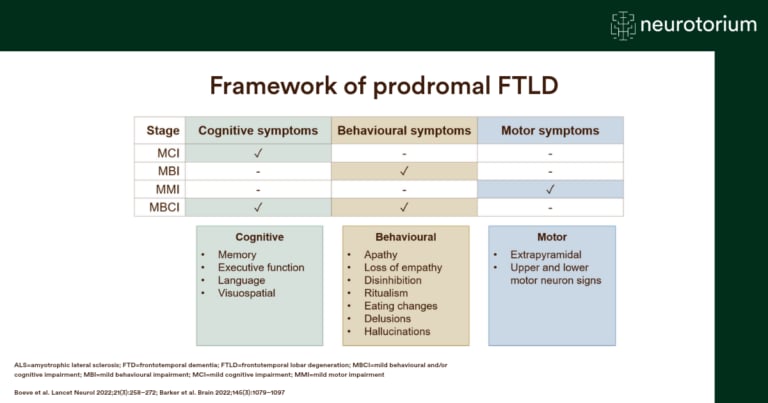
Prodromal FTLD can present with cognitive, behavioural and/or motor features, reflecting the clinical heterogeneity of early-stage disease.
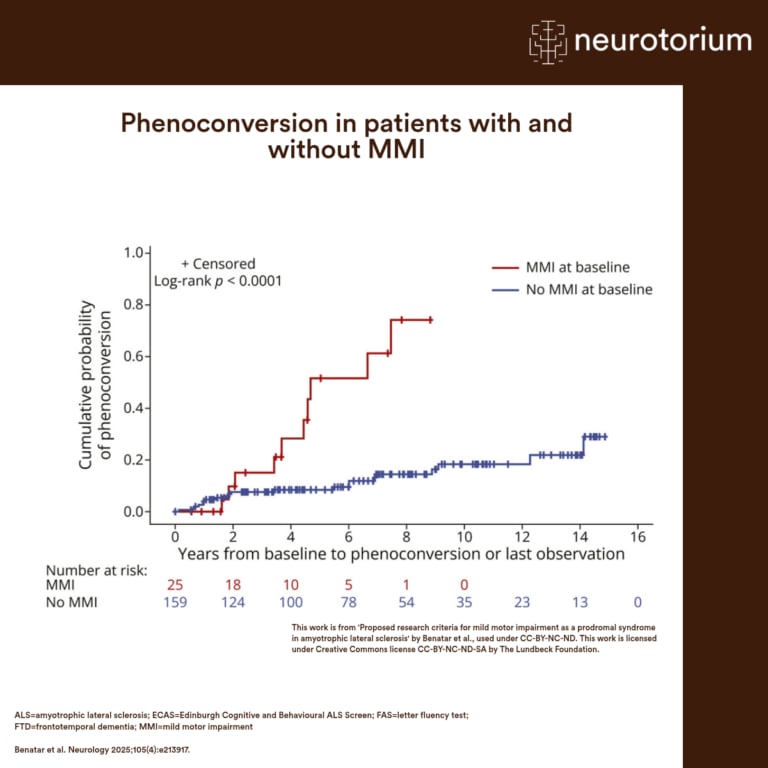
Mild motor impairment (MMI) at baseline is associated with earlier and more frequent phenoconversion, supporting MMI as a prodromal feature of ALS.
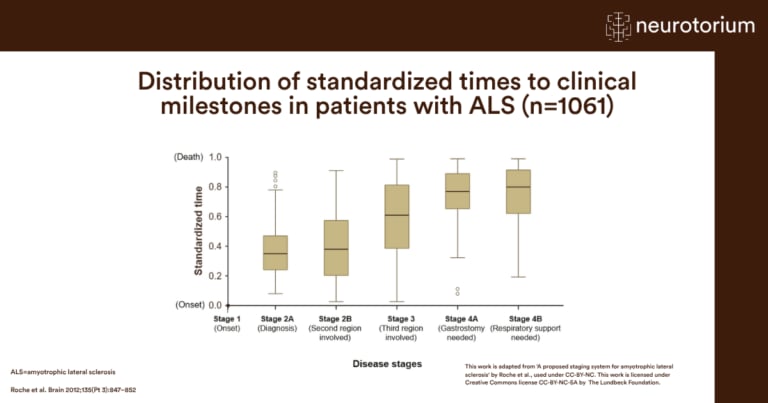
ALS clinical milestones occur progressively over the disease course, with substantial variation in the timing of progression between patients.