

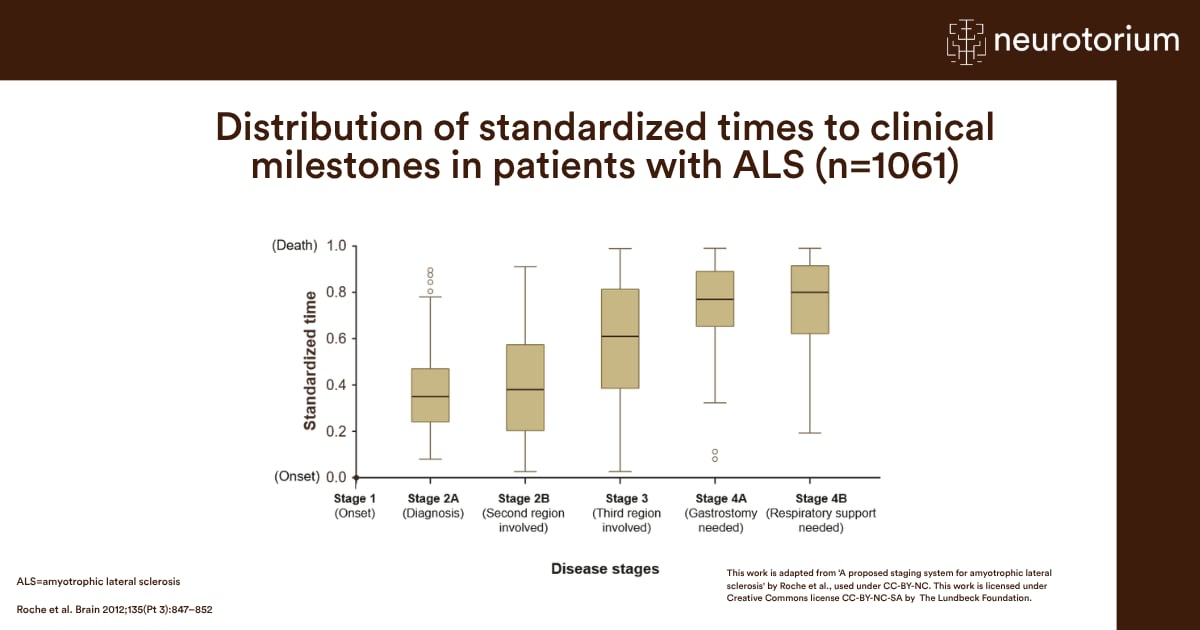
Clinical milestones tend to occur in a relatively predictable temporal sequence during ALS progression1. This observation led to the development of King’s staging system, where each stage reflects disease progression and key clinical milestones, and is related to survival time1
Disease staging provides a framework for monitoring progression and informing prognosis1,2
Related content
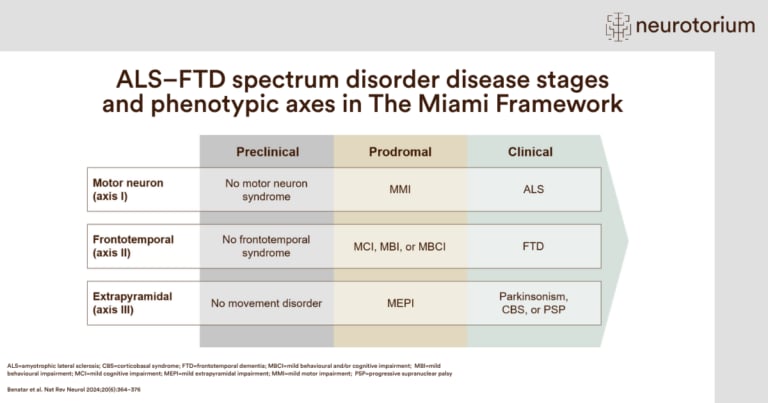
The Miami Framework describes ALS–FTD spectrum disorders across motor, frontotemporal and extrapyramidal axes, from preclinical through prodromal to clinical disease stages.
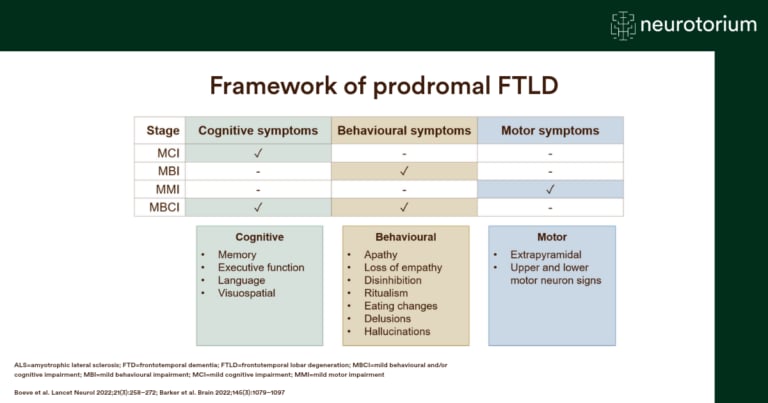
Prodromal FTLD can present with cognitive, behavioural and/or motor features, reflecting the clinical heterogeneity of early-stage disease.
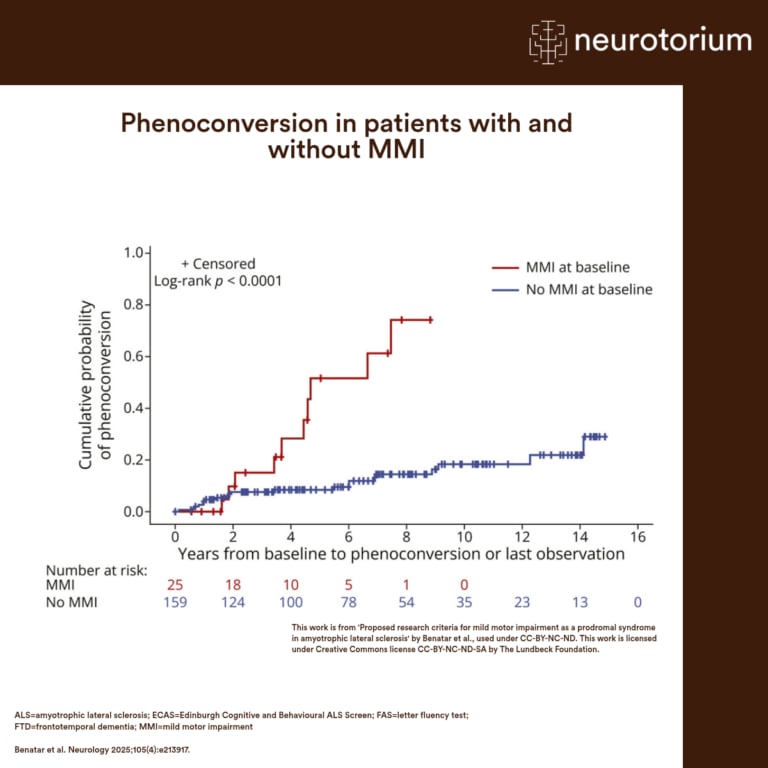
Mild motor impairment (MMI) at baseline is associated with earlier and more frequent phenoconversion, supporting MMI as a prodromal feature of ALS.