



Index for
slide deck
Course, natural history, and prognosis
Course, natural history, and prognosis
Disease course and natural history

Disease course and natural history
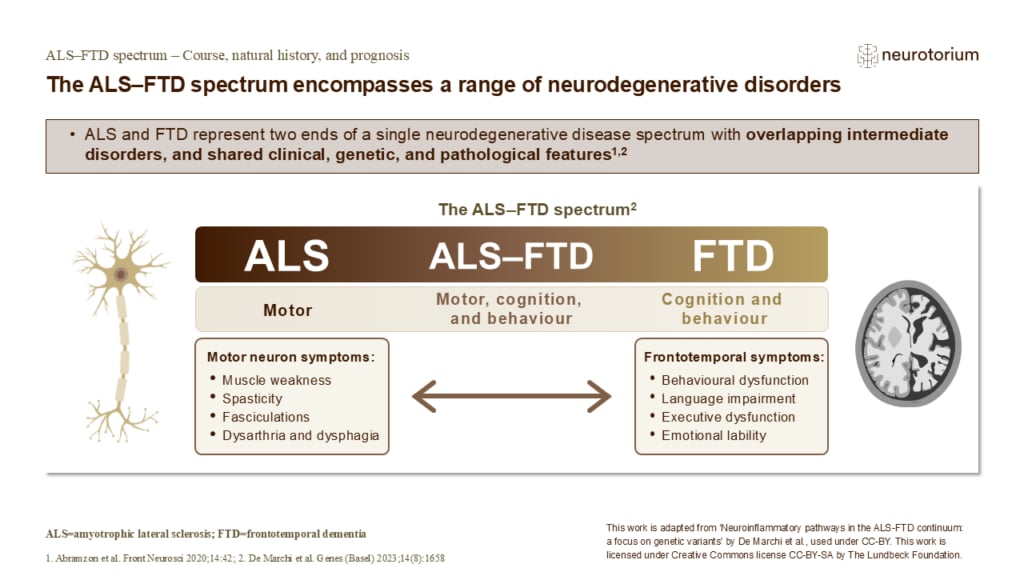
The ALS–FTD spectrum encompasses a range of neurodegenerative disorders
While amyotrophic lateral sclerosis (ALS) and frontotemporal dementia (FTD) have historically been considered distinct conditions, substantial overlap in genetic and pathological profiles indicates that they in fact represent two ends of a shared neurodegenerative disorde…
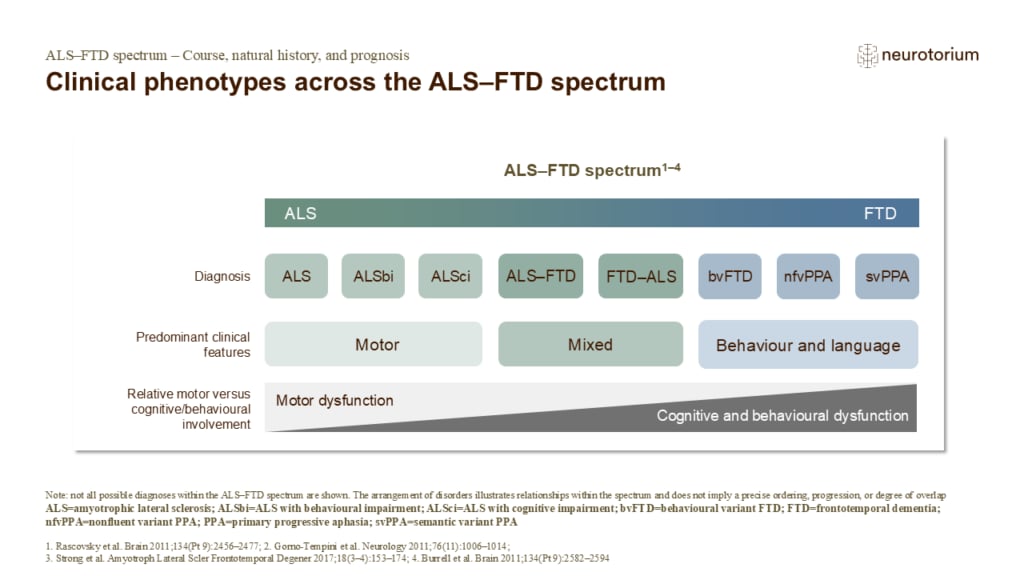
Clinical phenotypes across the ALS–FTD spectrum
The figure on this slide provides a visual representation of the relative extent of motor and cognitive/behavioural impairment across the amyotrophic lateral sclerosis–frontotemporal dementia (ALS–FTD) spectrum.1–4 It should be noted that the figure is representative and …
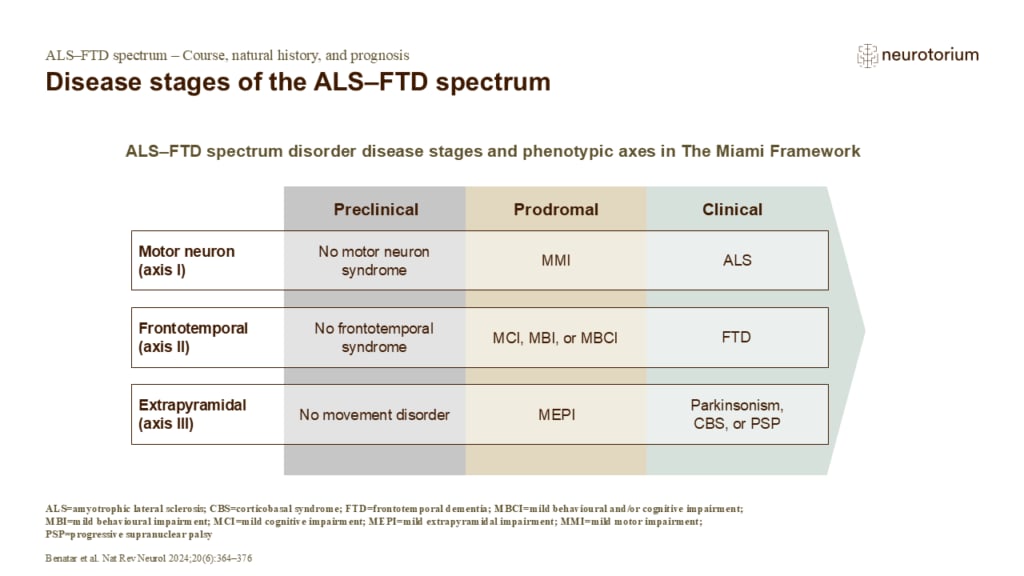
Disease stages of the ALS–FTD spectrum
The Miami Framework conceptualizes amyotrophic lateral sclerosis–frontotemporal dementia (ALS–FTD) as a spectrum disorder that progresses along a continuum from preclinical, to prodromal, to clinically manifest disease.1 In the preclinical stage, there are ongoing neuropa…
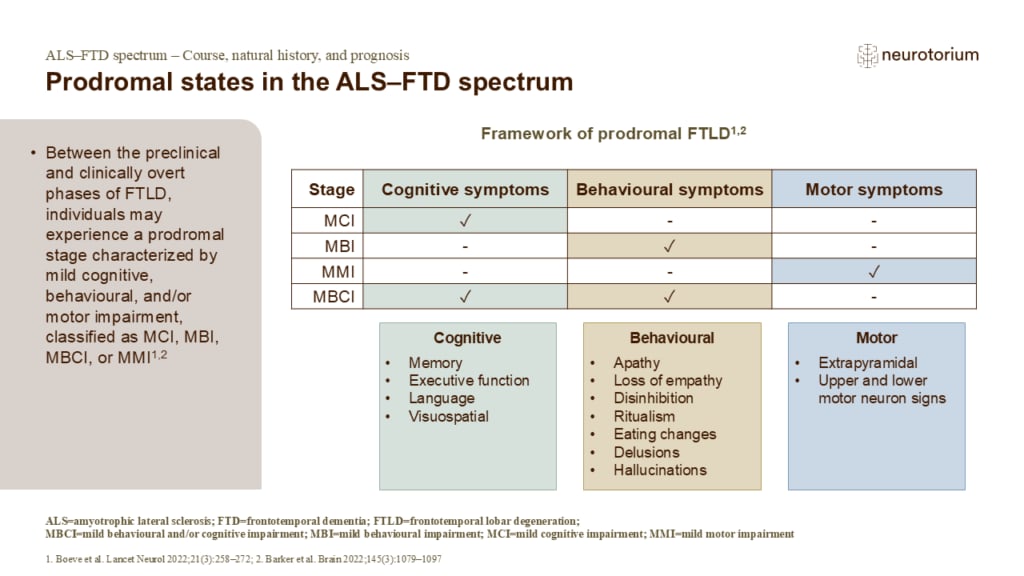
Prodromal states in the ALS–FTD spectrum
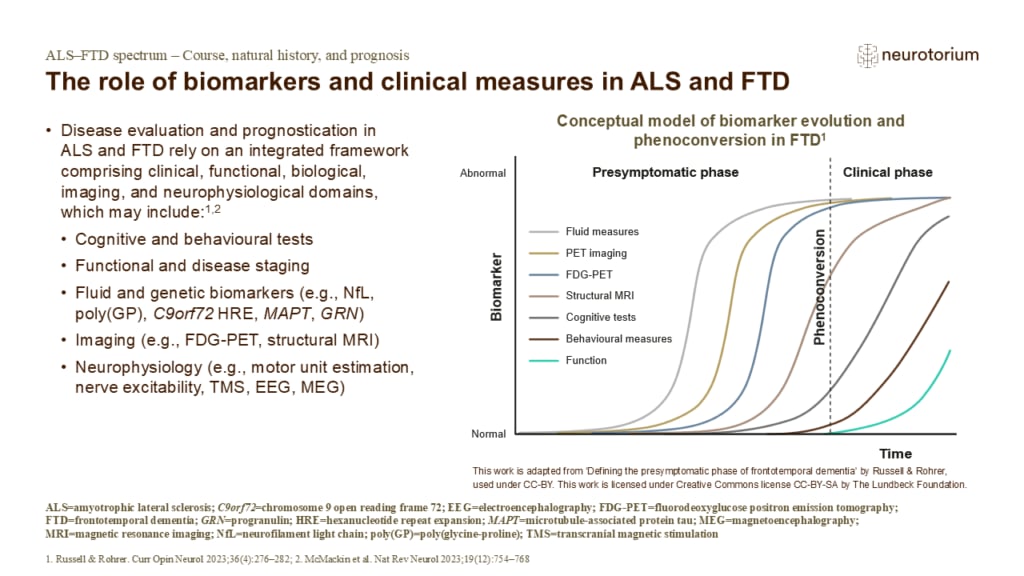
Within the framework of prodromal frontotemporal lobar degeneration (FTLD), mild cognitive impairment (MCI) is characterized by impairment in at least one cognitive domain, whereas mild behavioural impairment (MBI) is characterized by changes in personality, behaviour, or…
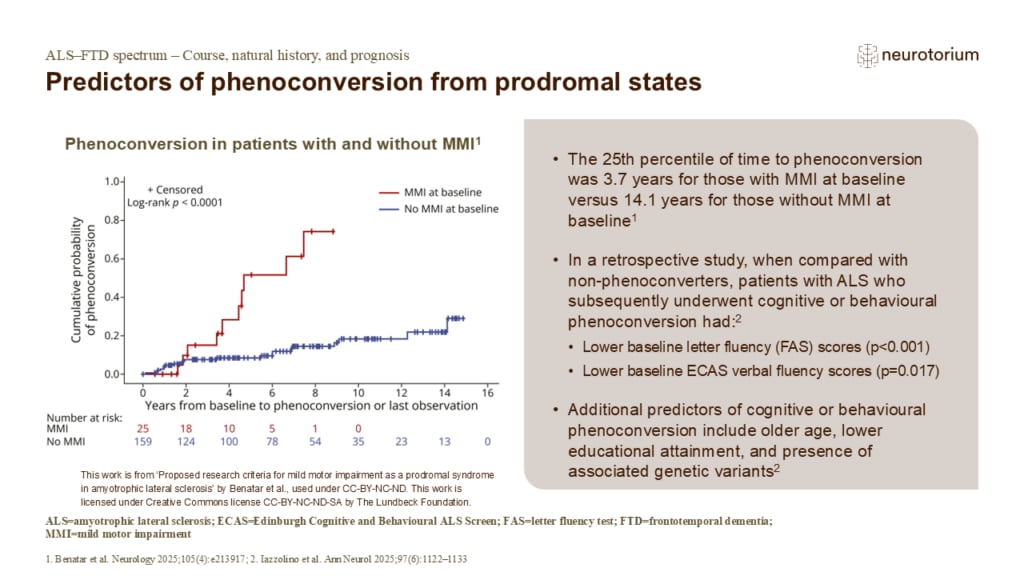
Predictors of phenoconversion from prodromal states
The Pre-Symptomatic Familial ALS (Pre-fALS) study was a single-centre study in North America of individuals who were carriers of amyotrophic lateral sclerosis (ALS)-associated pathogenic variants and who, at the time of enrollment, were clinically presymptomatic for ALS a…
Progression and survival in ALS
Progression and survival in ALS
Patterns of disease onset and spread in ALS
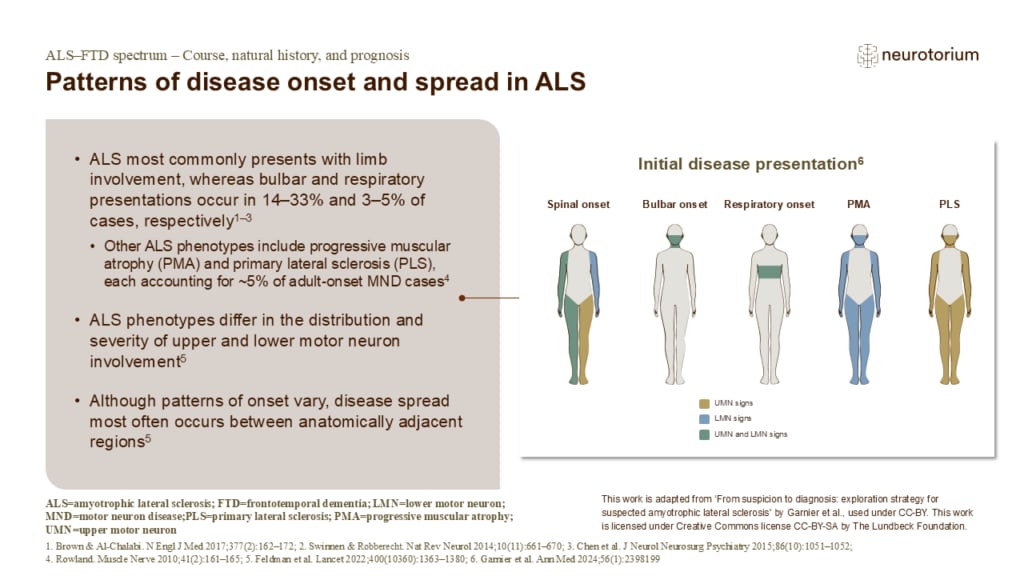
Some reviews consider that progressive muscular atrophy (PMA) and primary lateral sclerosis (PLS) are on the spectra of amyotrophic lateral sclerosis (ALS) phenotypes, although they may also be considered as separate clinical entities.3,5
References:
1. Brown RH & Al-Chal…
Clinical milestones and staging in ALS
Clinical and functional staging systems in ALS
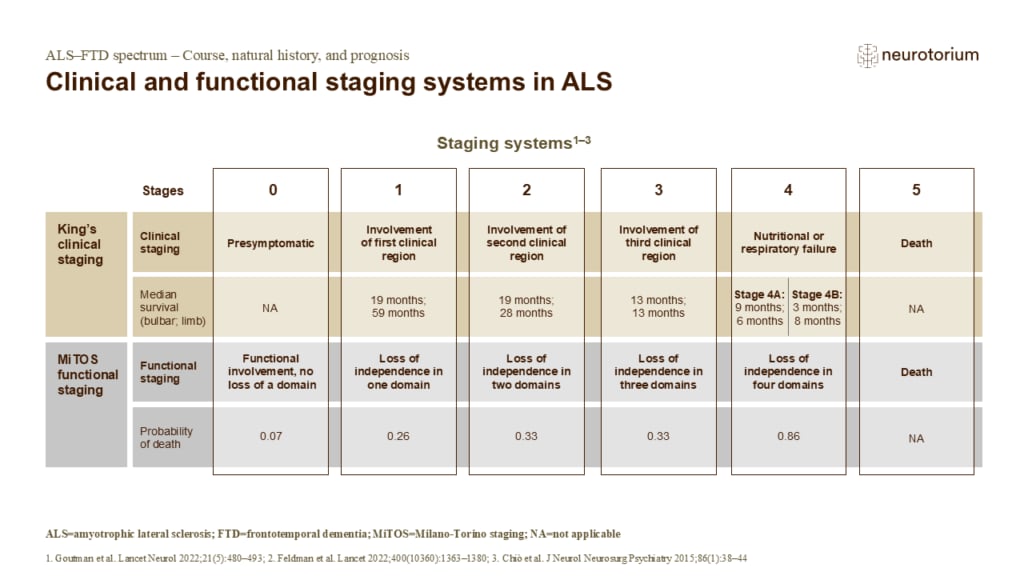
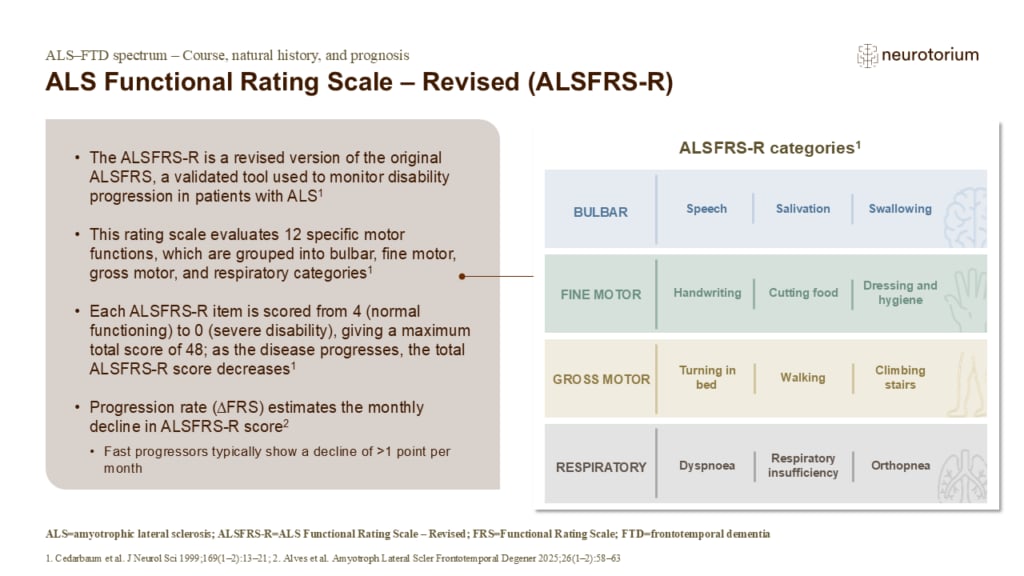
The progression of motor symptoms in Axis I (The Miami Framework) can be staged through the amyotrophic lateral sclerosis (ALS)-specific King’s clinical staging and Milano-Torino staging (MiTOS) functional staging.2 Taken together, these staging systems provide prognostic…
ALS Functional Rating Scale – Revised (ALSFRS-R)
ALSFRS-R trajectories and prognosis in ALS
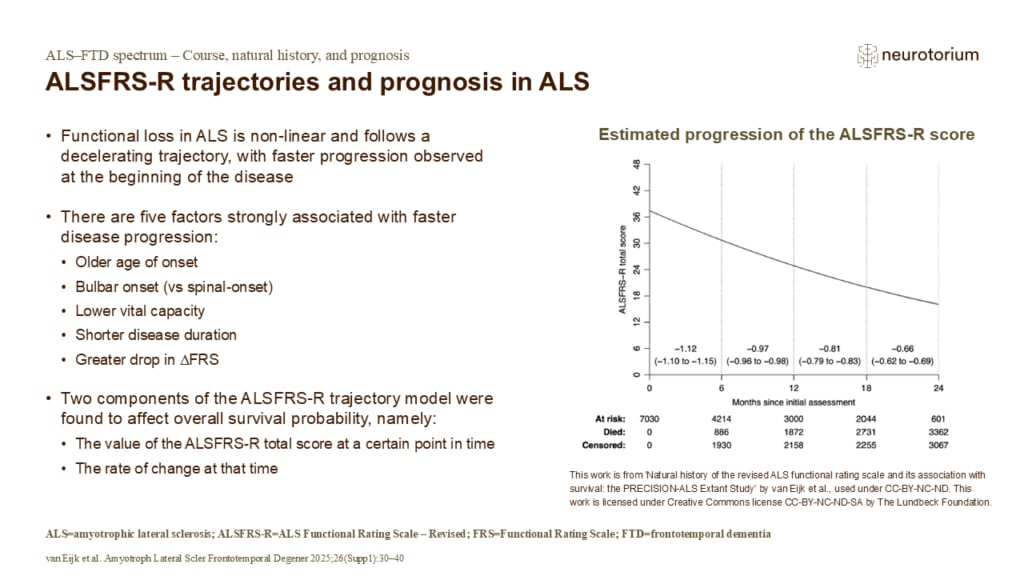
The PRECISION-ALS Extant study was a multicentre, longitudinal, observational cohort study of patients from nine European specialised amyotrophic lateral sclerosis (ALS) centres (PRECISION consortium). This study aimed to characterize the natural history of the ALS Functi…
Course of cognitive and behavioural changes in ALS
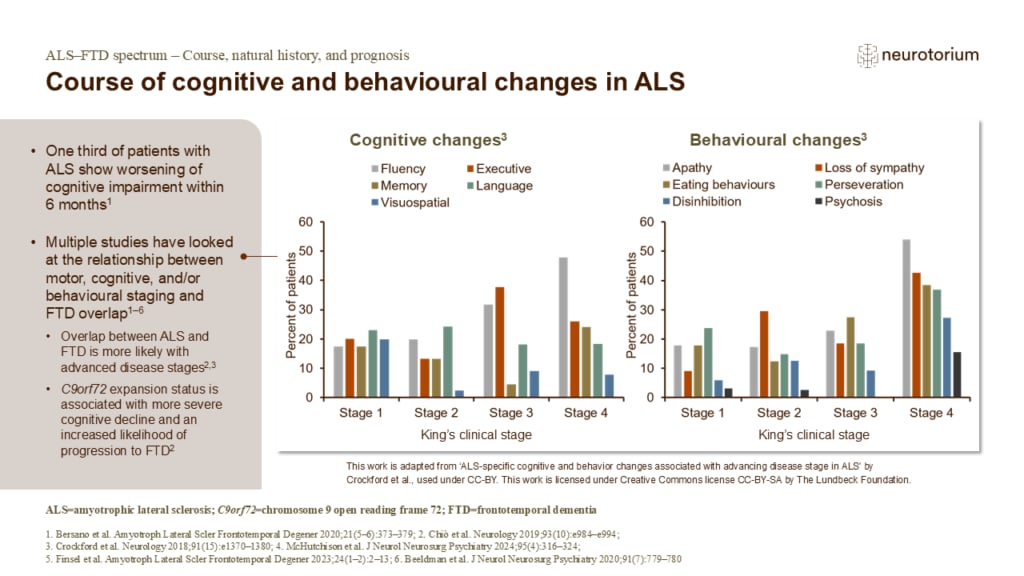
Amyotrophic lateral sclerosis (ALS)-specific cognitive functions (particularly letter fluency) and behaviour (apathy, loss of sympathy, eating behaviours, perseveration, disinhibition, and psychosis) are significantly associated with the disease stage, with later stages c…
Risk factors for cognitive and behavioural impairment in ALS
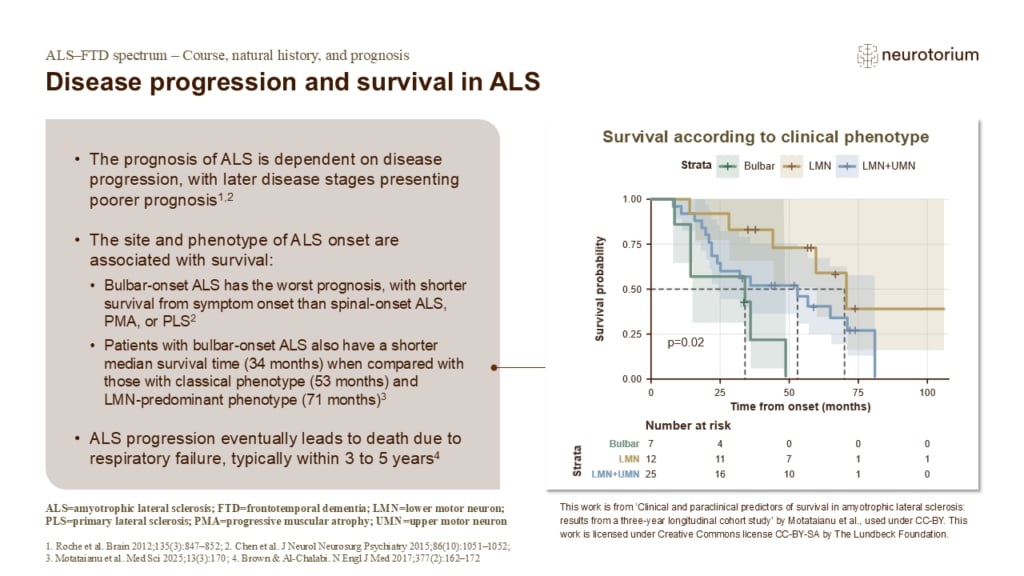
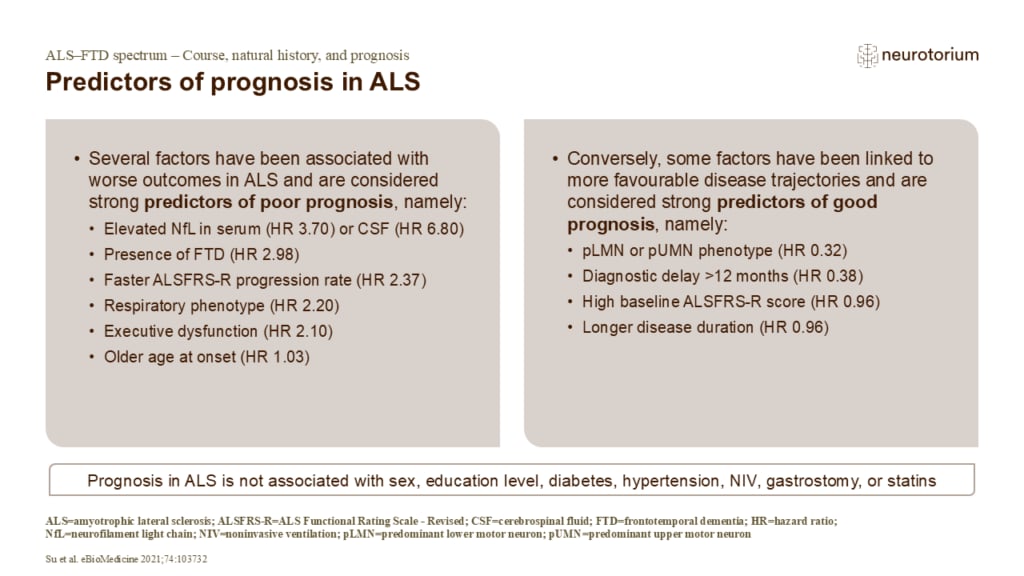
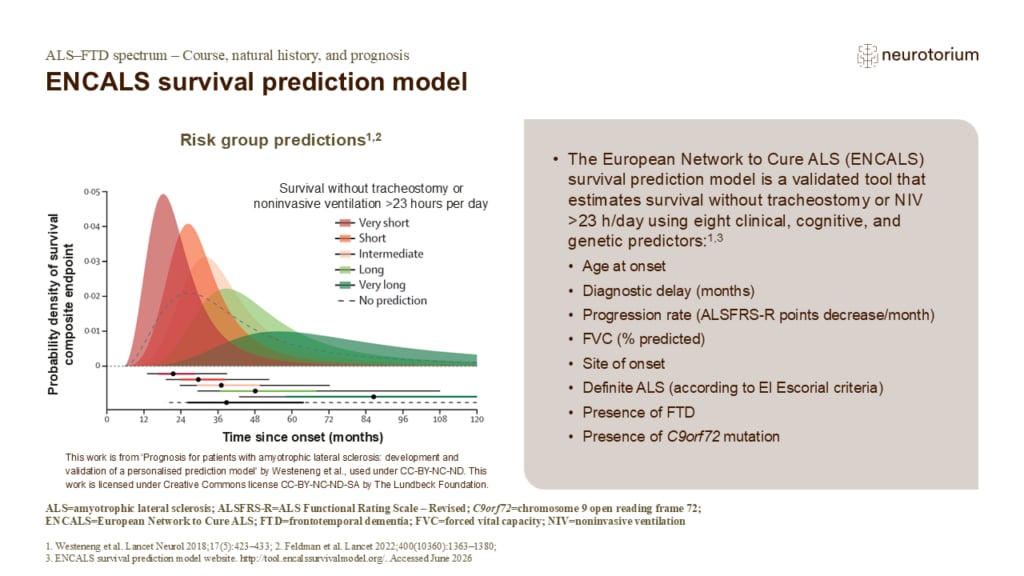
Disease progression and survival in ALS
Progression and survival in FTD
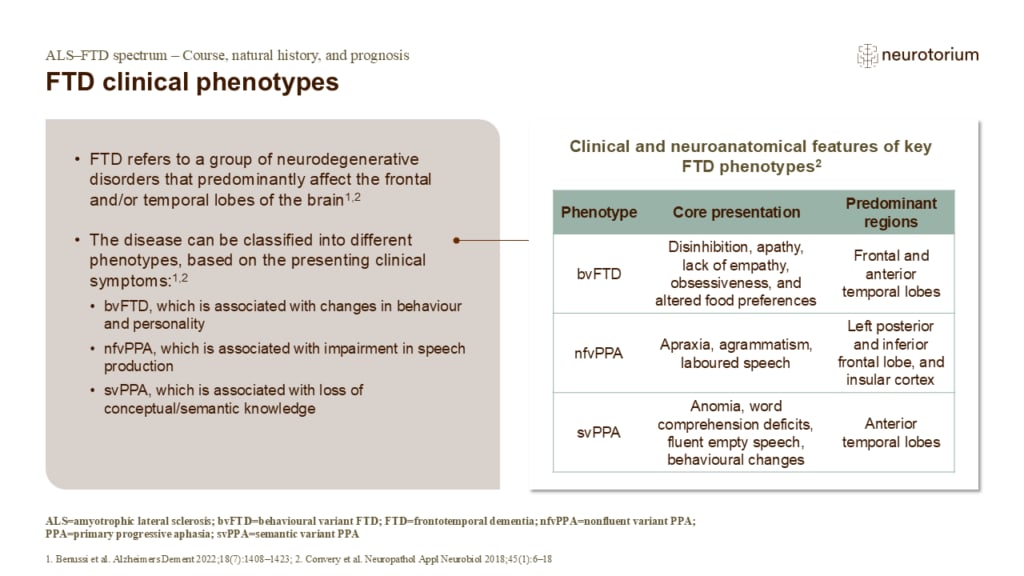
FTD clinical phenotypes
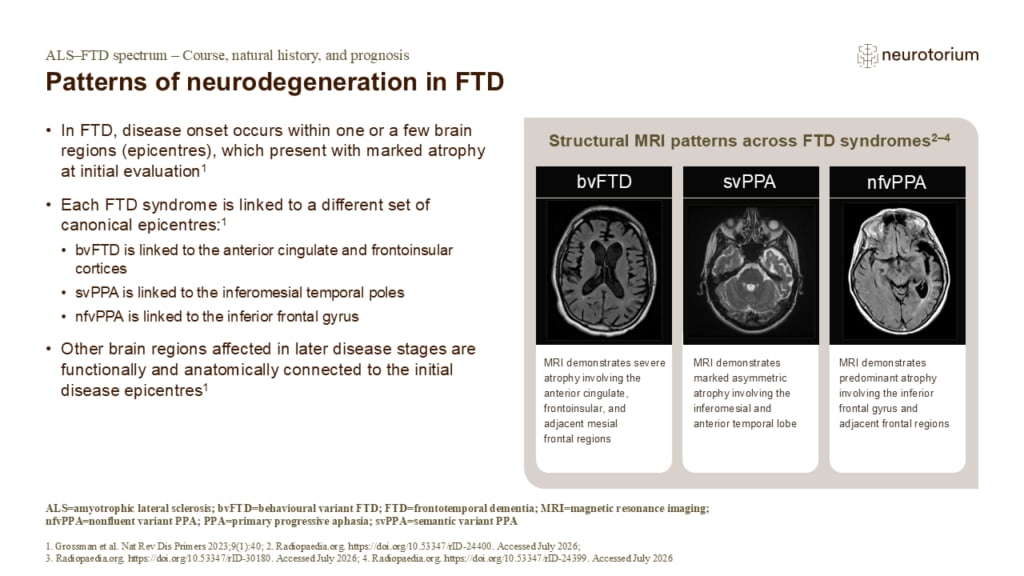
Patterns of neurodegeneration in FTD
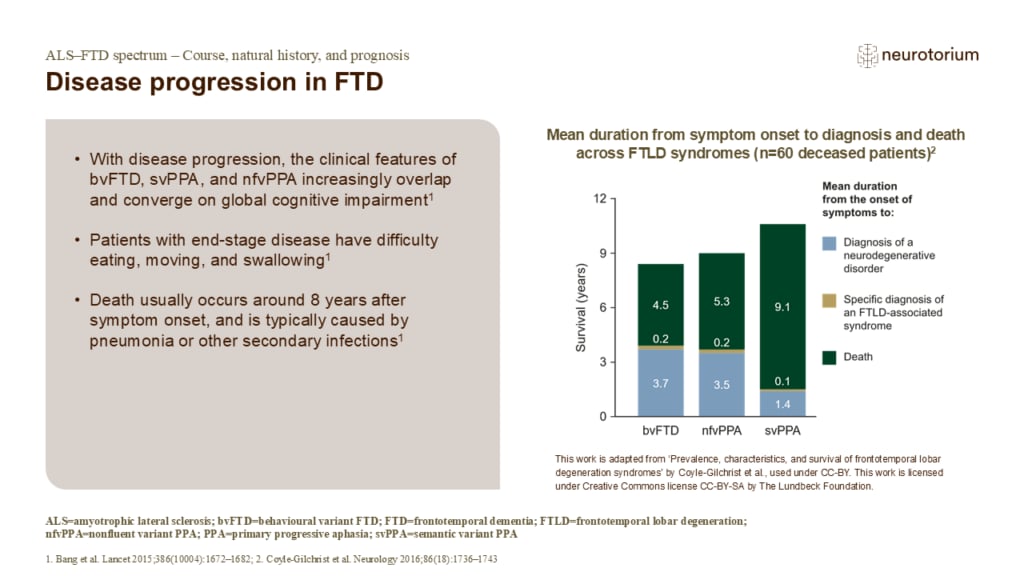
Disease progression in FTD
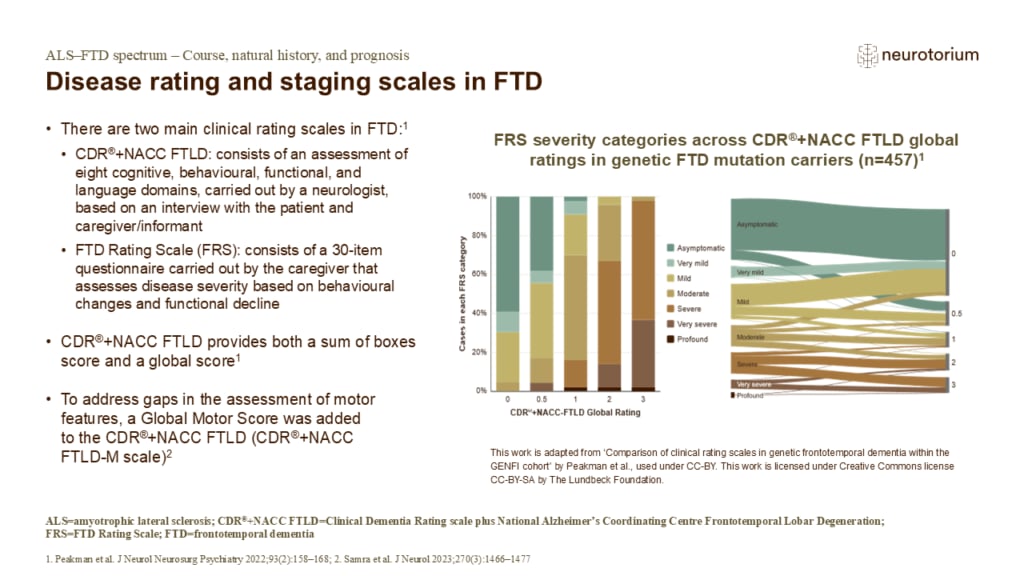
Disease rating and staging scales in FTD
Clinical Dementia Rating scale plus National Alzheimer’s Coordinating Centre Frontotemporal Lobar Degeneration (CDR®+NACC FTLD) global score ratings reflect disease stage, ranging from 0 (asymptomatic), to 0.5 (prodromal/very mild impairment), to 1–3 (mild, moderate, and …
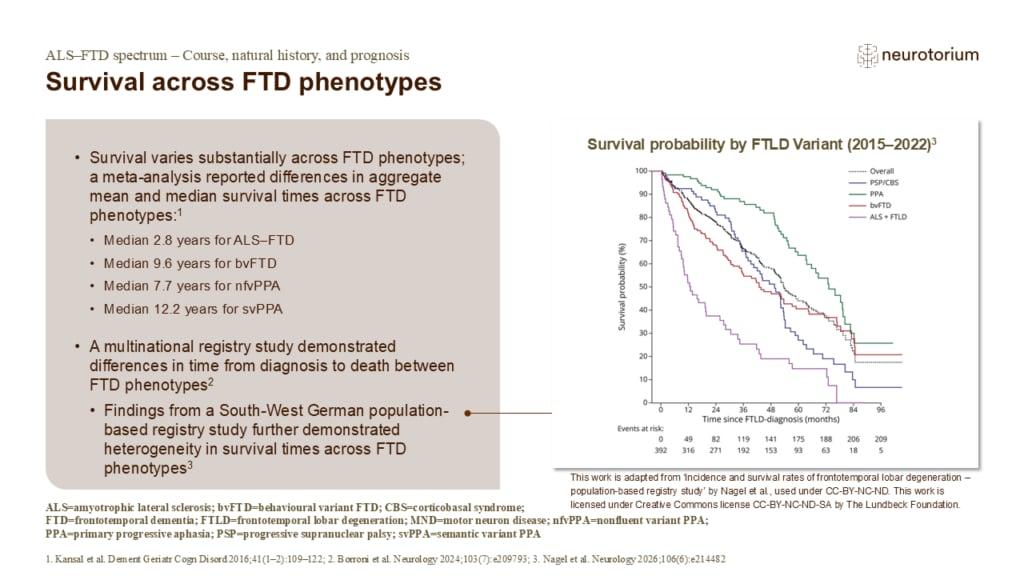
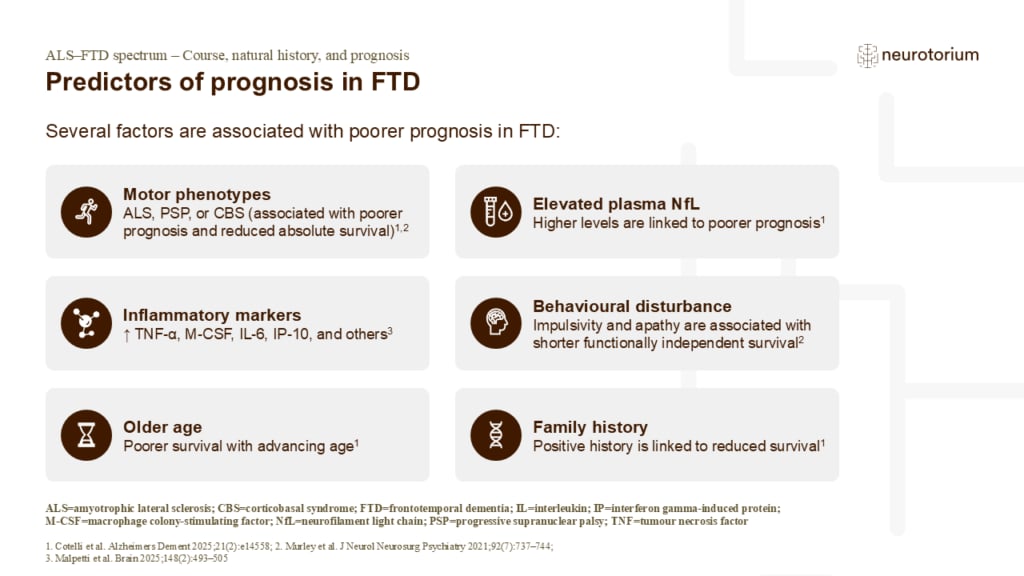
Survival across FTD phenotypes
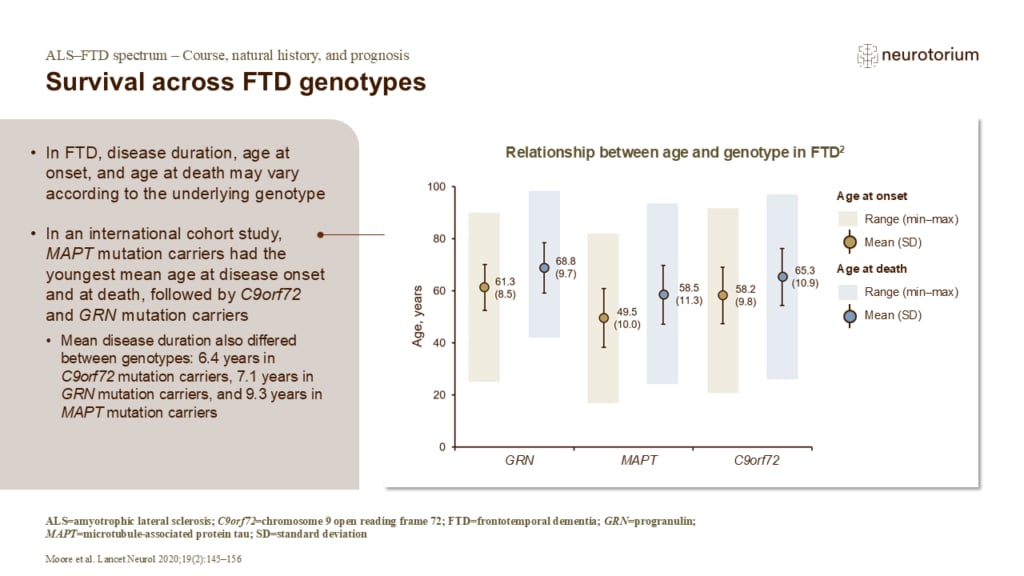
Survival across FTD genotypes
An international, retrospective cohort study explored differences in age at onset, age at death, and disease duration between genetic groups for individuals with frontotemporal dementia (FTD) with mutations in progranulin (GRN), microtubule-associated protein tau (MAPT), …
Related content
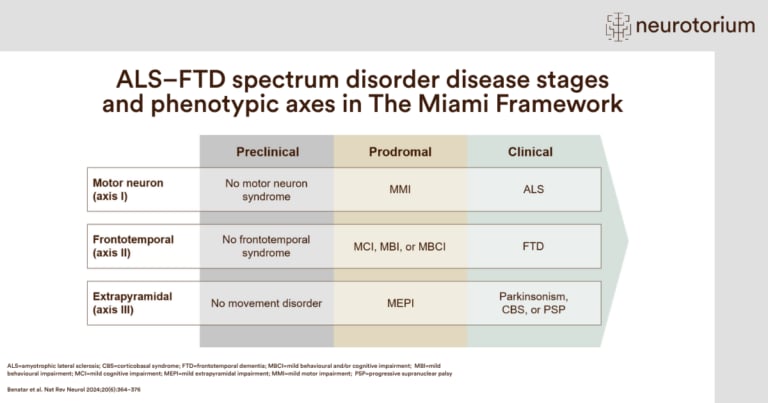
The Miami Framework describes ALS–FTD spectrum disorders across motor, frontotemporal and extrapyramidal axes, from preclinical through prodromal to clinical disease stages.
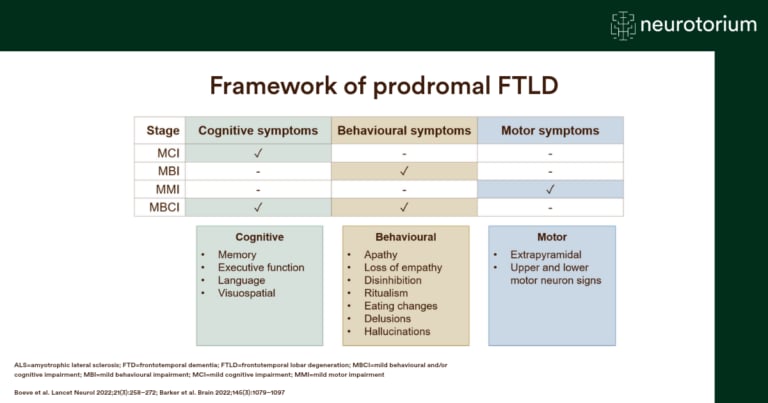
Prodromal FTLD can present with cognitive, behavioural and/or motor features, reflecting the clinical heterogeneity of early-stage disease.
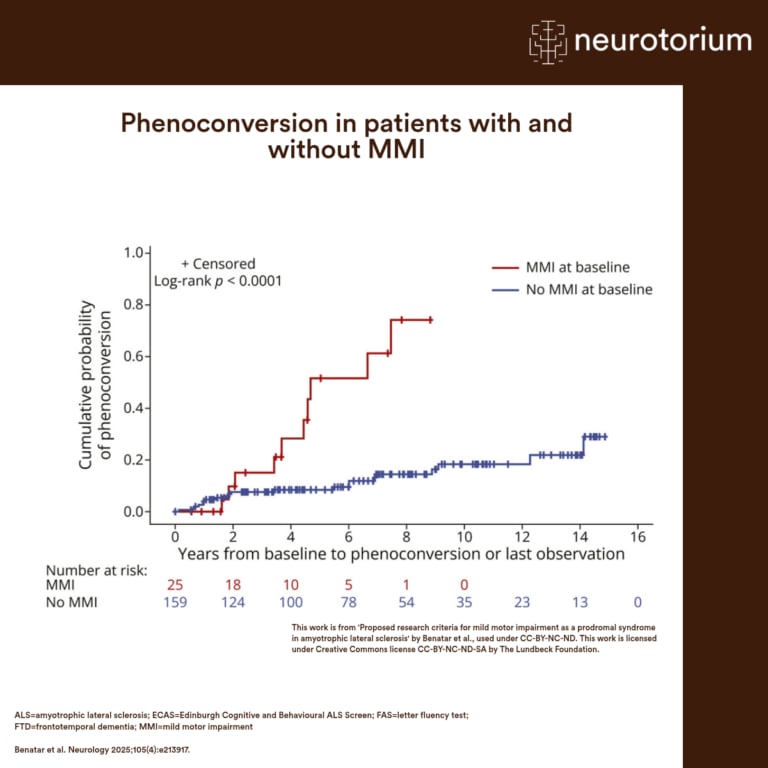
Mild motor impairment (MMI) at baseline is associated with earlier and more frequent phenoconversion, supporting MMI as a prodromal feature of ALS.