

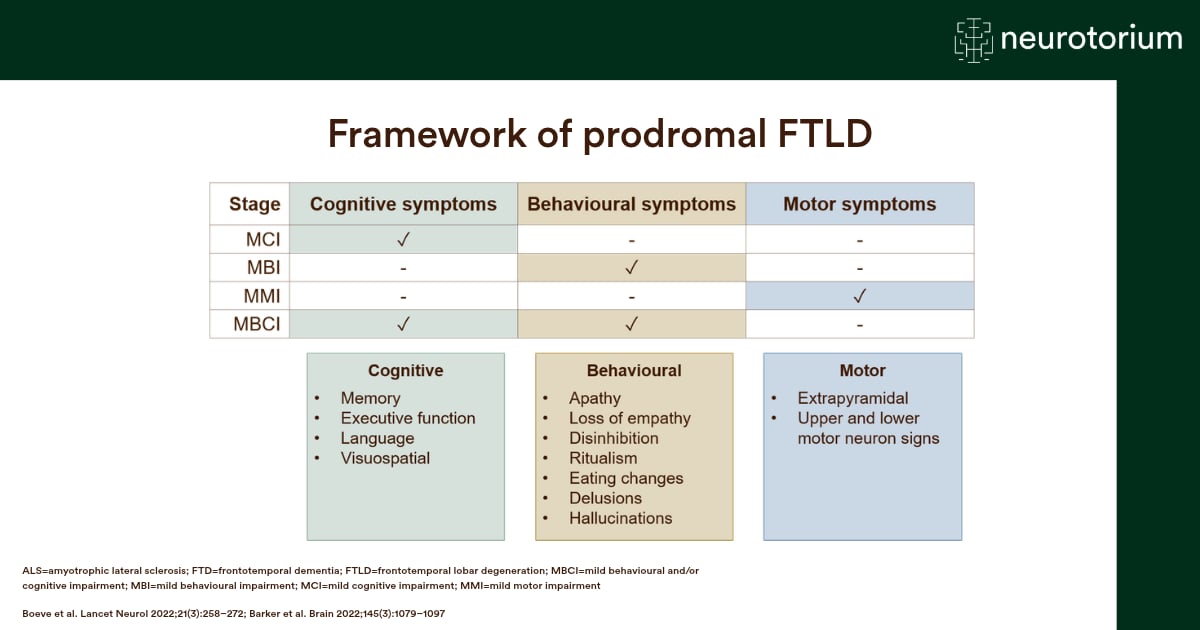
Within the framework of prodromal frontotemporal lobar degeneration (FTLD), mild cognitive impairment (MCI) is characterized by impairment in at least one cognitive domain, whereas mild behavioural impairment (MBI) is characterized by changes in personality, behaviour, or comportment, including at least two of the features described in the figure.1 Mild behavioural and/or cognitive impairment (MBCI) reflects overlap in cognitive and behavioural symptoms,2 while mild motor impairment (MMI) is characterized by a decline in motor functioning, including one or more of the motor features shown.1
Individuals in the prodromal phase may have features that overlap with both normal neurologic function and clinically overt FTLD, reflecting the transitional nature of this stage.1
Related content
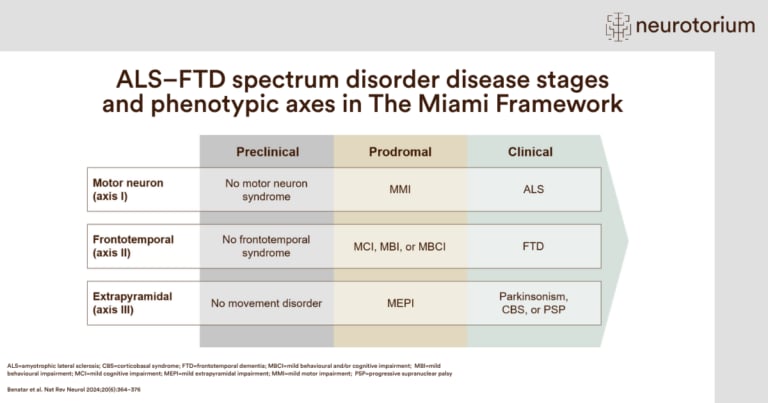
The Miami Framework describes ALS–FTD spectrum disorders across motor, frontotemporal and extrapyramidal axes, from preclinical through prodromal to clinical disease stages.
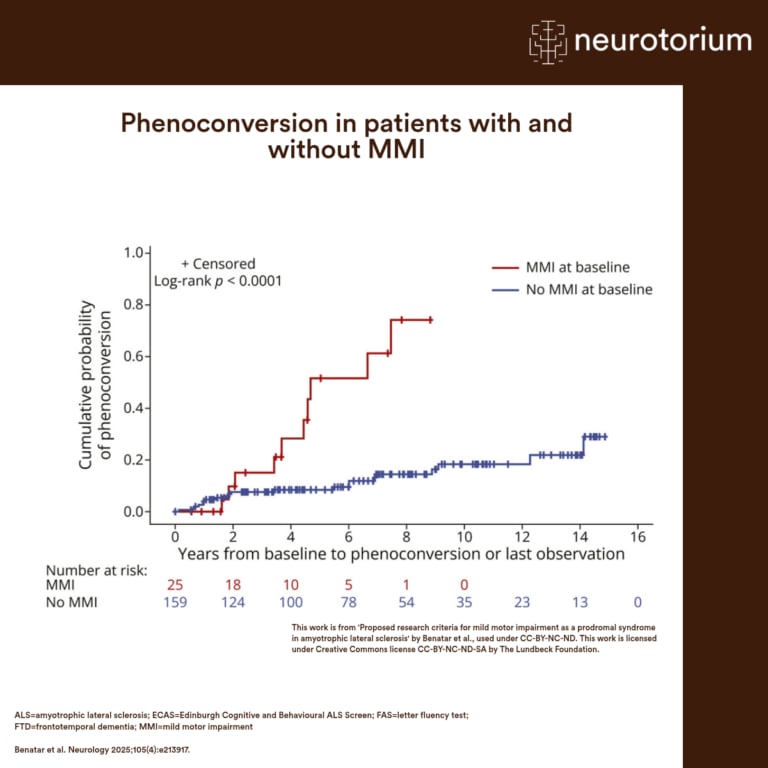
Mild motor impairment (MMI) at baseline is associated with earlier and more frequent phenoconversion, supporting MMI as a prodromal feature of ALS.
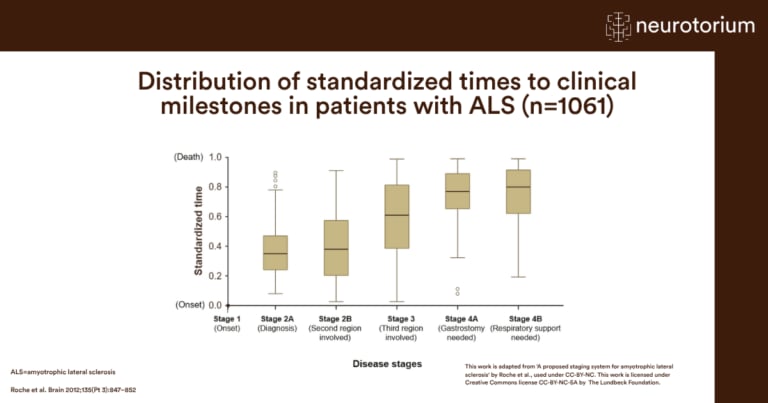
ALS clinical milestones occur progressively over the disease course, with substantial variation in the timing of progression between patients.