

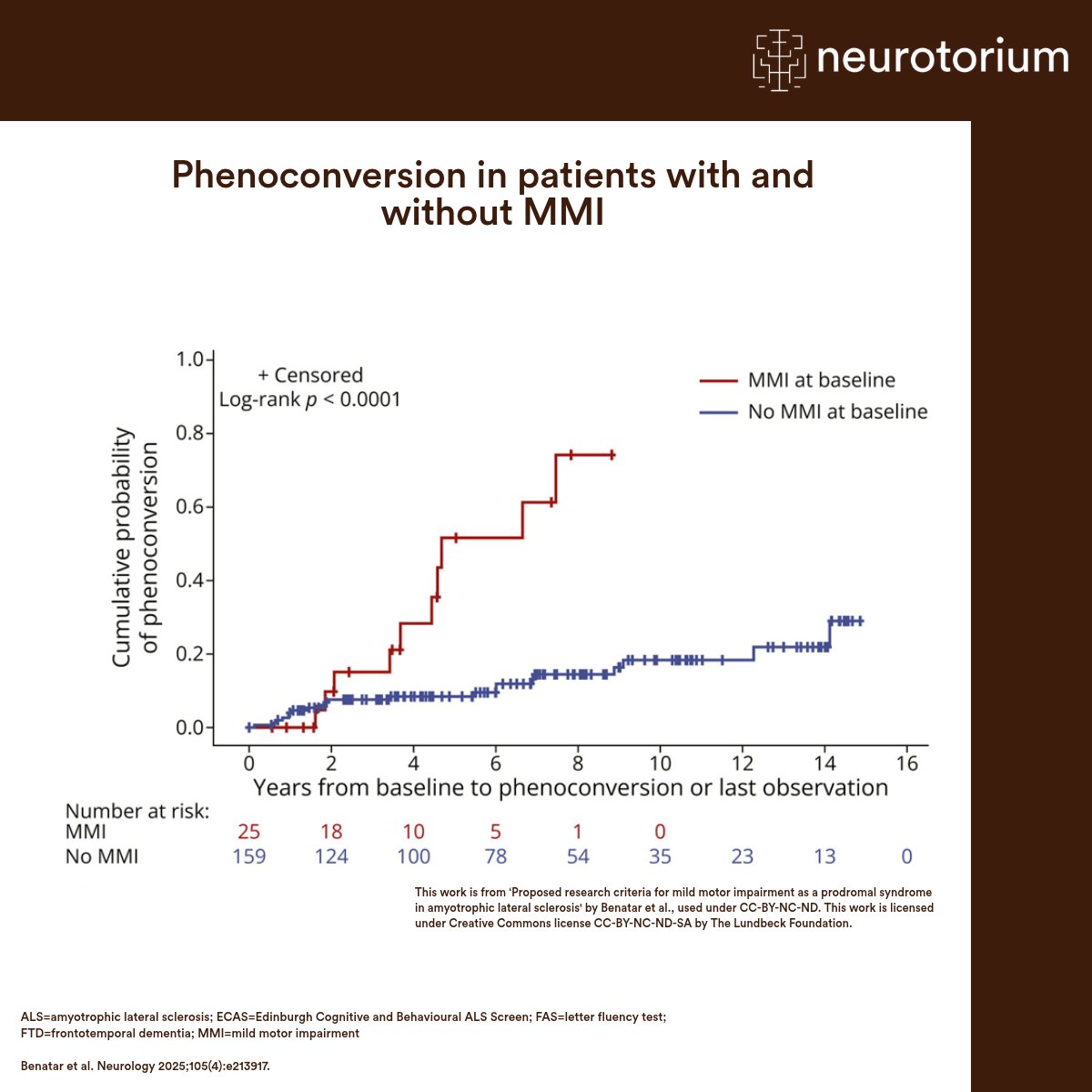
The Pre-Symptomatic Familial ALS (Pre-fALS) study was a single-centre study in North America of individuals who were carriers of amyotrophic lateral sclerosis (ALS)-associated pathogenic variants and who, at the time of enrollment, were clinically presymptomatic for ALS and frontotemporal dementia (FTD).1 This study identified mild motor impairment (MMI) patients among the study population, and assessed the probabilities and timing of phenoconversion for those with and without MMI at baseline. Of the 233 patients included in the study, 49 were controls, 153 were presymptomatic carriers, and 31 were phenoconverters.1 MMI was observed in 17/31 (55%) ALS phenoconverters before clinically manifest ALS, and in 66/153 (43%) of the presymptomatic carriers.1
Related content
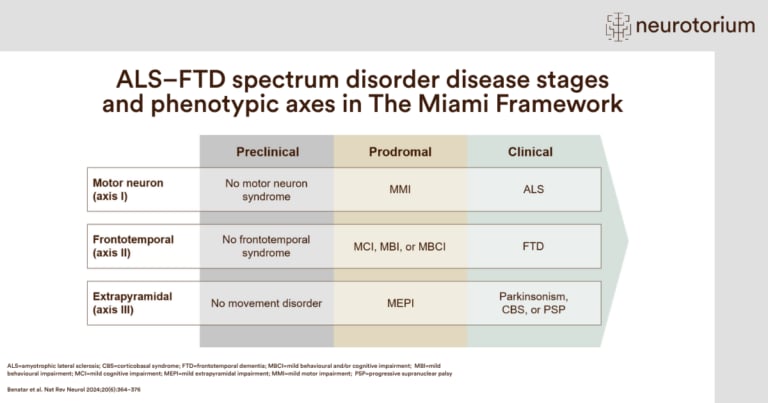
The Miami Framework describes ALS–FTD spectrum disorders across motor, frontotemporal and extrapyramidal axes, from preclinical through prodromal to clinical disease stages.
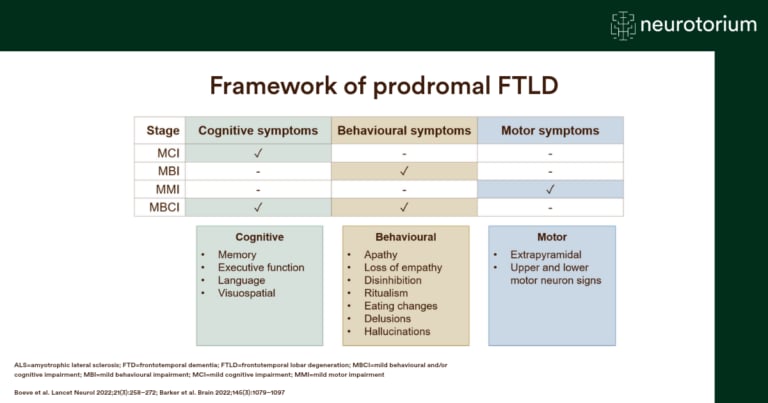
Prodromal FTLD can present with cognitive, behavioural and/or motor features, reflecting the clinical heterogeneity of early-stage disease.
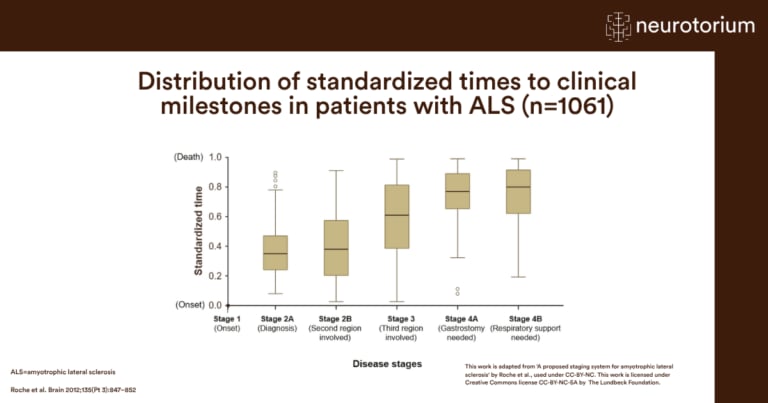
ALS clinical milestones occur progressively over the disease course, with substantial variation in the timing of progression between patients.