

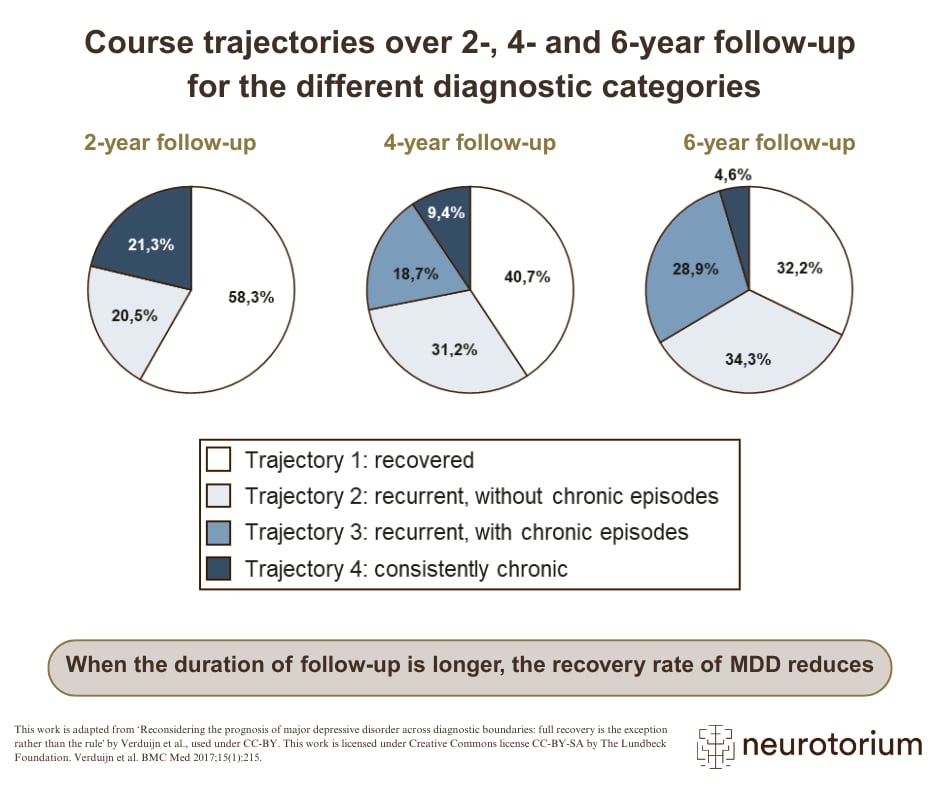
- Outcomes from depression can range from remission to chronic depression, switching to other psychiatric disorders, and death1-3
- One large study followed 903 people with MDD at baseline over a course of 6 years1
- Over 6-years of follow-up, recurrence of depression and chronic symptoms were the rule, rather than the exception – especially when the entire spectrum of affective disorder outcomes is considered1,2
- Moreover, over time switching from MDD to other affective disorders (e.g., anxiety disorders, (hypo)manic disorder, or dysthymia) is common in people with baseline MDD1
MDD=major depressive disorder
Related content
Major Depressive Disorder (MDD) is a highly prevalent psychiatric condition with significant individual and socio-economic burden. Despite the broad availability of numerous effective therapeutic interventions, up to 30% of patients fail to achieve adequate symptom relief and are classified as having treatment-resistant depression (TRD). TRD represents a significant clinical challenge, affecting approximately 30% of individuals with MDD who fail to respond to at least two adequate antidepressant trials.
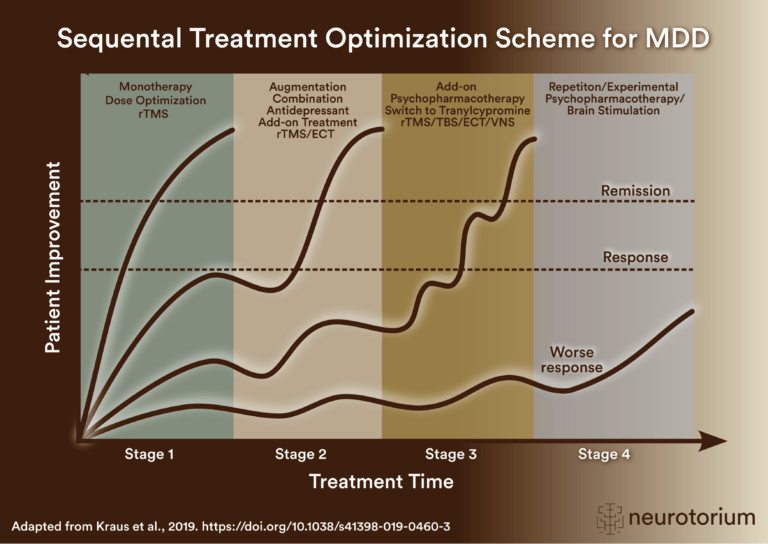
Sequential treatment optimization scheme for major depressive disorder generated according to international evidence.
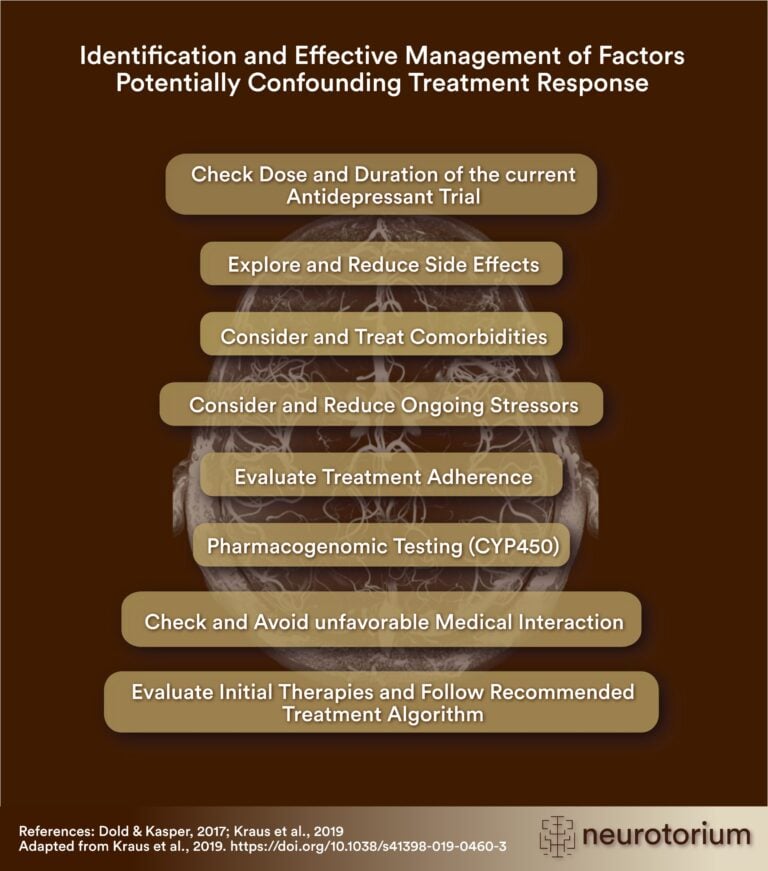
Key steps for managing factors that may confound antidepressant treatment response, including dose, side effects, comorbidities, stressors, adherence, pharmacogenomics, interactions, and treatment algorithms.