

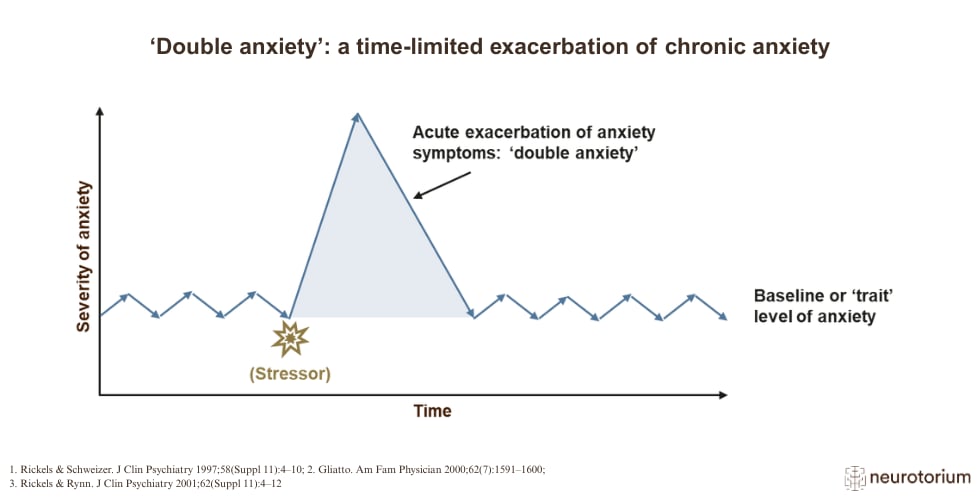
Some patients with anxiety disorders, e.g. patients with generalized anxiety disorder, may be experiencing persistent anxiety without a precipitating stressor; subsequently, a stressor may exacerbate this baseline level of anxiety.1 This phenomenon is called ‘double anxiety’ (i.e., acute anxiety superimposed on persistent anxiety).1,2
Recommended treatment for double anxiety is generally the same as for chronic anxiety and includes intermittent or long-term use of anxiolytic therapies (e.g., benzodiazepines) and/or psychological therapies.1,3
The acute anxiety episode tends to be particularly responsive to pharmacological therapy.2
Related content

Decades of twin and family research have established that anxiety disorders run in families and are meaningfully influenced by genetic factors. Family and twin studies suggest an increased recurrence risk for first degree relatives of patients with anxiety to develop any anxiety disorders.
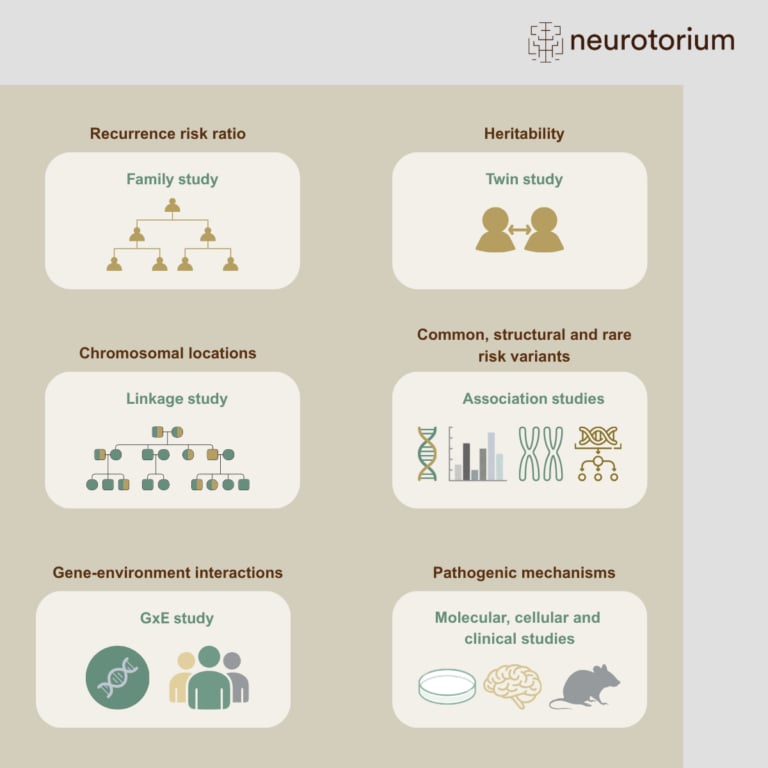
Family and twin studies estimate recurrence risk and heritability, showing that anxiety disorders aggregate in families and have a moderate genetic component.
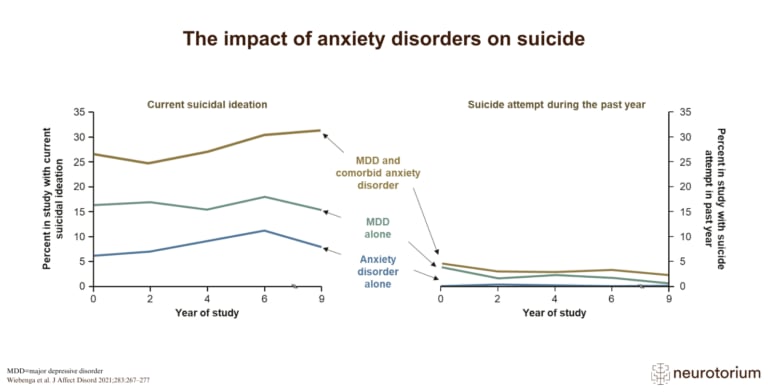
Suicidal ideation is far more common than attempts in people with anxiety or depression, especially with comorbid disorders and severe depression.