

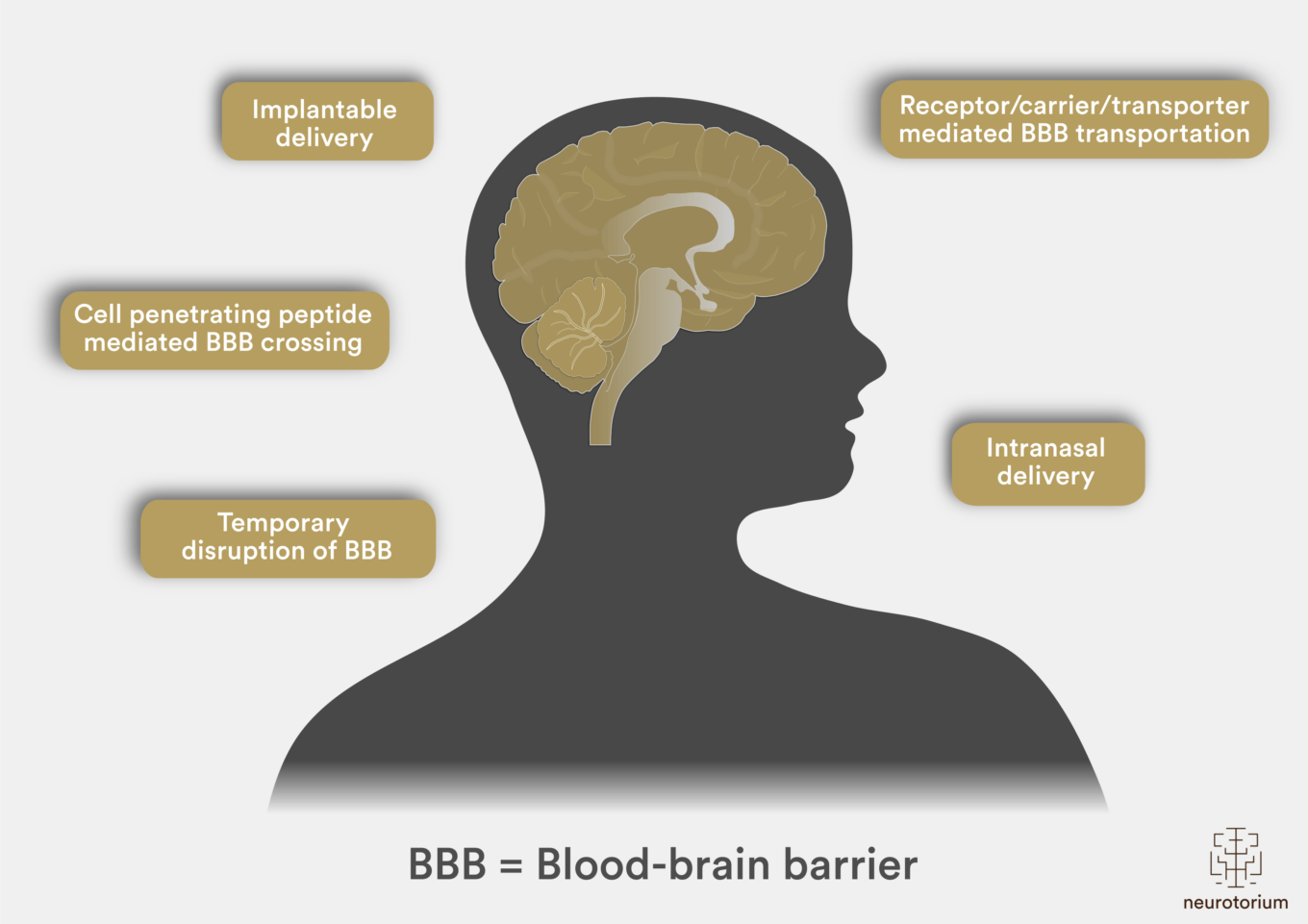
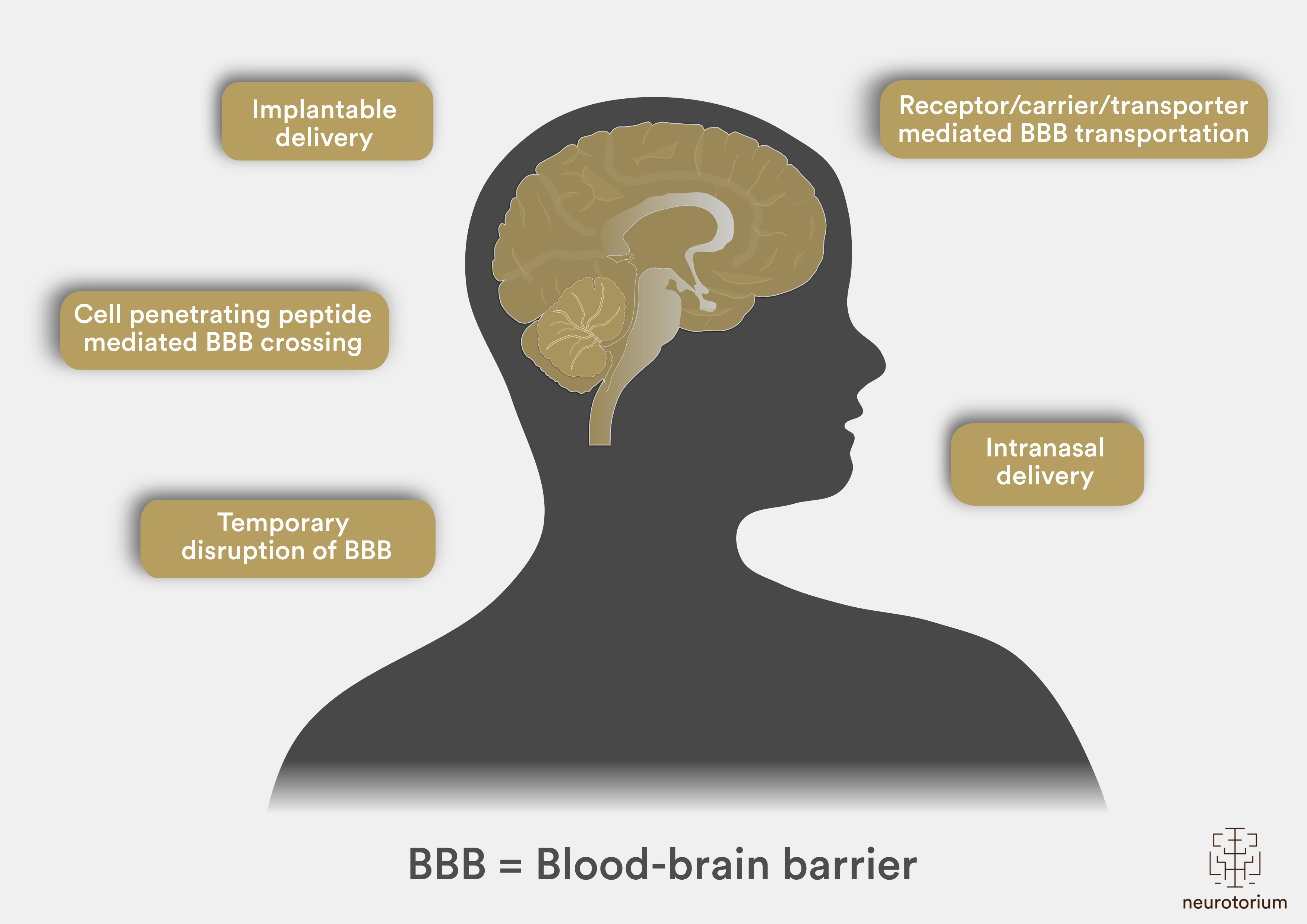
Brain drug delivery systems, allied with their characteristics for overcoming the blood-brain barrier (BBB). Implantable delivery ensures that drug preparations are directly implanted into the brain by surgery or through special instruments. In cell penetrating peptide mediated BBB crossing, positively charged particles are modified onto the surface of the preparations to heighten the interactions. Temporary disruption of BBB can currently be achieved through ultrasound or magnetic disruption technologies. Intranasal delivery enables drug preparations to cross the olfactory mucosa in the nasal cavity, to be transported into the brain. Finally, molecules, ligands or substrates can be modified onto the surface of the preparations via receptors, carriers or transporter-mediated approaches.
Related content
Advances in blood biomarkers are transforming the diagnosis and prognosis of Alzheimer’s disease, helping to assess pathology, disease progression, and co-existing pathologies.
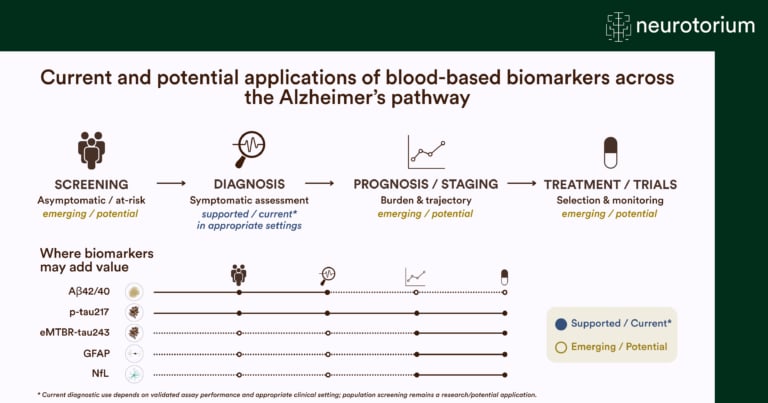
Overview of how blood-based biomarkers may support screening, diagnosis, staging, prognosis, and treatment decisions across the Alzheimer’s disease continuum.
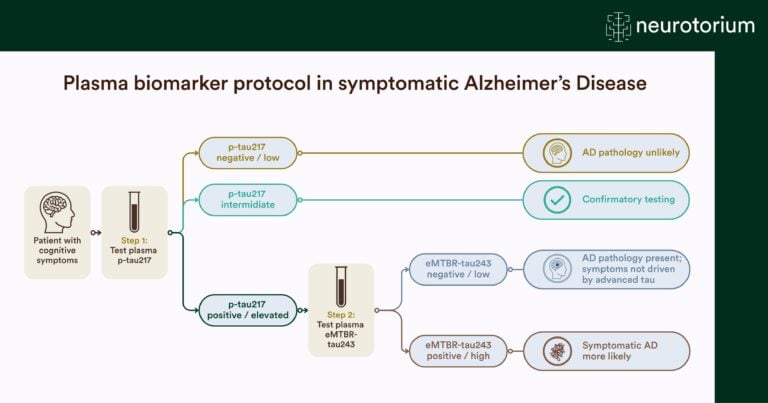
Overview of a plasma biomarker testing pathway for symptomatic Alzheimer’s disease, using p-tau217 and eMTBR-tau243 to guide diagnostic assessment and identify underlying pathology.