

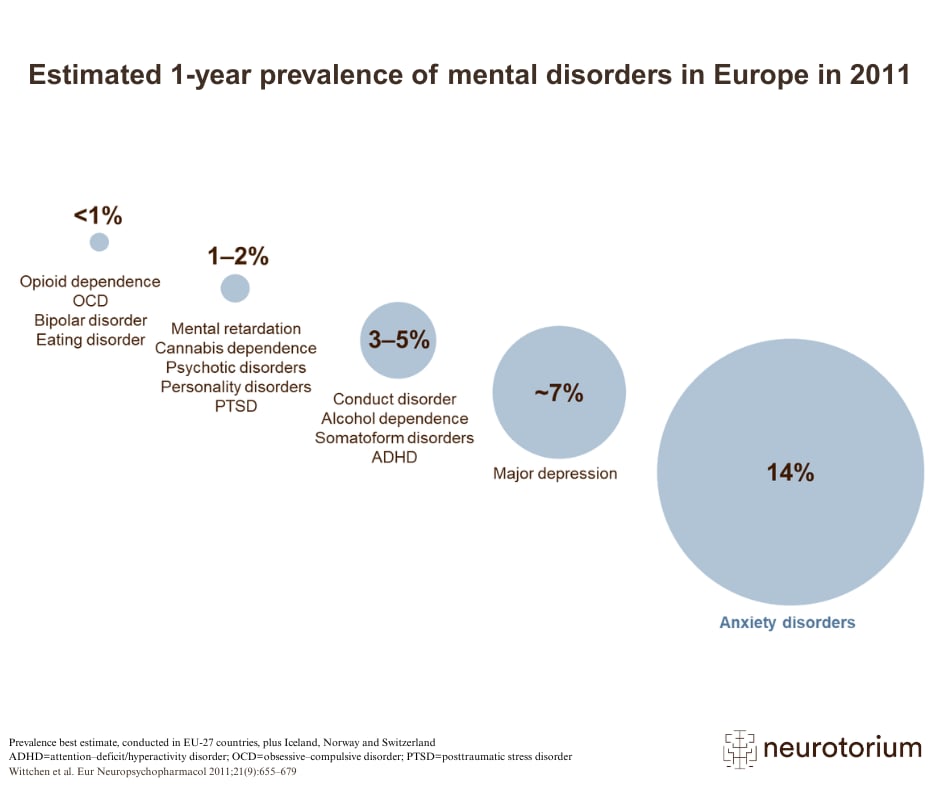
The prevalence of most mental disorders is approximately 2–3 times higher in women than in men, except for substance use disorders, which are approximately 3 times more common in men than in women, and psychotic disorders.1
Anxiety disorders have the highest 1-year prevalence among all mental disorders (14%), affecting almost 70 million people in Europe across all age groups; the most prevalent anxiety disorders include specific phobias (6.4%), social anxiety disorder (2.3%) and agoraphobia (2.0%).1 The prevalence rates of individual disorders differ by age groups: for example, prevalence rates for generalized anxiety disorder are much higher among people aged over 65 years (3.4%) than in people aged 65 years and under (1.7%), and PTSD rates decline with age (14–34 years: 2.9%, 35–65 years: 1.3%, 65+: 1.1%).1
ADHD=attention–deficit/hyperactivity disorder; OCD=obsessive–compulsive disorder; PTSD=posttraumatic stress disorder
Related content

Decades of twin and family research have established that anxiety disorders run in families and are meaningfully influenced by genetic factors. Family and twin studies suggest an increased recurrence risk for first degree relatives of patients with anxiety to develop any anxiety disorders.
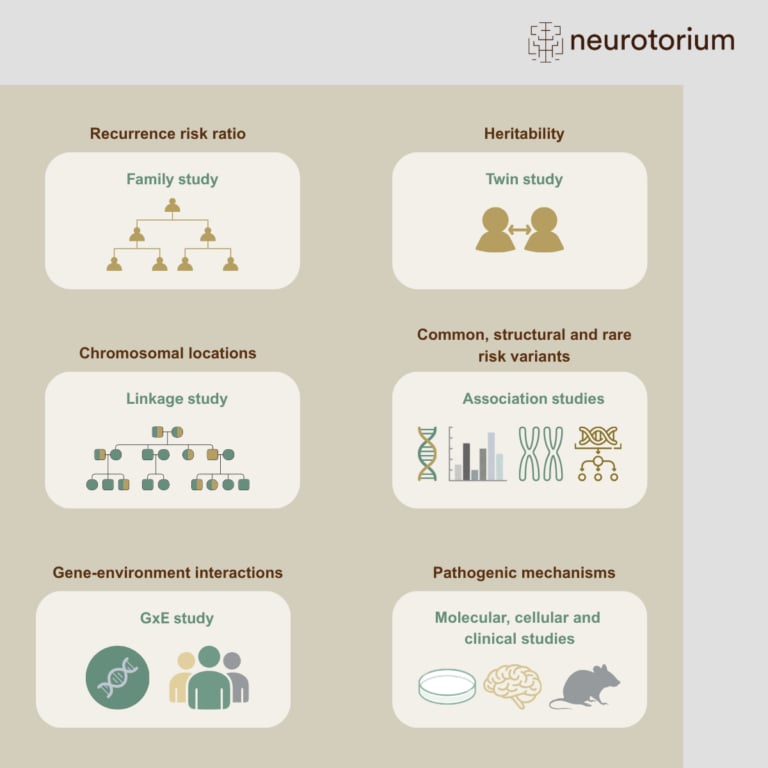
Family and twin studies estimate recurrence risk and heritability, showing that anxiety disorders aggregate in families and have a moderate genetic component.
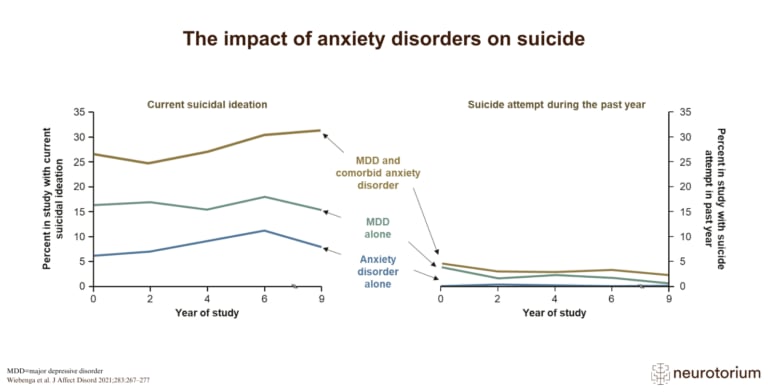
Suicidal ideation is far more common than attempts in people with anxiety or depression, especially with comorbid disorders and severe depression.