


Images
Filter
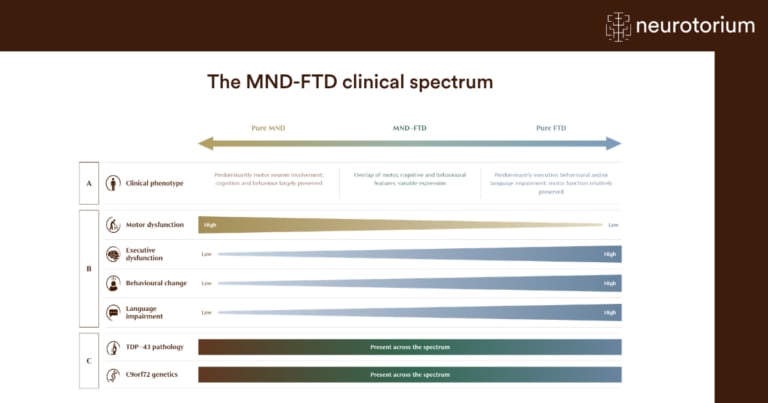
Motor neuron disease (MND) and frontotemporal dementia (FTD) were once seen as separate conditions, one affecting movement and the other cognition and behaviour. Growing evidence now places them on the same disease spectrum, linked by shared clinical features, genetic causes, and underlying pathology.
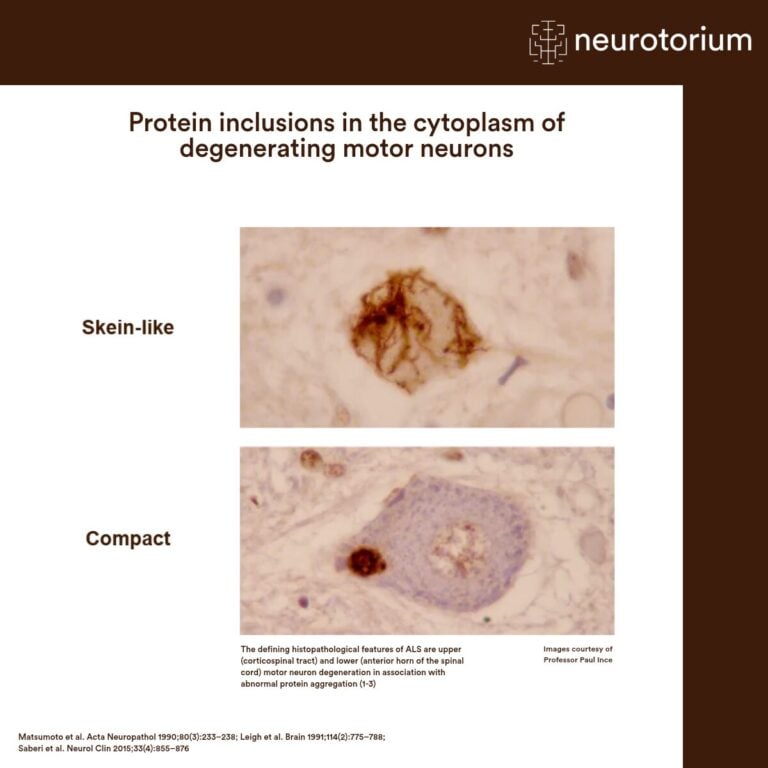
Motor neuron degeneration in ALS is associated with abnormal protein aggregation, including characteristic skein-like and compact cytoplasmic inclusions.
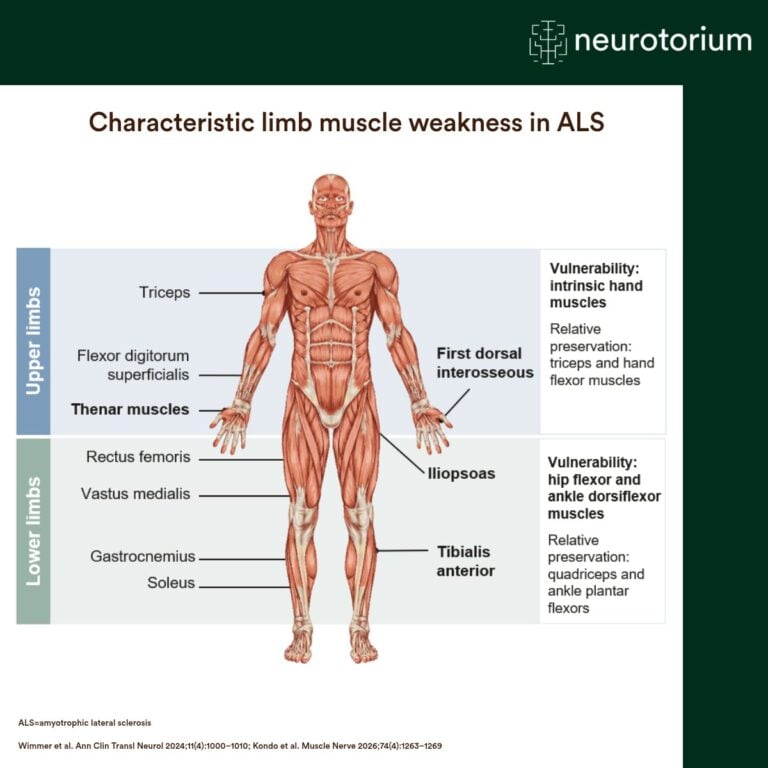
ALS is associated with characteristic patterns of muscle weakness, with selective vulnerability and relative preservation of specific upper- and lower-limb muscles.
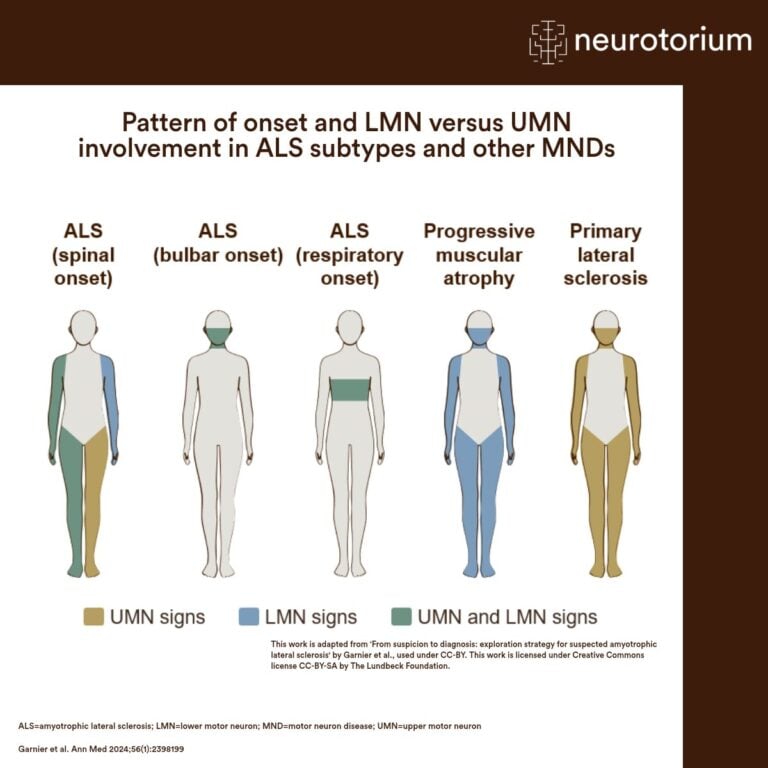
ALS and other motor neuron diseases vary in their pattern of onset and involvement of upper and lower motor neurons, resulting in distinct clinical phenotypes.
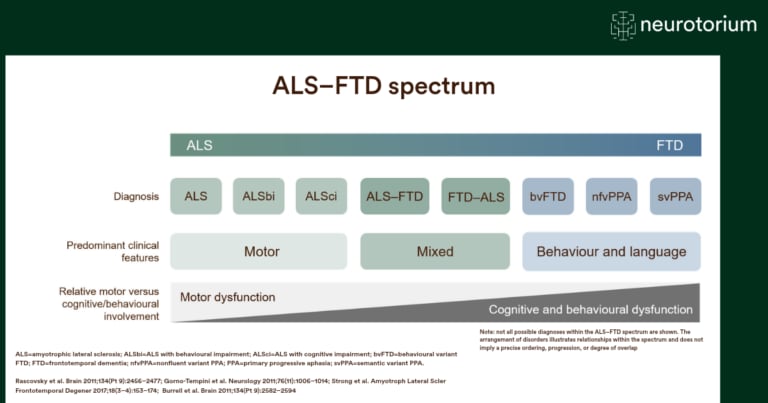
The ALS–FTD spectrum encompasses overlapping clinical phenotypes, ranging from predominantly motor impairment in ALS to cognitive, behavioural, and language impairment in FTD.
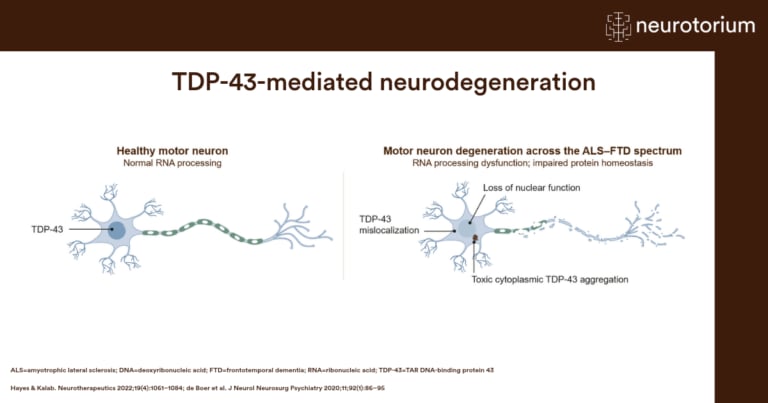
TDP-43-mediated neurodegeneration across the ALS–FTD spectrum involves loss of nuclear function and toxic cytoplasmic aggregation, disrupting RNA processing and protein homeostasis.
No results matched your search.
Please try again.