

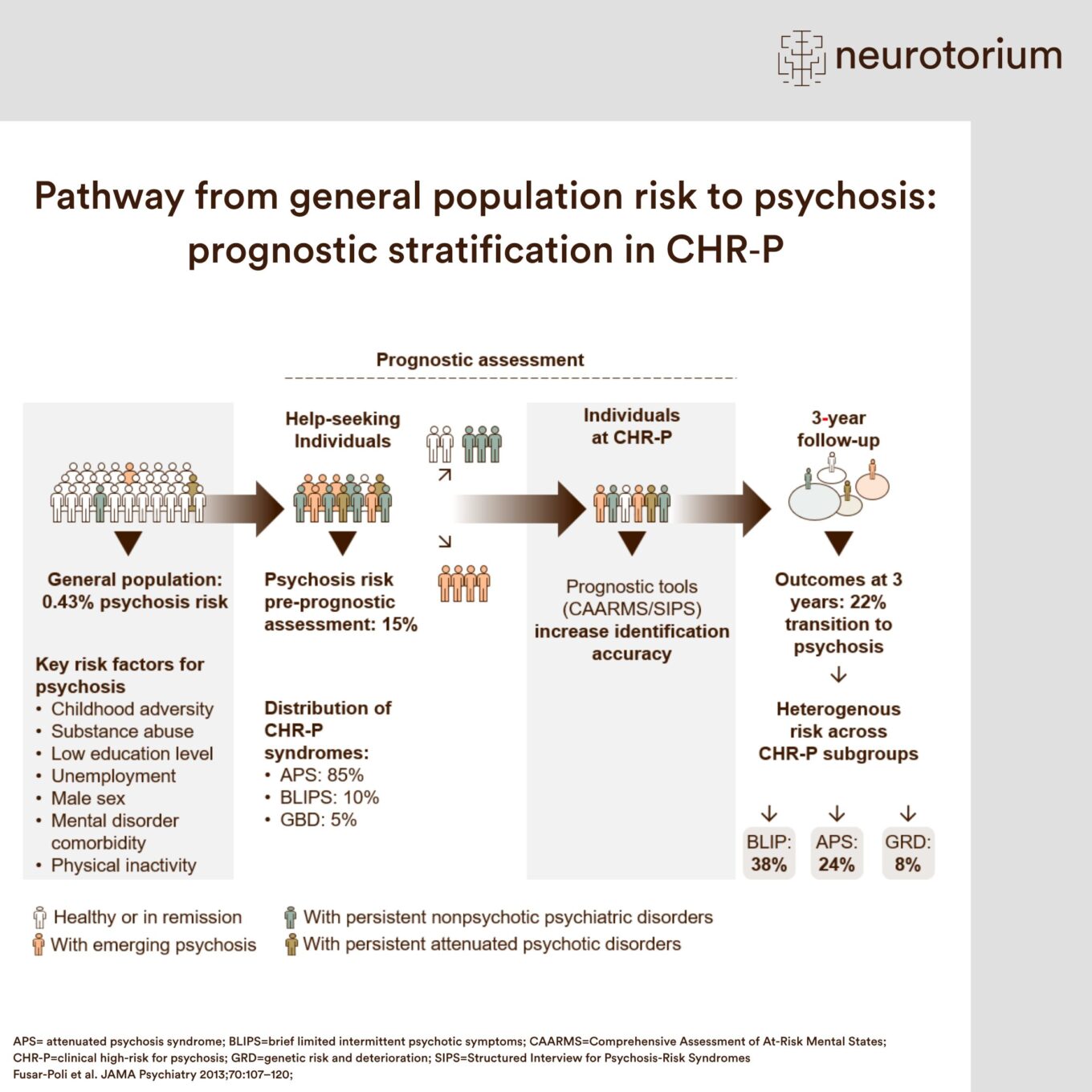
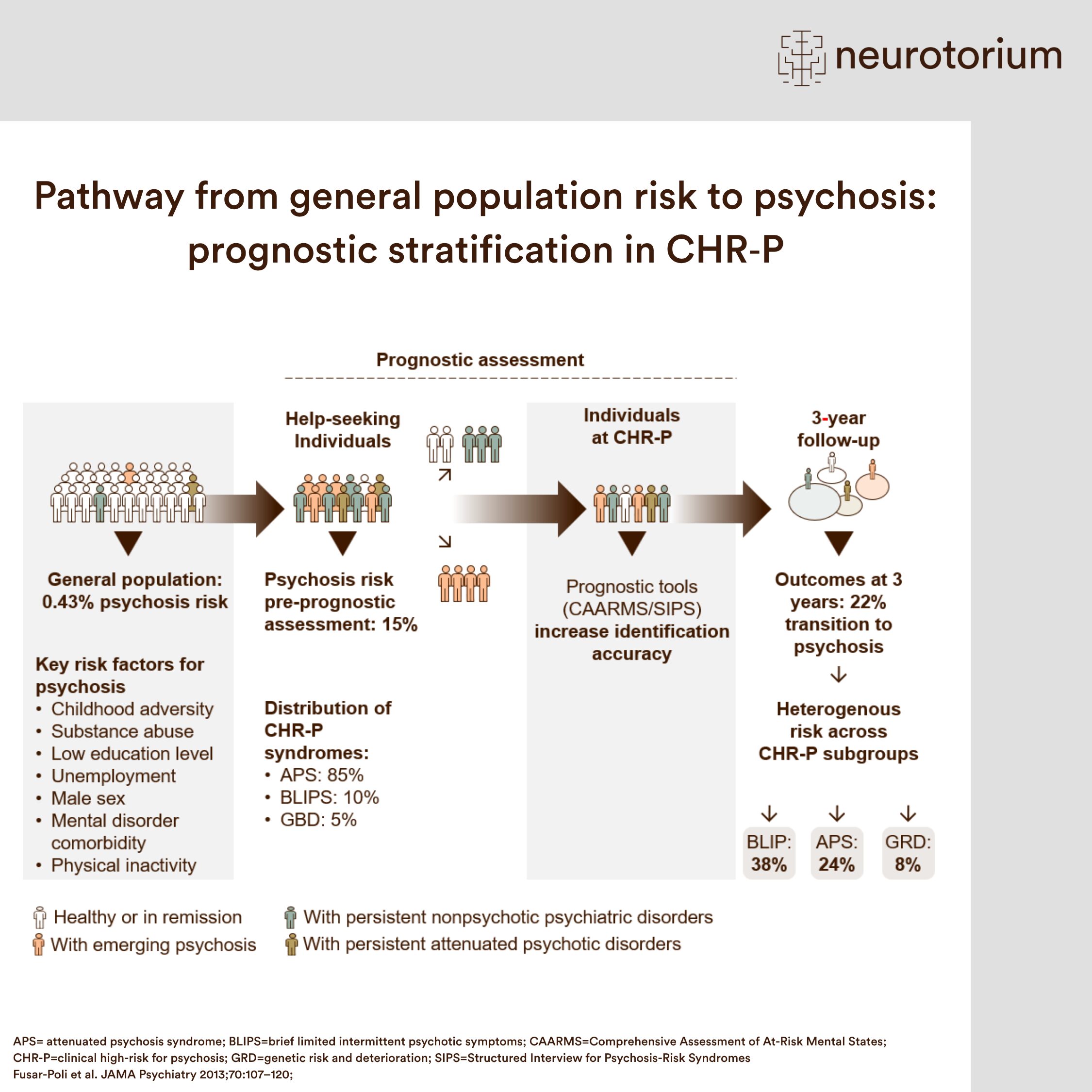
Clinical high-risk for psychosis (CHR-P) criteria identify individuals with attenuated psychotic symptoms, brief, limited psychotic episodes, or genetic risk accompanied by functional decline.1 This state is associated with an elevated risk of transition to psychosis, which increases with time.1 The CHR-P population is heterogeneous, with many individuals experiencing persistent symptoms or functional impairment.1,2 Advances in detection, prognosis, and stage-specific interventions aim to reduce transition risk and improve overall clinical outcomes.2
APS= attenuated psychosis syndrome; BLIPS=brief limited intermittent psychotic symptoms; CAARMS=Comprehensive Assessment of At-Risk Mental States; GRD=genetic risk and deterioration; SIPS=Structured Interview for Psychosis-Risk Syndromes
Related content
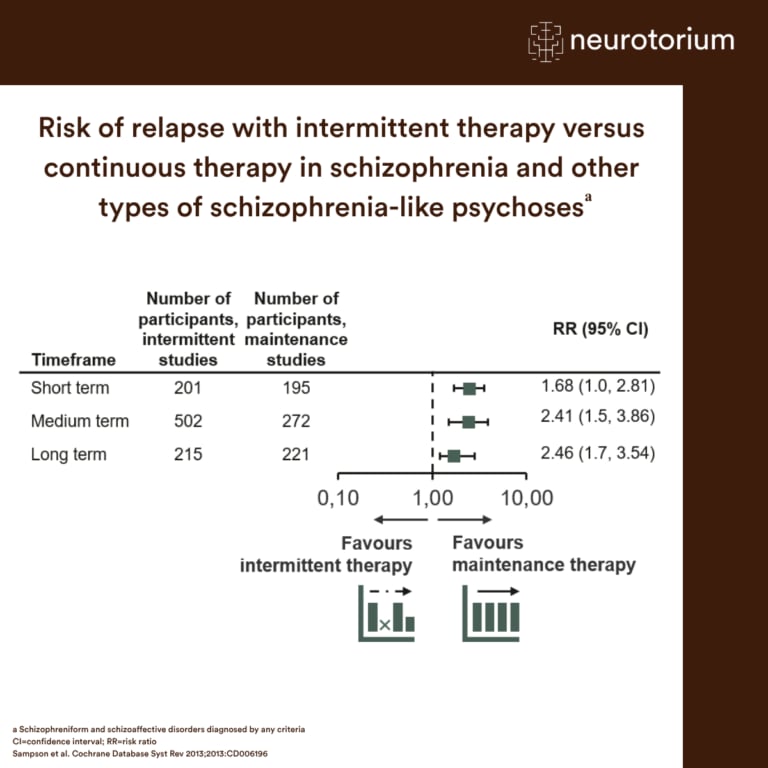
Continuous maintenance therapy is associated with a lower risk of relapse than intermittent treatment, supporting ongoing treatment strategies in schizophrenia and related psychotic disorders.
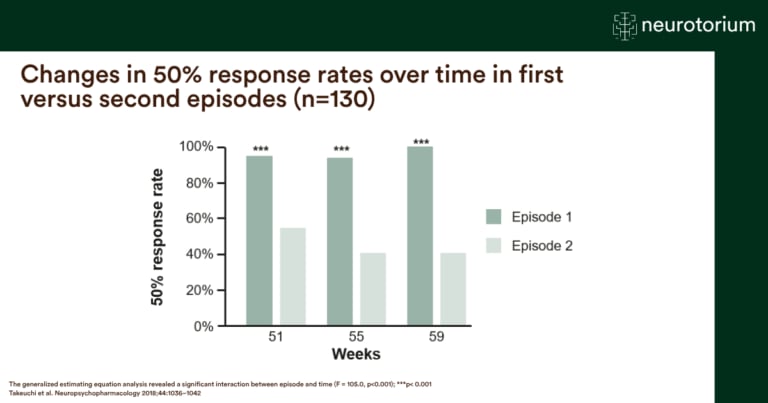
Treatment response tends to be higher during a first episode than during subsequent episodes, emphasizing the importance of early intervention and effective management.
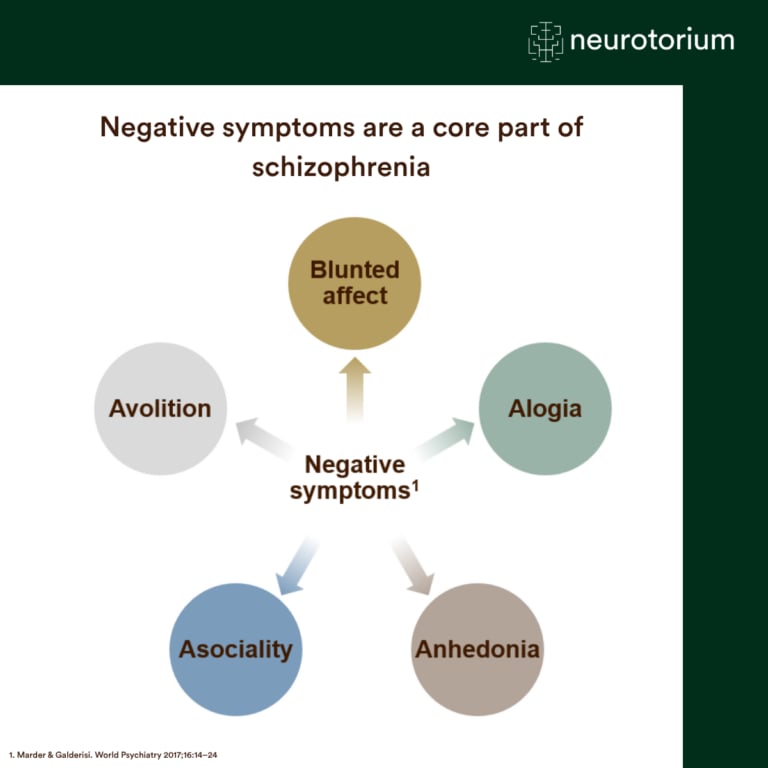
Negative symptoms are a core feature of schizophrenia and can have a profound impact on functioning, social relationships, and quality of life.