

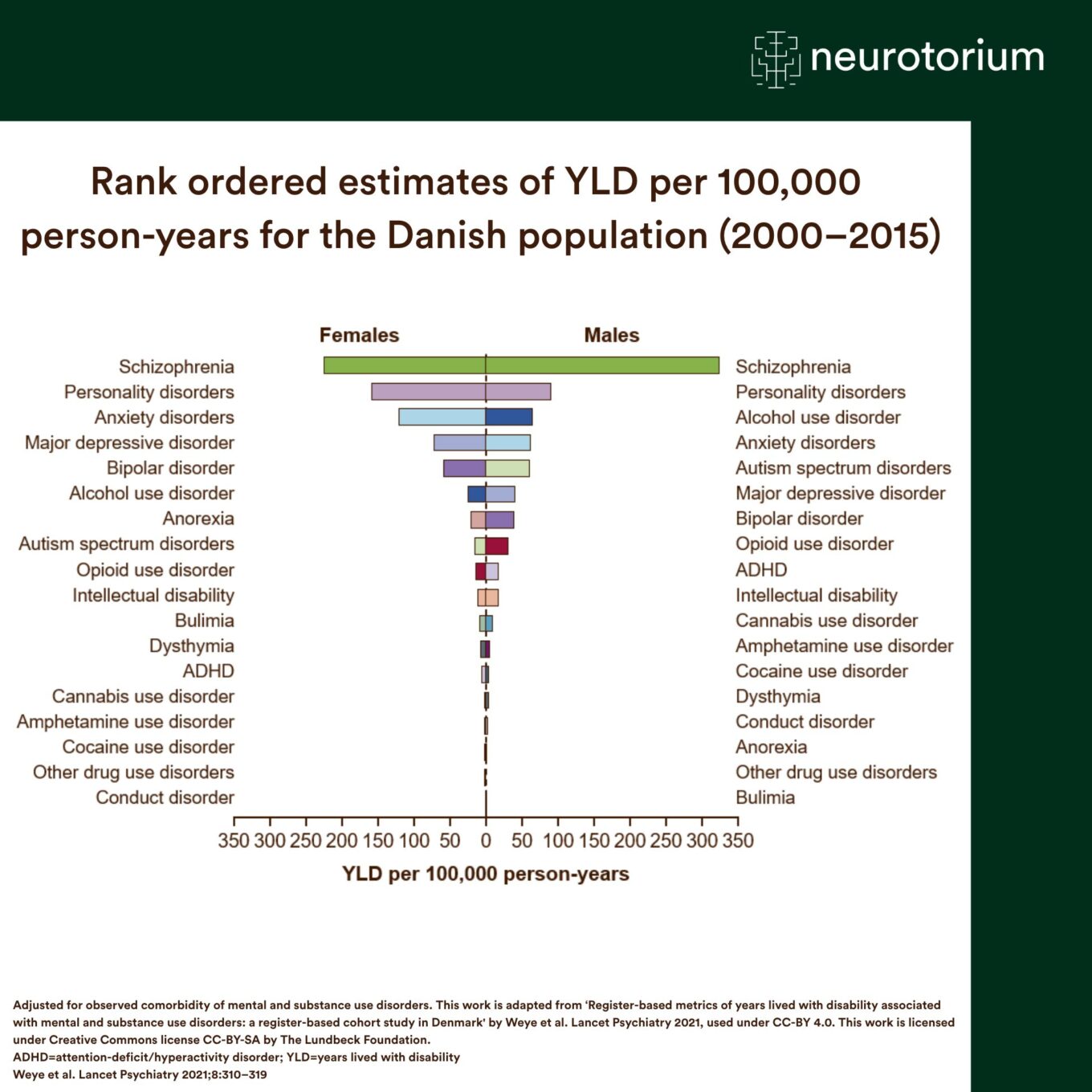
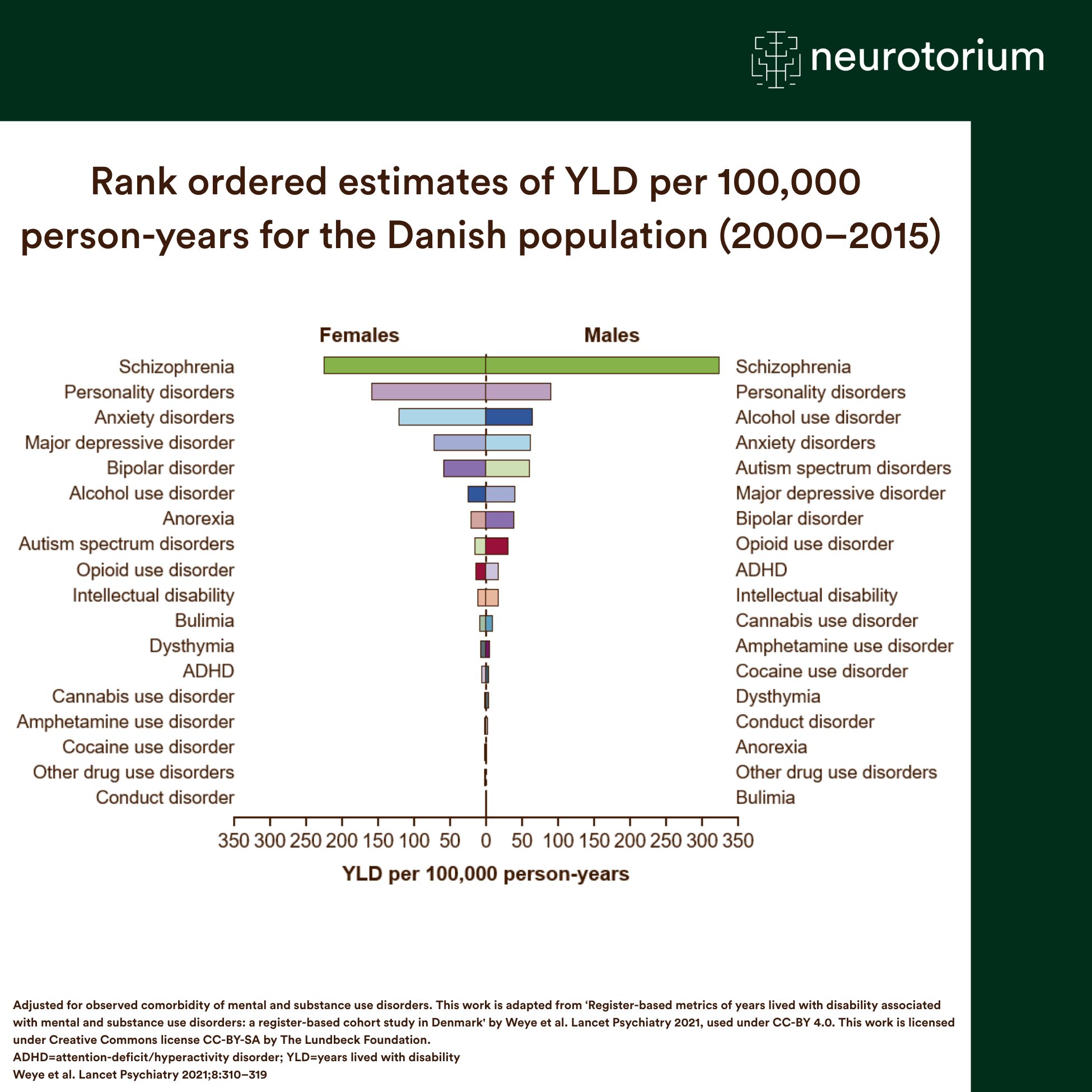
Schizophrenia was found to be the single largest contributor to years lived with disability (YLD) (36%) among all 18 mental and substance use disorders examined in the entire Danish population between 2000 and 2015.1
This figure shows an overview of rank estimates of YLD per 100,000 person-years for the Danish population.
The novel HeLPa metric showed that schizophrenia was associated with the greatest individual health loss, with affected individuals losing ~73% of a healthy year annually (HeLP = 0.73; 95% CI: 0.63, 0.83).1
Schizophrenia, while considered a disabling condition in itself, is frequently accompanied by multiple psychiatric and physical comorbidities,2 which substantially increase the overall burden on affected individuals.
A The HeLP quantifies the average individual disability associated with each index mental or substance use disorder and can be decomposed into disability attributable to the index disorder itself and to non‑index disorder comorbidity; b Adjusted for observed comorbidity of mental and substance use disorders1
Data are from a prospective population‑based cohort including all individuals living in Denmark between 1 January 2000, and 31 December 2015. Participants were followed from 1 January 2000, birth, or immigration (whichever occurred last) until death, age 95 years, emigration, or 31 December 2015, whichever came first. Diagnoses were based on the Danish modification of ICD‑10.1
ADHD=attention-deficit/hyperactivity disorder; CI=confidence interval; HeLP=Health Loss Proportion; ICD-10=International Classification of Diseases, 10th revision; YLD=years lived with disability
Related content
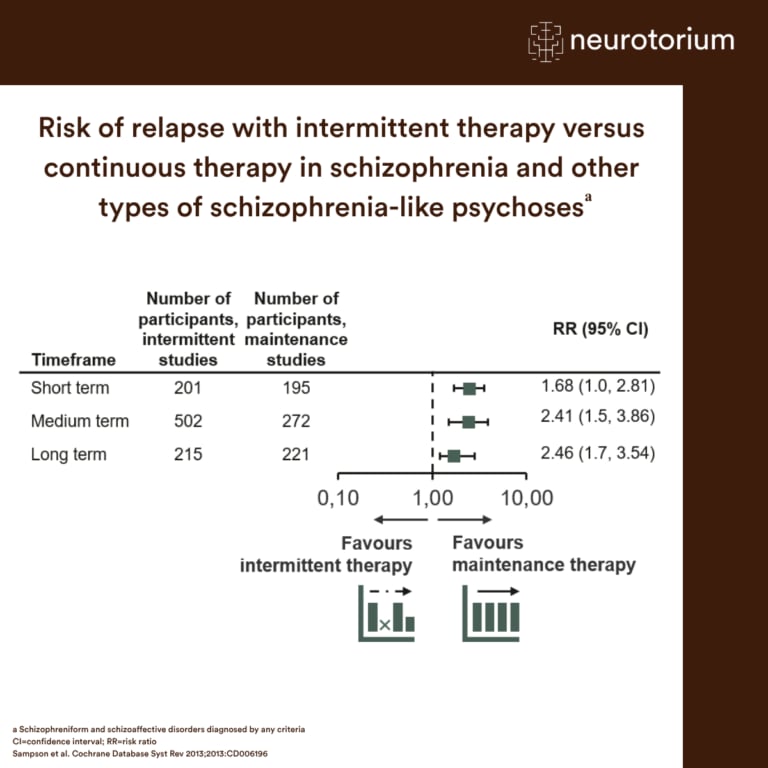
Continuous maintenance therapy is associated with a lower risk of relapse than intermittent treatment, supporting ongoing treatment strategies in schizophrenia and related psychotic disorders.
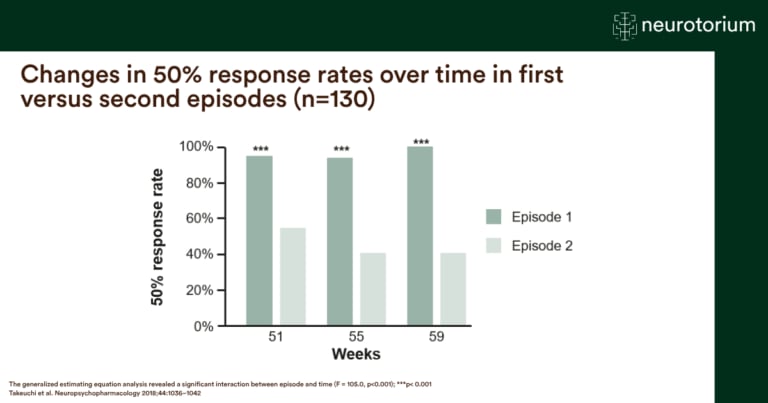
Treatment response tends to be higher during a first episode than during subsequent episodes, emphasizing the importance of early intervention and effective management.
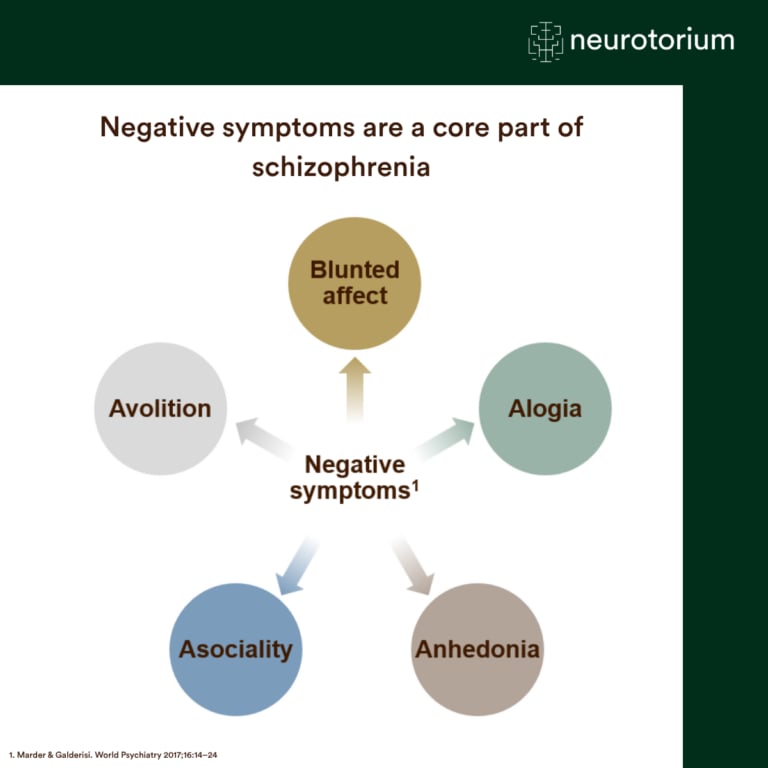
Negative symptoms are a core feature of schizophrenia and can have a profound impact on functioning, social relationships, and quality of life.