

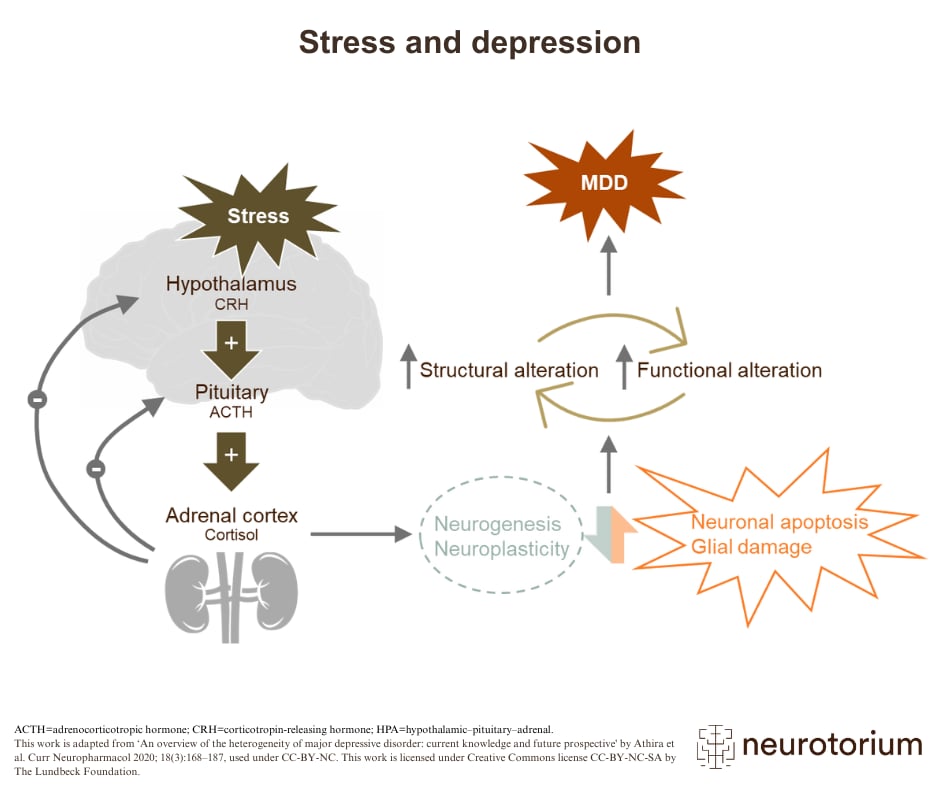
Major depressive disorder is a multifactorial disorder strongly associated with pathophysiological components related to stress.1 Chronic stress results in the dysregulation of the hypothalamo–pituitary–adrenal axis, resulting in higher levels of inflammation, higher oxidative and endoplasmic reticulum stress, increased levels of mitochondrial damage and dysfunction, and increased glutamate neurotransmission.1 These detrimental changes, coupled with reduced production of neurotrophic factors (such as the brain-derived neurotrophic factor), reduced monoamine neurotransmission, lower levels of the gamma-aminobutyric acid and reduced endocannabinoid signalling, then lead to structural and functional alterations in the brain, and to the development of major depressive disorder.1
Related content
Major Depressive Disorder (MDD) is a highly prevalent psychiatric condition with significant individual and socio-economic burden. Despite the broad availability of numerous effective therapeutic interventions, up to 30% of patients fail to achieve adequate symptom relief and are classified as having treatment-resistant depression (TRD). TRD represents a significant clinical challenge, affecting approximately 30% of individuals with MDD who fail to respond to at least two adequate antidepressant trials.
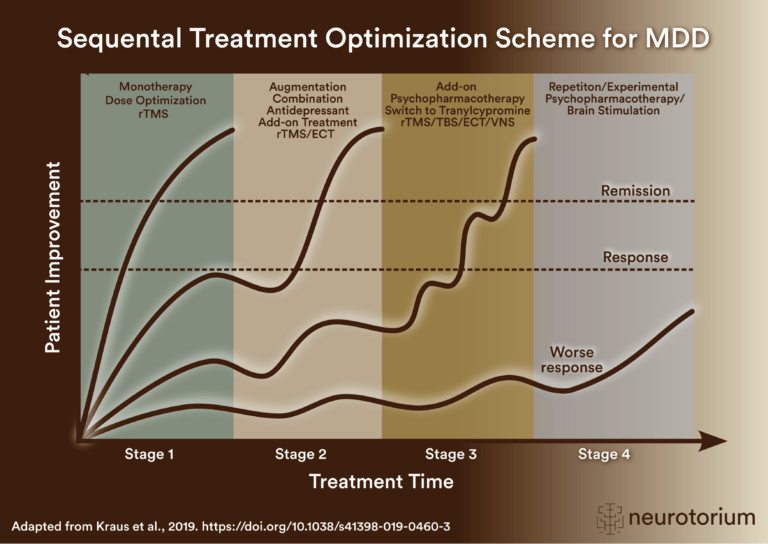
Sequential treatment optimization scheme for major depressive disorder generated according to international evidence.
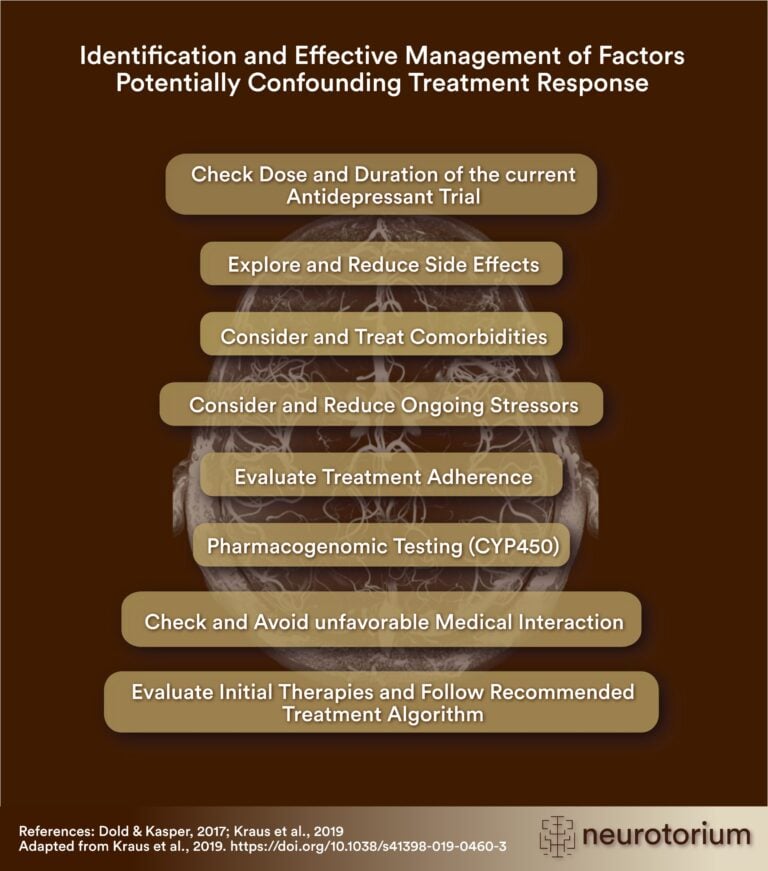
Key steps for managing factors that may confound antidepressant treatment response, including dose, side effects, comorbidities, stressors, adherence, pharmacogenomics, interactions, and treatment algorithms.