

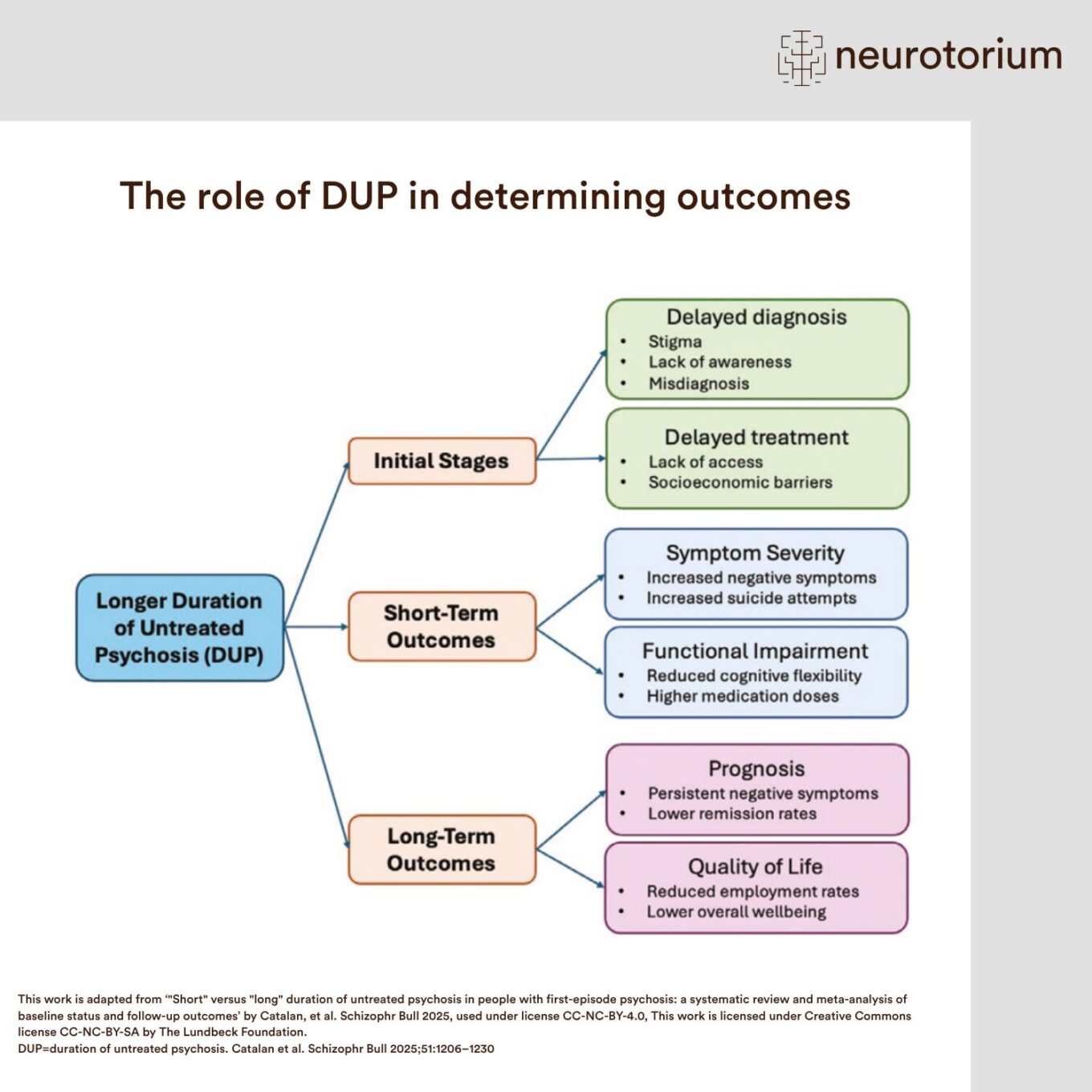
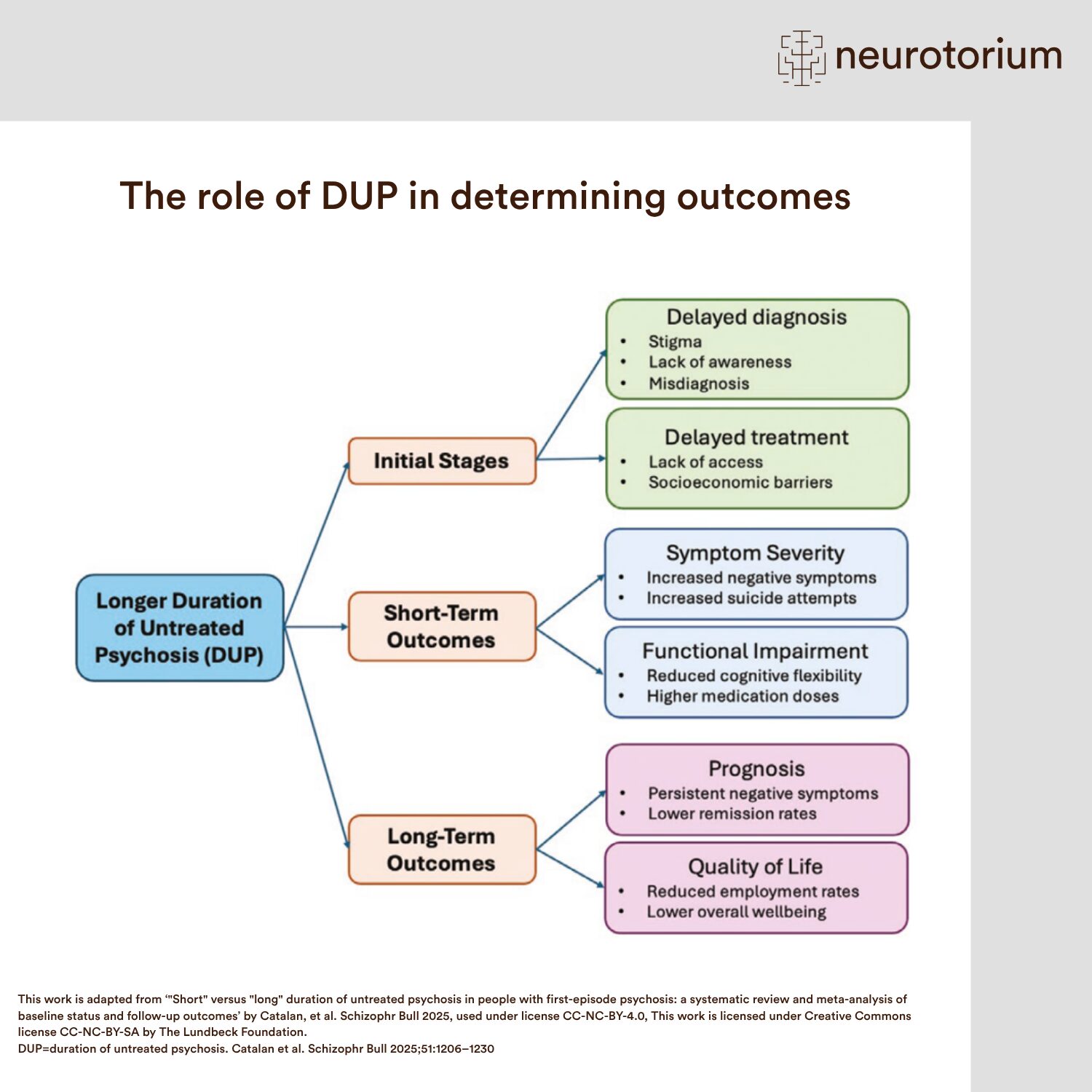
A shorter duration of untreated psychosis (DUP) is consistently associated with better symptom reduction, functioning, and remission in FEP.1 Individuals with a longer DUP present with more severe baseline symptoms, poorer functioning, and reduced early treatment response.2 Early detection and rapid initiation of antipsychotic treatment significantly improve both short- and long-term outcomes.1 Baseline differences linked to DUP persist over follow-up, with a long DUP predicting lower recovery rates and greater illness chronicity.2
FEP=first-episode psychosis
Related content
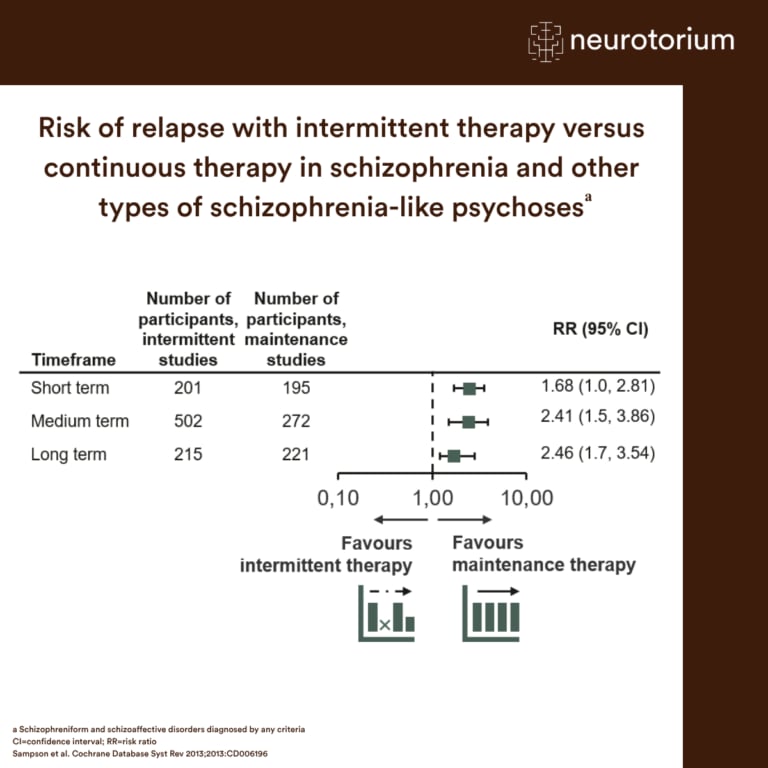
Continuous maintenance therapy is associated with a lower risk of relapse than intermittent treatment, supporting ongoing treatment strategies in schizophrenia and related psychotic disorders.
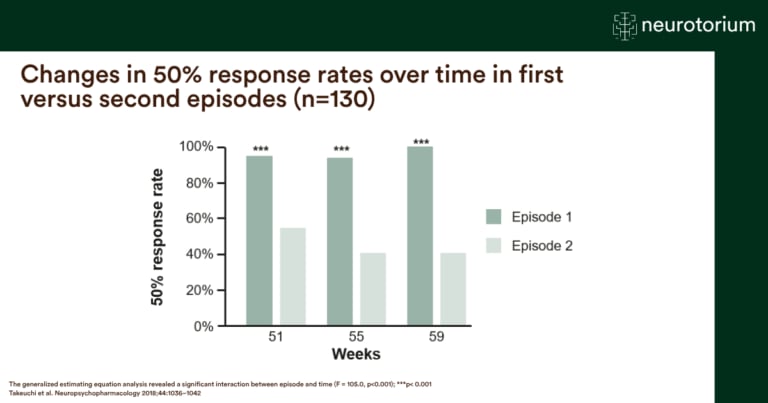
Treatment response tends to be higher during a first episode than during subsequent episodes, emphasizing the importance of early intervention and effective management.
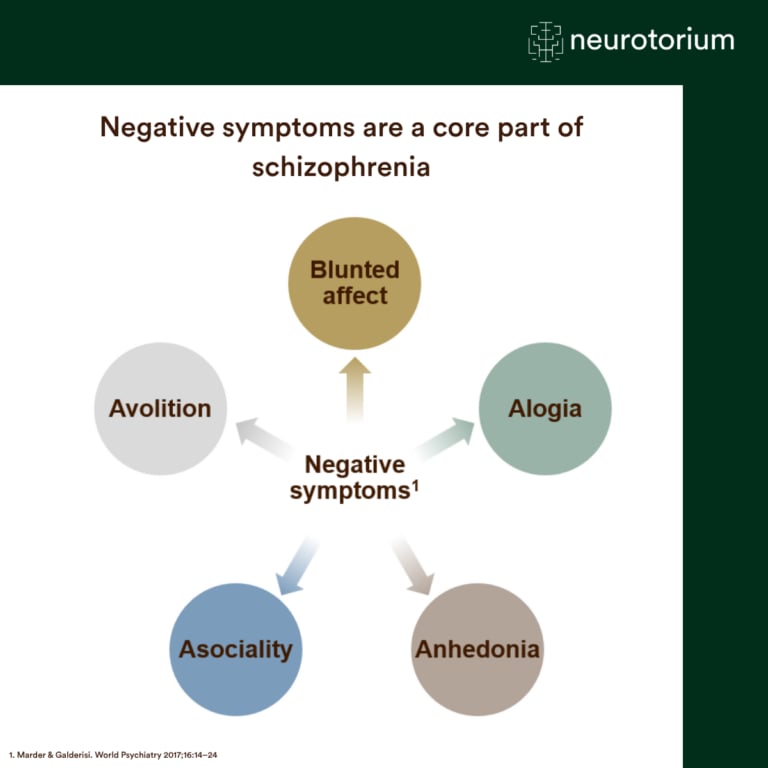
Negative symptoms are a core feature of schizophrenia and can have a profound impact on functioning, social relationships, and quality of life.