

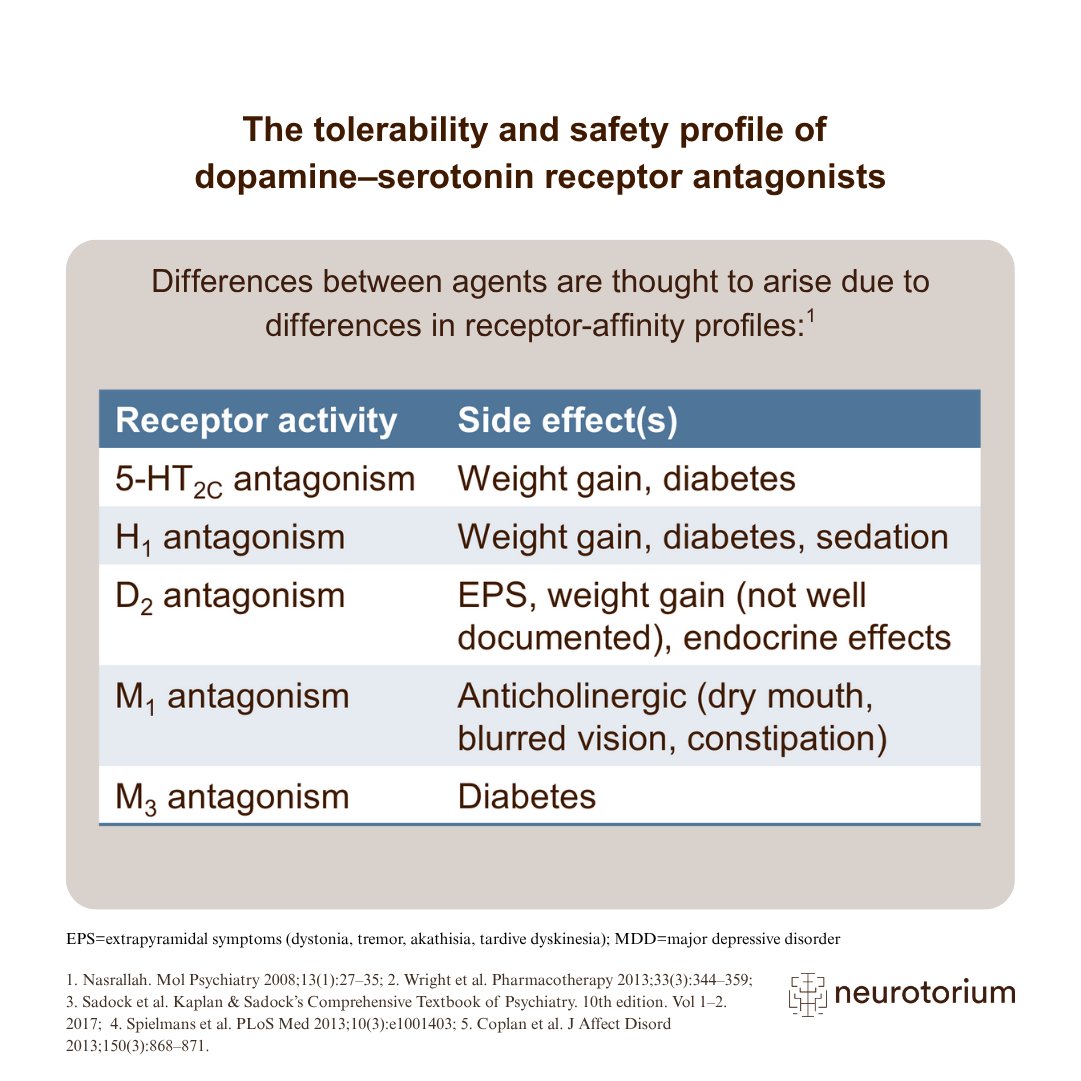
As a class, across indications and as adjunctive treatment in MDD, dopamine–serotonin receptor antagonists (also known as second-generation antipsychotics) are associated with some risk of EPS, and a varying risk of metabolic adverse effects.1-3 As adjunctive treatment in MDD, some dopamine–serotonin receptor antagonists are associated with sedating side effects, while others are more often associated with ‘activating’ side effects.2,4
Dopamine–serotonin antagonists, can also cause orthostatic hypotension and dry mouth2,3. Longer-term treatment is associated with tardive dyskinesia, although this is rare.2,5 Despite their efficacy in the adjunctive treatment of MDD, the side-effect profiles of dopamine–serotonin receptor antagonists may be unfavourable to some patients.2
EPS=extrapyramidal symptoms (dystonia, tremor, akathisia, tardive dyskinesia); MDD=major depressive disorder.
Related content

Major Depressive Disorder (MDD) is a highly prevalent psychiatric condition with significant individual and socio-economic burden. Despite the broad availability of numerous effective therapeutic interventions, up to 30% of patients fail to achieve adequate symptom relief and are classified as having treatment-resistant depression (TRD). TRD represents a significant clinical challenge, affecting approximately 30% of individuals with MDD who fail to respond to at least two adequate antidepressant trials.
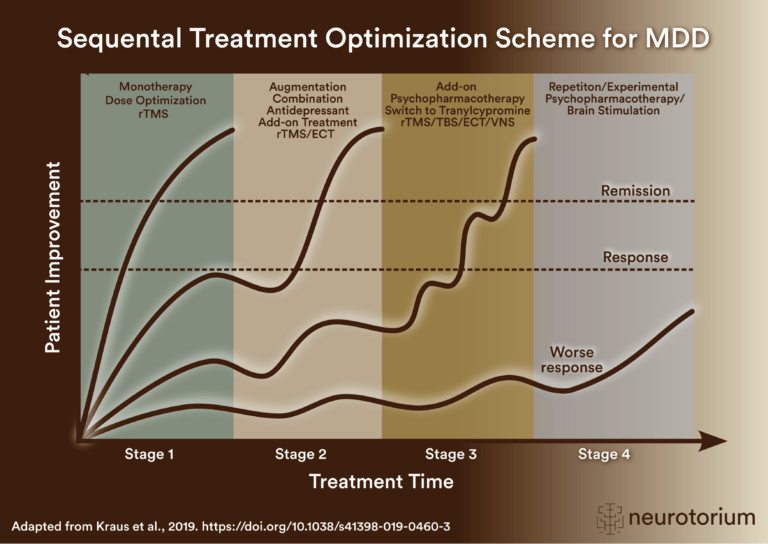
Sequential treatment optimization scheme for major depressive disorder generated according to international evidence.
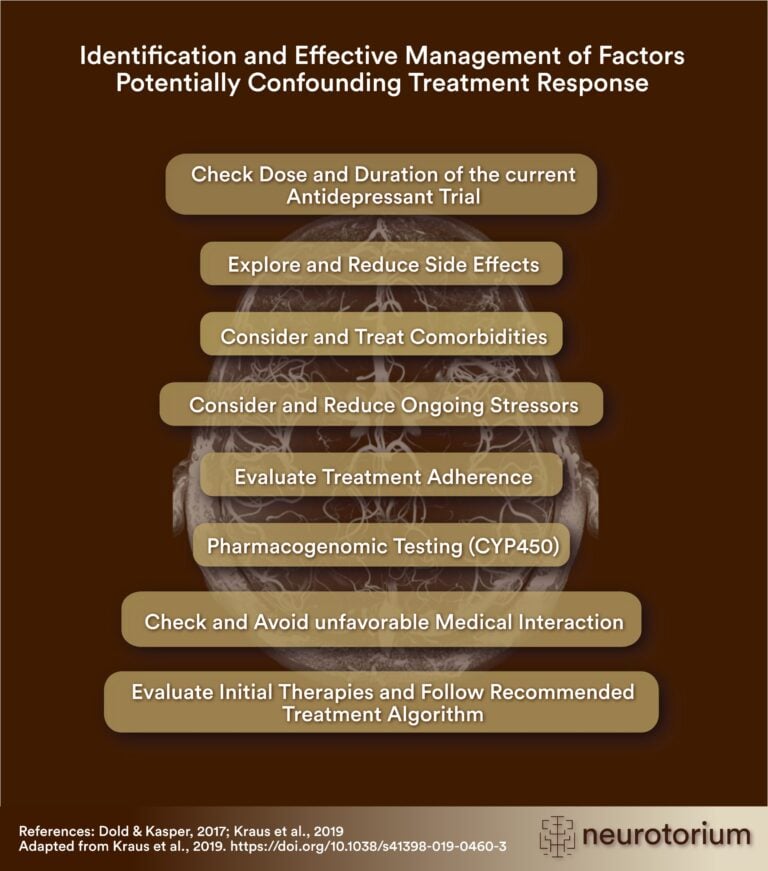
Key steps for managing factors that may confound antidepressant treatment response, including dose, side effects, comorbidities, stressors, adherence, pharmacogenomics, interactions, and treatment algorithms.