

Alzheimer’s disease (AD) causes gradual cognitive decline and dementia. Until recently, the definitive diagnosis of AD was based on autopsy assessments of brain amyloid-β plaques and tau neurofibrillary tangles, the defining biological features of AD.
Biomarkers of amyloid-β and tau are vital for measuring AD pathology in living people and for differentiating between different neurodegenerative diseases. With the latest progress in AD research, accurate in-vivo diagnosis of AD is becoming increasingly crucial.
In this video Joseph Therriault, PhD discusses the AD biomarkers and their use in clinical and research settings and explore future research areas for wider clinical practice use.
Joseph Therriault, PhD, McGill Centre for Studies in Aging. Faculty of Medicine, McGill University, Montréal, Québec, Canada.
Related content

Advances in blood biomarkers are transforming the diagnosis and prognosis of Alzheimer’s disease, helping to assess pathology, disease progression, and co-existing pathologies.
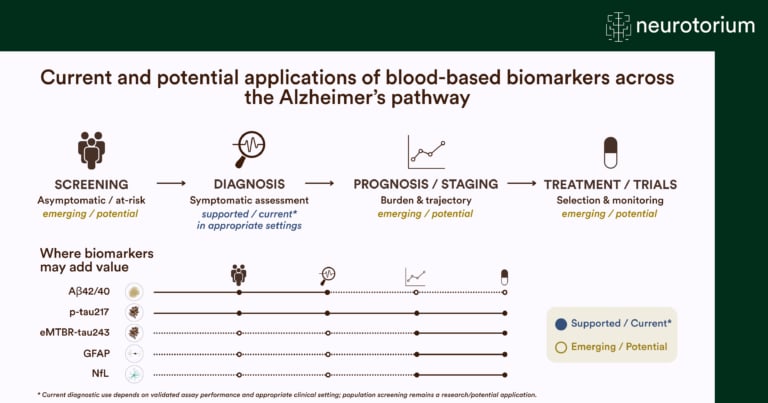
Overview of how blood-based biomarkers may support screening, diagnosis, staging, prognosis, and treatment decisions across the Alzheimer’s disease continuum.
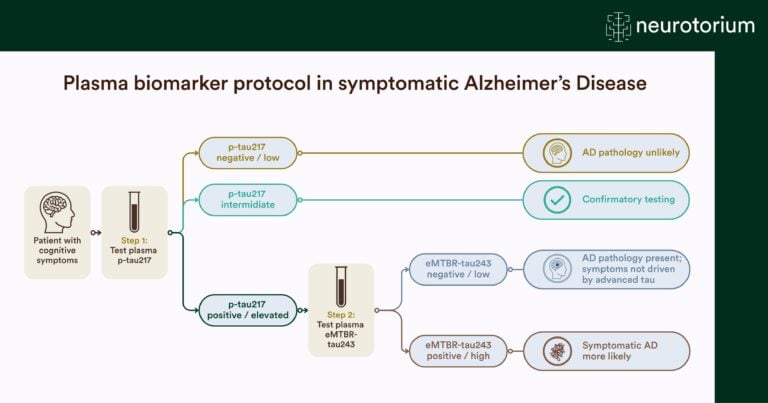
Overview of a plasma biomarker testing pathway for symptomatic Alzheimer’s disease, using p-tau217 and eMTBR-tau243 to guide diagnostic assessment and identify underlying pathology.