

Amyotrophic lateral sclerosis (ALS) and frontotemporal dementia (FTD) are increasingly understood as part of a disease spectrum, with considerable variation in how symptoms develop and progress between individuals.
Professor Nortina Shahrizaila explains how genetic factors, environmental exposures and other influences may contribute to differences in disease presentation and progression across the ALS–FTD spectrum. She also discusses why this variability makes disease progression difficult to predict, and how a better understanding of the underlying mechanisms could help inform future treatments.

Related content
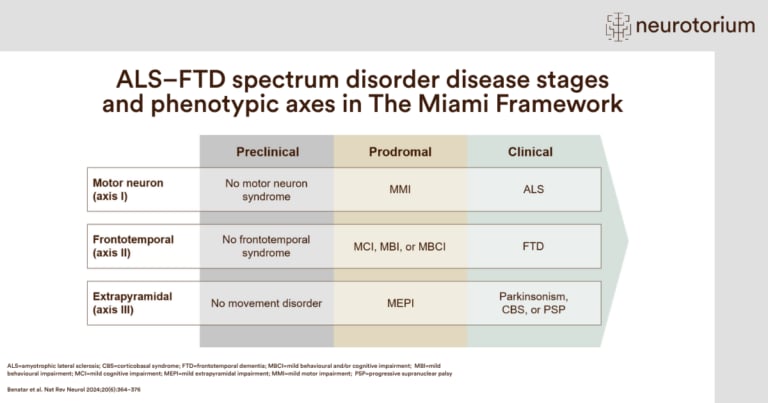
The Miami Framework describes ALS–FTD spectrum disorders across motor, frontotemporal and extrapyramidal axes, from preclinical through prodromal to clinical disease stages.
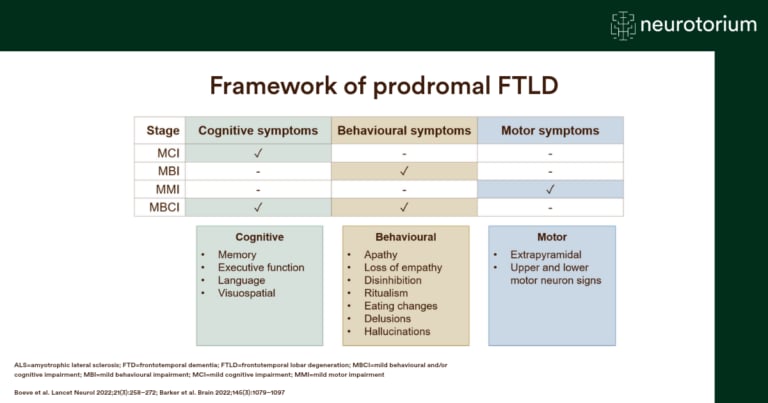
Prodromal FTLD can present with cognitive, behavioural and/or motor features, reflecting the clinical heterogeneity of early-stage disease.
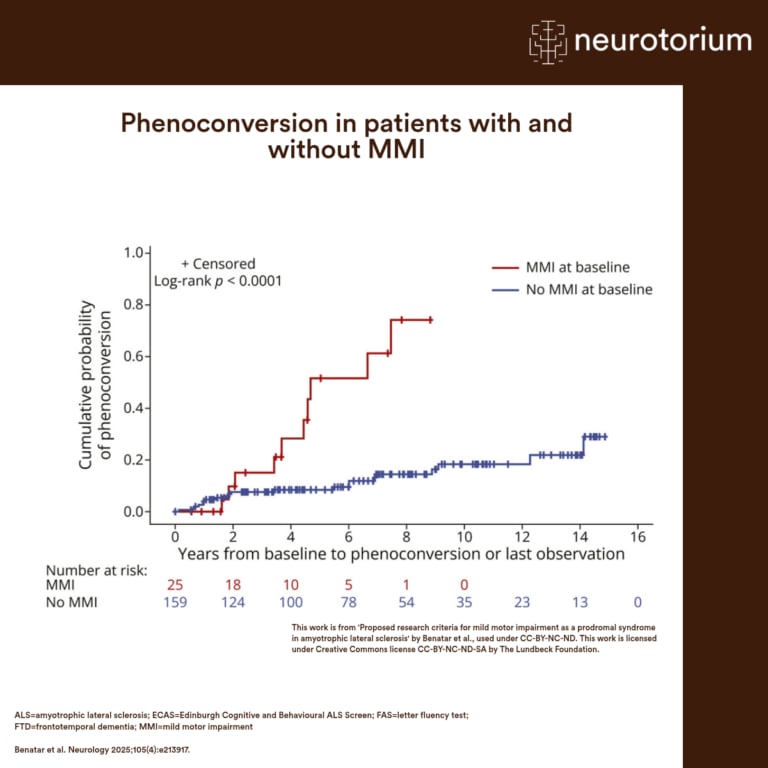
Mild motor impairment (MMI) at baseline is associated with earlier and more frequent phenoconversion, supporting MMI as a prodromal feature of ALS.