

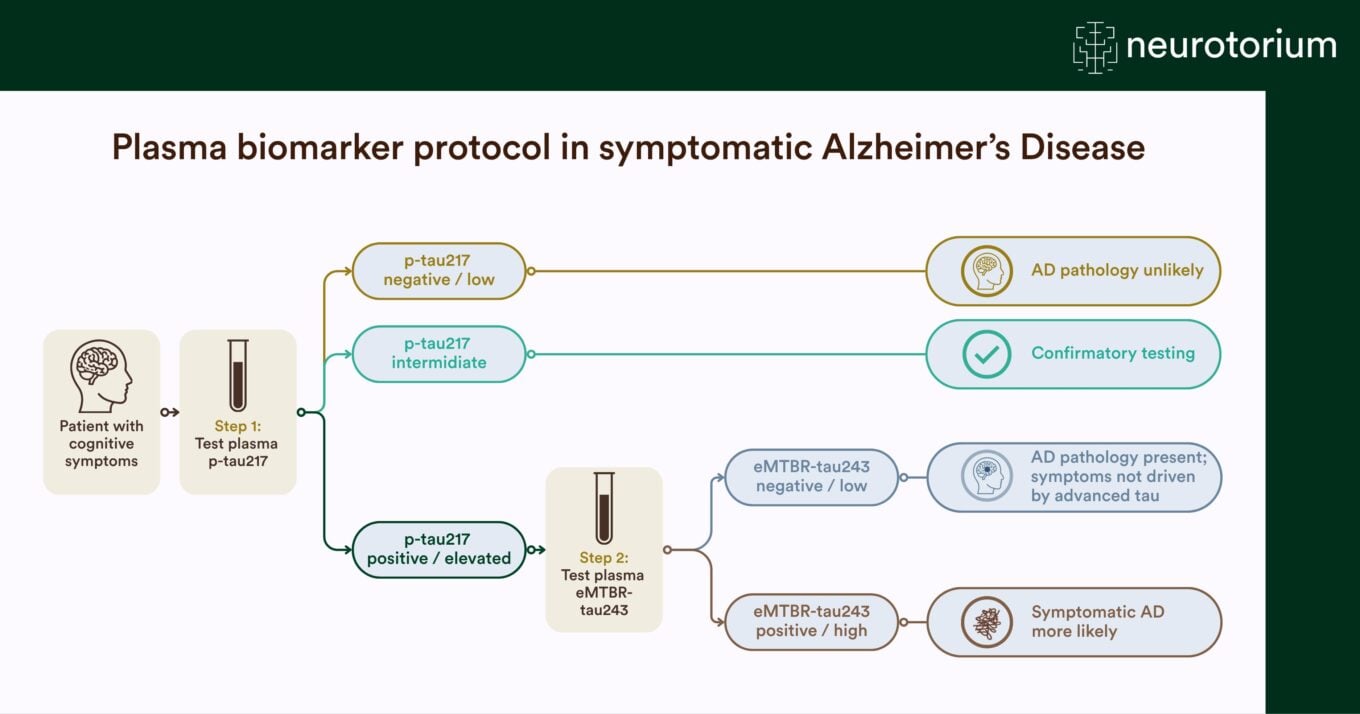
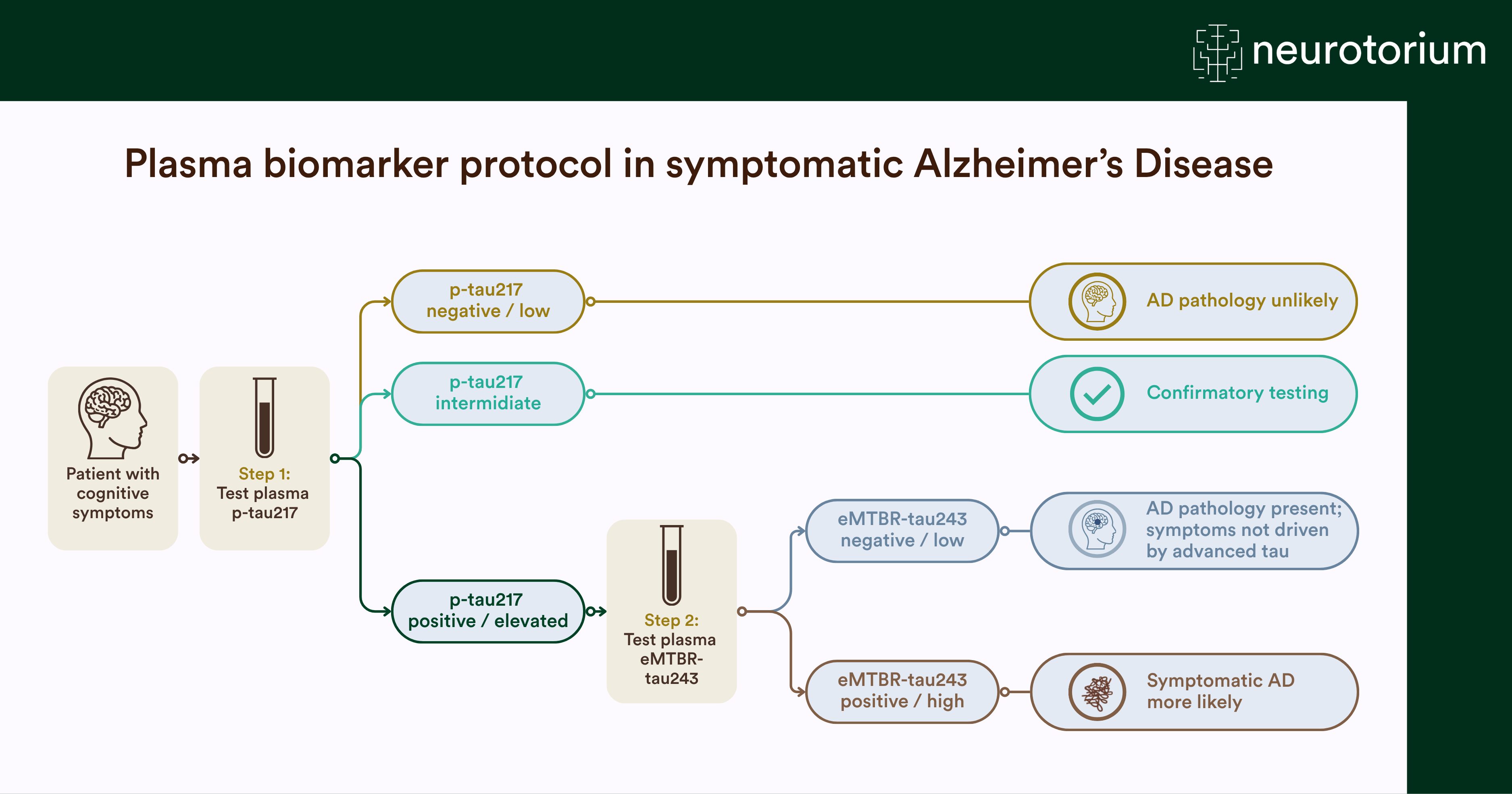
A workflow has been suggested to integrate early Alzheimer biomarkers (p-tau217, a core 1 biomarker) for initial assessment of presence of Alzheimer pathology. Patients may undergo further testing, e.g., with advanced tests (CSF or PET) in selected cases with intermediate p-tau217 levels. Among those with elevated p-tau217 levels, eMTBR-tau243 may be assessed to determine likelihood for presence of significant tau pathology, supporting that Alzheimer pathology contributes substantially to cognitive decline.
Related content

Advances in blood biomarkers are transforming the diagnosis and prognosis of Alzheimer’s disease, helping to assess pathology, disease progression, and co-existing pathologies.
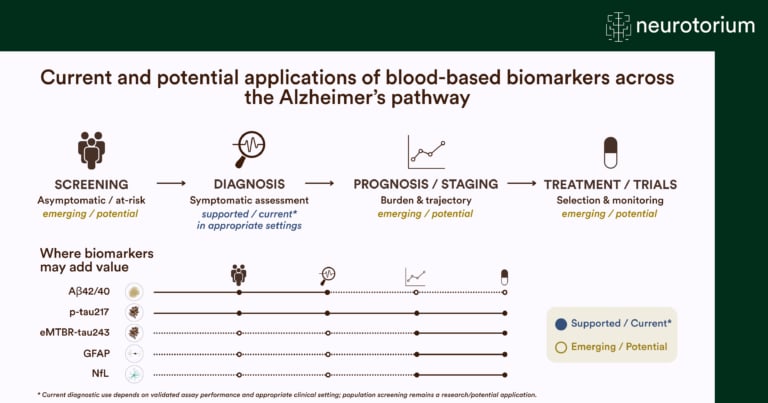
Overview of how blood-based biomarkers may support screening, diagnosis, staging, prognosis, and treatment decisions across the Alzheimer’s disease continuum.
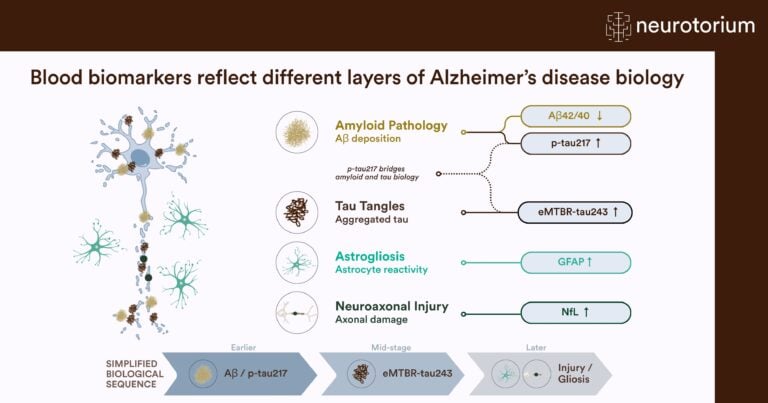
Overview of blood-based biomarkers that capture distinct aspects of Alzheimer’s disease pathology and progression.