

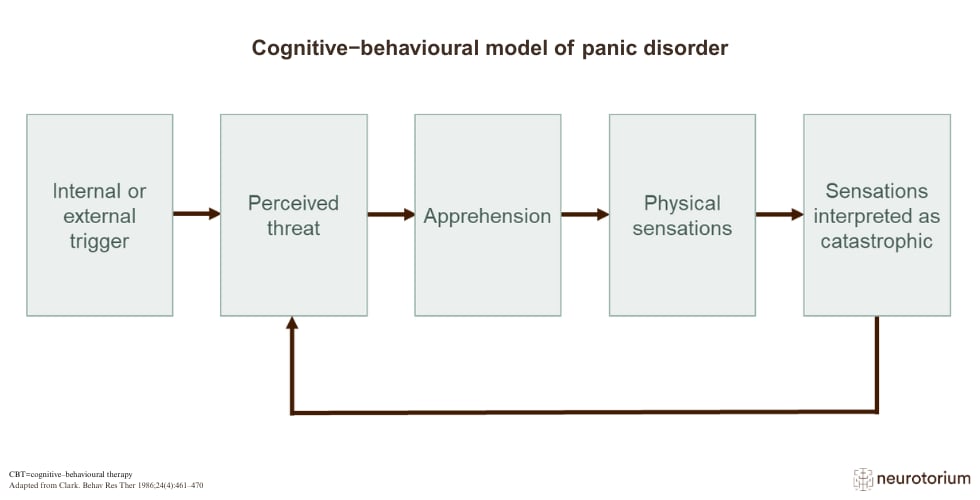
An external trigger (e.g., environmental) or internal trigger (e.g., body sensation, thought or image) can act as a stimulus to provoke a panic attack. If a stimulus is perceived to be a threat, anxiety-produced body sensations can be interpreted in a catastrophic fashion, further increasing apprehension. This fuels a vicious cycle that can provoke panic attacks.
CBT=cognitive–behavioural therapy
Related content

Decades of twin and family research have established that anxiety disorders run in families and are meaningfully influenced by genetic factors. Family and twin studies suggest an increased recurrence risk for first degree relatives of patients with anxiety to develop any anxiety disorders.
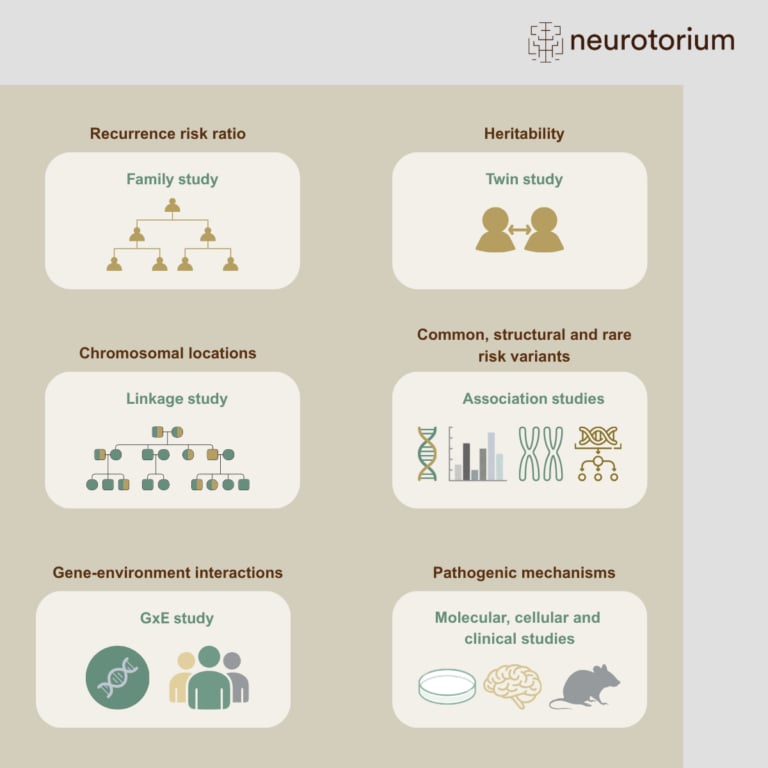
Family and twin studies estimate recurrence risk and heritability, showing that anxiety disorders aggregate in families and have a moderate genetic component.
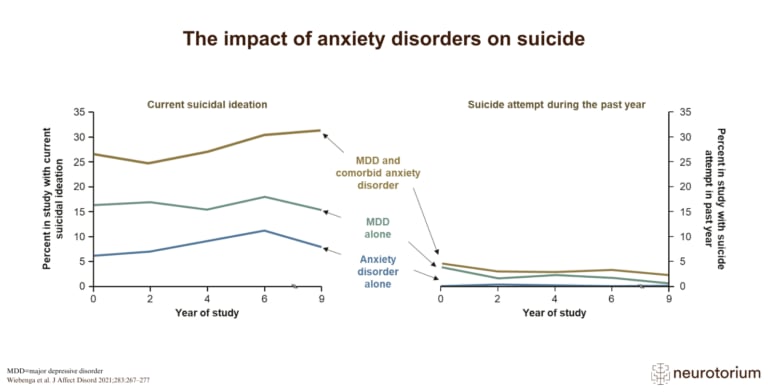
Suicidal ideation is far more common than attempts in people with anxiety or depression, especially with comorbid disorders and severe depression.